Tag: mother and child

  • When She Was Here

    When She Was Here

    E. Marmer | Free to Navel Gaze

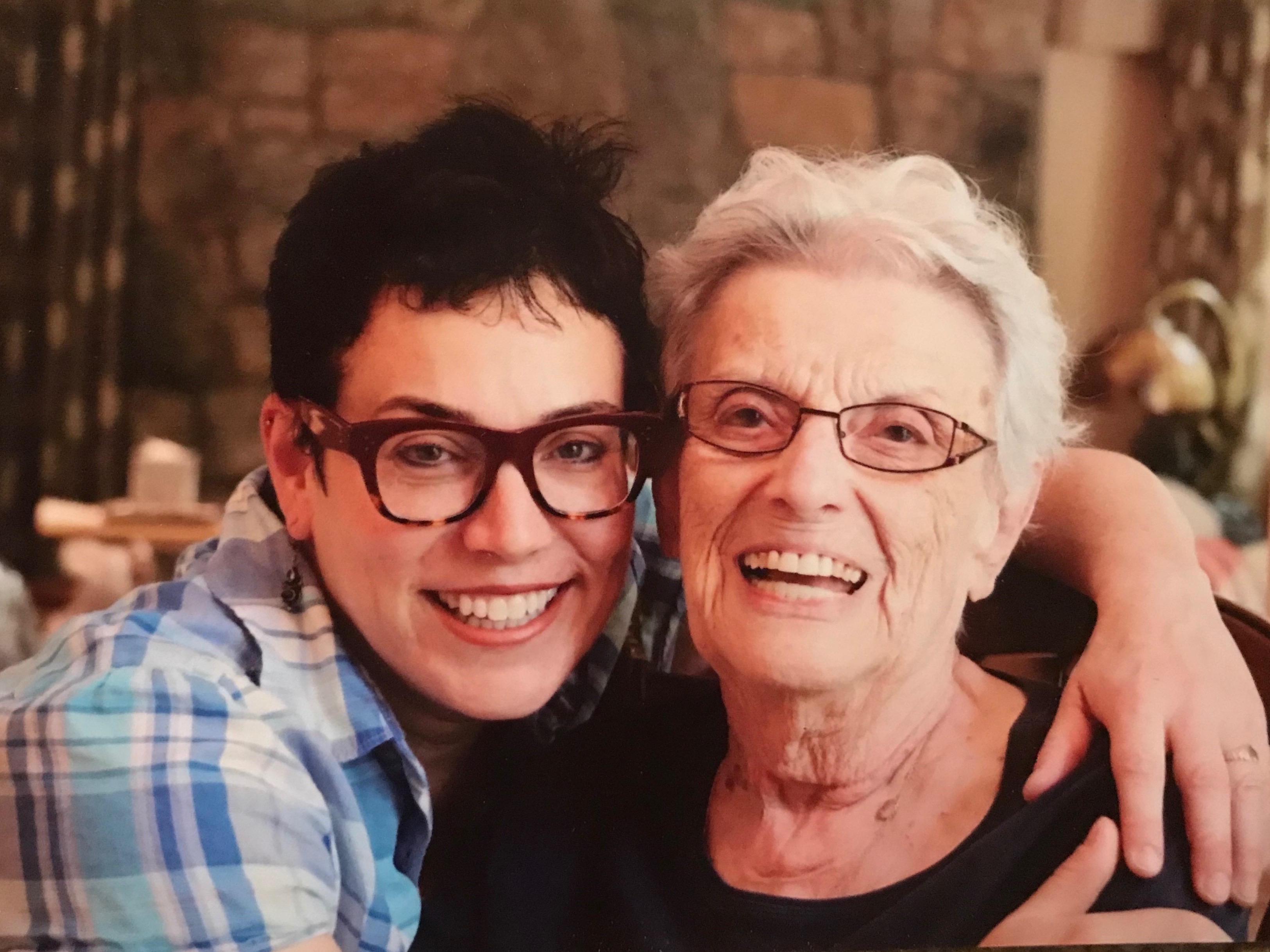
    When she was here, my mother would lie on her bed after I helped her shower, on top of the long white towel she insisted I put down so the bed wouldn’t get wet. But I thought of that towel as part of her cocoon, the one I made by putting another long white towel on top of her, and one small one for under her feet because the main towel wasn’t long enough, and one for under her head of course, because I wanted her hair to dry, but in her mind it was there to prevent the pillow from absorbing all that wetness from her hair, always so careful, my mother. Then I’d put her comforter over this sandwich in which she was the filling, and tuck her in.

    With her arms and legs immobilized inside this wrapping, by weakness more than by swaddling, and her now small head peeking out over the cover, she seemed to me almost like my child. She pulled forth from me all the same sweet painful love I had only known for my children, with almost but not quite the same targeted piercing as I felt when my breast milk came in.  My mother in my care, so completely, so willingly and with utter belief in her security – it was just the same as with my children. And the sensation, this belief I felt from her, made me love her in a new old way. And when I bent down to kiss her just as I would have my child who was going down for a nap, I was even able to nuzzle her neck in a tickling way that made her giggle, then look into her laughing eyes with my loving ones. 

    I’d announce that I’d come back into her room in ten or fifteen minutes to check if she were dry and ready to dress, but we both knew I meant I’d really be back in as many as thirty minutes because I’d be trying to get something done in the kitchen and on top of that I had no sense of time.  That she knew it and knew that I knew she knew, made her love me in a new way as well.  I’d like to think so, anyway.  We also both knew that she needed more than 10 or 15 minutes anyhow to recover from the exertion the shower required, but that didn’t make either of us love more or differently, it just made us sad.

    My mother had pancreatic cancer, diagnosed at least when she was 85, in some sort of merciful grace by an unseen god. On the other hand, for a woman determined to live into her nineties, it still sucked.  She didn’t want to leave; she hadn’t stopped enjoying us all, and the small pleasures that came with her every day. Such a modest woman, she didn’t ask for much and was more than delighted by all that she nevertheless received:  our attentions, her comfort and independence, the joys of watching her grandchildren and great grandchildren metamorphizing, the familiarity of the signs on her neighborhood roads, her simple routine just the way she liked it.  And so, aware that she might not live into her nineties after all, she determined instead to live as long as she could, and fight against the cancer as hard as an 85-year-old with, well, with pancreatic cancer, can.  As she had also lost almost 40 pounds in two months of intermittent hospitalizations which included recovery from a life-threatening surgical accident, leaving her so weak that she was unable to perform even daily living tasks, this made the effort required absurdly difficult, but she was not deterred. 

    My sisters and I decided that as the daughter with the best layout for her limited strength and mobility, the most unstructured, uncommitted time available, and an observed impressive endurance for those small irritations that can build and build with continuous exposure to one’s mother, sick or no, I would be the one to take her in and see to her care.  I think they knew, though, that it was what I wanted. I’d go to the mat for it. My sisters would come for wonderful long visits with our mother, and I would be able to leave for the occasional social engagement, or my own doctor appointments, but always I returned to her without the weight of obligation.  I carried instead a kind of gratitude, even a shameful pride, that I could make sure my mother’s existence was the most comfortable one possible in her condition. 

    She knew this.  She knew I was compelled to be the one, driven by devotion or some perceived claim. It could have been because I spent the least time with her, called her least of any of us over the preceding ten years or so, and I felt I had to make that up; or maybe it was because I carried the knowledge that I had spent much of my adult life working through the not always so hidden sorrows and insecurities I developed in part as a result of emotional barriers she erected, which I knew, of course, were the result of her own sorrows and insecurities as a child. . . and so perhaps I felt I had to make our last months (or what I hoped would be years) together as intimate and rid of shadows as they could be. It was true that, due to reckonings with my own daughter, and my fuller appreciation of all the ways I had fallen short for her, indeed due to the understanding I acquired over the years of so many things, I was primed to show my mother a new kind of unadulterated love.  

    But maybe it was because I needed to show her that I loved her desperately as no other could, as much as when I was child, and I wanted her favor and undivided attention as I did then.  As the third child coming into a busy working class household, I never really felt I had the individual attention from her that I wanted. And dammit I was gonna get it! I was going to have it, have her, all to myself. . . It’s this last possibility that disturbs me.  And yet, even to the extent it may have been true, my mother silently understood all of this. All the reasons, whether noble or pathetic, she accepted as originating from a pure place (as did my sisters, loving and generous souls that they are). Perhaps on some level my mother even recognized that my troubled relationship with my daughter mirrored somewhat the one she had had with me, in that I too had been the unhappy, solemn, and lonely child whom my mother cherished but did not know how to help; though neither of us needed to speak of that – she, because she did not like to reveal herself or reflect on the past, and I because I had already forgiven her so thoroughly that I wouldn’t even think to bring it up. 

    When I returned to my mother’s room, she usually reported that she was ready for the rest of our post shower ritual, which included dressing of course, but always began with the drying of her toes.  This precise operation, developed in response to her complaints that previous toweling had not sufficiently done the job, entailed my softly running the narrow edge of a dry washcloth between her toes. And it is the drying of the toes that I think of now, this small activity that somehow was the perfect expression of our momentary happiness, away from her cancer, away from the end, in being mother and daughter.  I was the one providing the care this time, but it could just has well have been her, when I was in her care, before memory even, running a dry washcloth through my toes in the same way.  We were back all the way to that space, before the barriers had time to click into place. Adoring caretaker and trusting receiver, both feeling safe in having their attachment truly known. 

    If dressing exhausted her further, she’d tell me she needed to remain in bed for a little while longer, perhaps a half hour, for a little nap.  She knew that I’d let her sleep for longer than that, because I’d be trying to accomplish some mundane administrative task, or even perhaps get back to a poem I was writing; and I knew she secretly was relieved by my anticipated imprecise adherence to the clock, because she had not yet gathered the will to rise, to make her slow way down the hall to her chair in the family room.  But sometimes, before leaving her to rest, I’d lie down next to her, alongside her freshly made cocoon of sheet and comforter, and quietly sing her a song she had once sung to me: This is the story of two little babes who were left in their uncle’s care… This didn’t rankle. We both knew it was my way of telling her that I felt how much she had loved me, and that I carried it still. Sometimes she would join me, sometimes she would just listen and remember.

    E. Marmer | Free to Navel Gaze
  • Message in a Bottle

    Message in a Bottle

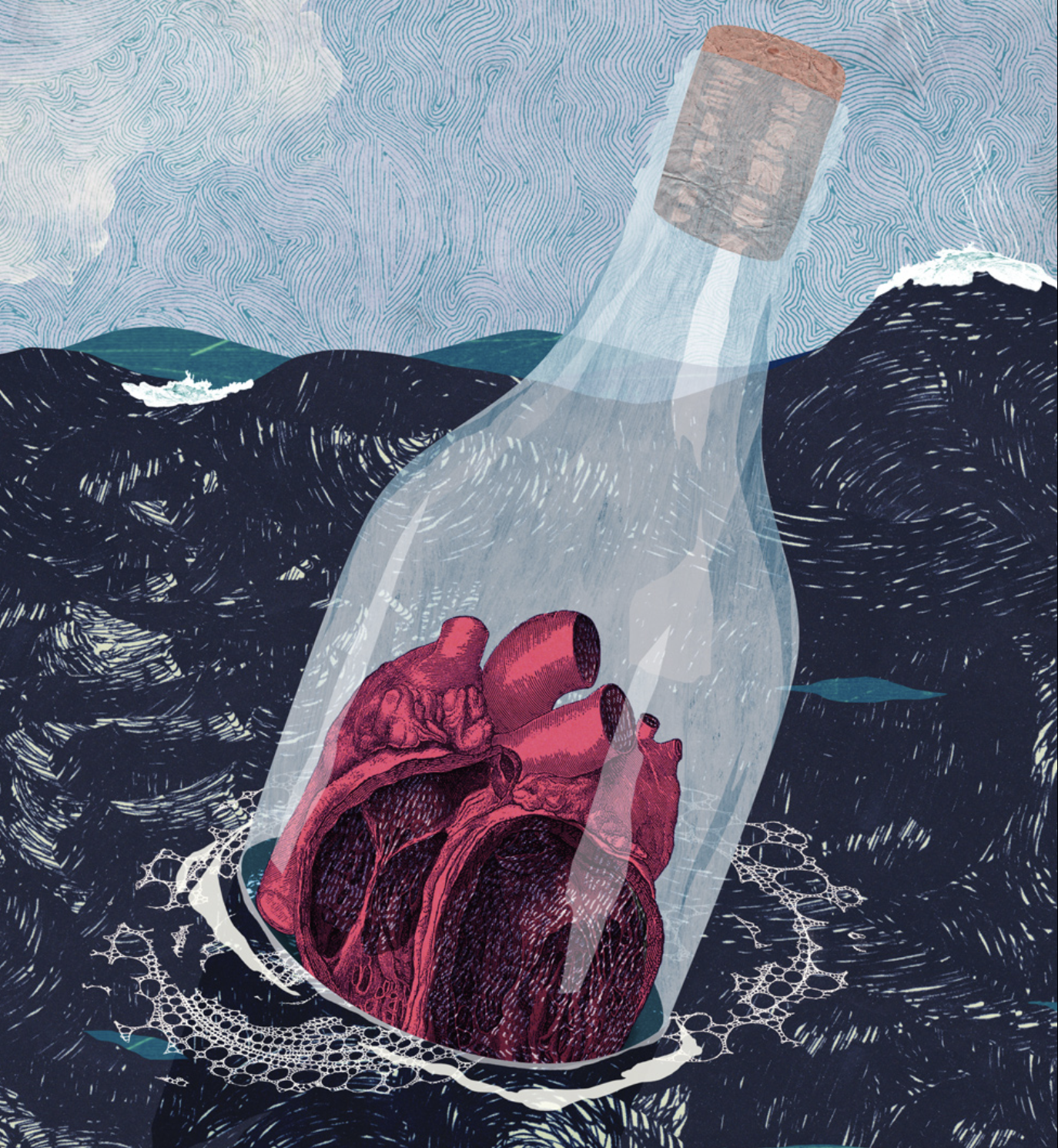
    Emma Hanquist, Artisit

    My daughter carries a heavy load of emotional scars. They come in part, of course, from all the regular wounds that all sensitive people endure, whether inflicted by others, or by one’s own hand, or received upon the usual stumbles and falls that plague all such sensitive souls during childhood, adolescence and early adulthood.   But in addition, some of my daughter’s scars come from uniquely devastating experiences. And some of them come from her unfortunate luck of being born with overactive or underactive brain chemicals, giving her a distorting fun house mirror to work with, and making navigation through the ordinary pitfalls of life and complications of connecting with others all the more treacherous.

    From “Wink Space” by Masakazu Shirane and Saya Miyazaki

    My dear beautiful daughter has been working for her entire life to shatter that mirror, or at least to recognize its distortions and learn to navigate despite them.

    I know that many of her scars came from wounds I inflicted as well, unintentional as they were. Time has given me sight: I can see where I said and did the wrong thing, got drawn into an unhealthy pattern, came up short, missed the mark and even communicated judgment and disapproval. I could take refuge behind that well worn excuse, true as it may be, that all mothers are destined to screw up to varying degrees (because despite the most ardent wishes of their children and themselves, they are indeed flawed, bumbling human creatures like everyone else), but I won’t. I regret all the wounds I inflicted on my daughter. I wish I could take them all back. I can’t, obviously, but I can do one thing at least. I can let her know that never once, in all our years together, regardless of whatever sparring, frustrations, heartaches, mistreatment and misunderstandings we encountered or caused relating to each other, regardless of whatever sorrow I conveyed to her about her struggles and my inability or, in some cases, incompetence to make them go away, that never once was it a sorrow that she was, is, my daughter. From the moment I fell in love with her, looking down at her in my arms, I have rejoiced in being the one lucky enough to get her and have never stopped. When I fretted over how she was handling or not handling a situation, or felt the sting from one of our unhappy exchanges, I was also, always, exalting in how goddamned unique, and irreplaceable she is, how spirited and emotionally complex, how tender-hearted, how brilliantly glowing, how much a gift I didn’t deserve, for who could deserve such a prize as my Sophie. Through it all, and even now at 23, she remains as adored, as treasured, as zealously and jealously held, as much a wonder and a miracle as she was in my arms all those years ago. I wish she could feel exactly what is in my heart, my darling daughter.

    E. Marmer | Free to Navel Gaze

    If she could she’d know what I felt when she fit like a small football against my chest, for that feeling has never left.

    I don’t expect that my saying all this will magically make some small portion of her scars disappear, though of course I pray every day for her happiness, and it’s no secret from either of us that I wish I did indeed have the bottle of magic balm, the potion to drip into her scars and free her heart from the past, even the many parts of her past that do not relate to me. (I carry that irrational wish despite how she well she has been making some of her scars disappear on her own, with no help from me – she has been achieving so much self-healing, that strong and capable woman.) But if it does anything, I hope this message in a bottle, poor substitute for any magic balm in a bottle though it may be, makes her feel, know, believe, accept that she has made my life meaningful in ways I could never have dreamed of, and that knowing her and being her mother has been one of the greatest joys I have been blessed to receive.

  • Atonement

    Atonement

    Found at 2me4art.com
    Found at 2me4art.com

    Over my life a particular memory visited me from time to time. Whenever it came, I always gave it its due attention. But it seemed to serve no purpose other than replaying a long ago hurt and, despite the gentler perspective granted with age and experience, always triggered the same painful mix of bio-chemicals that squirted forth when it actually happened so many years ago.

    Of late, the memory began popping up more frequently.

    At first, I wasn’t even wondering why. Then, when it finally dawned on me that the same episode was running again and again on my brain’s T.V. screen, I began to suspect that the constant replay was a demand to be noticed. Like a loud megaphone: Hey, dummy! Does this remind you of anything?

    It was a time in my life when I was a real pain in the ass. Somewhere between the ages of 8 and 11, I was experiencing the fallout from being taken away from a life that worked for me. In that wonderful former life in the Bronx, my older sister Michele played with me more than she socialized with our eldest sister Renee. In that life, my best friend lived directly across the hall from me, and was available most of the time for companionship. In that life, my mother was home most of the time; and, when she did go out without me, I had the security of my best friend’s mom across the hall, or or my grandmother (who lived two floors below us) and never once felt alone. But in this new suburban life I was now in, I hadn’t made any real friends yet, my companionable sister had crossed over and was now a fellow traveler of our eldest sister, and my mother worked as a teacher. Little did I know that day when we were all so proud of her for graduating and huddled together, smiling for the camera to mark the occasion, that I should have been singing a dirge. For my mother of course did the next logical thing, which was to get a job as a teacher. Not that it affected me during school hours. But, after school, in place of my attentive, soft and patient mother, offering snacks and asking me about my day, there was a different mother. This one was stressed. A new teacher, preparing lessons for the next day. Working on her masters degree, and sometimes traveling into the city for evening classes, or spending yet more hours doing her assignments.

    My father was also withdrawing. Not that he ever was the warm and cuddly type. He was a cop, and had to keep up his hard-boiled exterior. But when we lived in the Bronx, it was a few simple steps for him to come into the bedroom I shared with my sisters, to tell us some stories, make us laugh or sing to us. Now, we all inhabited our own separate rooms, up a flight of stairs, and my sisters were getting too old for that sort of thing anyway. And, too, he was facing his own wearying challenges. He was now commuting from the suburbs into a part of the Bronx that was getting scarier and more disassociated from that place where he grew up. The absence of any men who really could relate to him on any level in our upward striving suburban community, and the surreal and battering horror of traveling back and forth from dainty civilization to dystopia on a daily basis, caused him to retreat further into his world of books and pipe tobacco when he was home. And my sisters were off tittering about some shared secret knowledge or hanging out with their friends. I was no longer a cute diversion holding any interest for them, and my felt banishment filled me with resentment and longing.

    Screen Shot 2015-10-27 at 6.09.15 PM
    From The Children’s Encyclopedia, by Arthur Mee. (London: The Education Company. Orig pub. as The Children’s Encyclopædia 1908), “Ideas” section, Volume I, p. 112.

    The final loss, in a twisted turn of poor timing, I also was no longer my mother’s “warm little bundle.” This I learned when she started telling me all the time “Oh you used to be my warm little bundle!” As I was getting larger and losing what was left of my wide-eyed and sweet puppy features, it was not possible, had I even tried, to fool anyone into thinking I still needed slack for my hesitations and cluelessness. People expected me to get with the program, understand my responsibilities, stop expecting time made to soothe and redress my little hurts and disappointments.

    One Sunday afternoon in particular I was sadder than usual. My sadness moved into broken-heartedness, and I felt strangely incapacitated, virtually listless. I became convinced that I had some sort of mysterious malady, which only a mother would understand, and certainly have the remedy for, if I could just muster up the energy to call for her, which I did. She was all the way downstairs, using up what free weekend time she had entertaining my Aunt Betty, and so I had to summon up quite a bit of energy for my call of “Mahhhhh-meeeeee!” to reach her. That I was in such a sorry state as to be required to use every last bit of my strength to make such an effort only made me that much more broken-hearted. Years later, I understood that what I wanted to see, what I ached to see, was my mother, coming up into the master bedroom (where my incapacitated little body lay), with a gentle reassuring face, soon to be stroking my hair and telling me that if only she could get ride of Aunt Betty she’d be there with me, taking care of me and making everything all right. What I got instead was a slightly exasperated mother, with firmly set lips, who was there to get to the bottom of why her then 9 year old thought she was incapable of walking down the stairs. When I told her that I wasn’t feeling well, she strode over, checked my forehead for heat and looked at me hard, trying to size up which reaction I deserved. I received the, “Well, just rest here and I’ll check on you later” response, which was far short of what I so desperately wanted. She went back down. I spent the next 15 to 20 minutes wondering what went wrong. Why didn’t I get the loving stroking of the hair and the reassurance that our bond remained intact despite all the demands on her time? And, convinced that I didn’t do a good enough job of conveying how broken-hearted I was, I decided as only a 9 year old can that the best way forward was to call her again, and this time really make sure she understood. Although this time I never got to say anything. As soon as I called out my even more plaintive “Mahhhhh-meeeeee!” I could hear Aunt Betty clucking her tongue about what a nuisance I was for my poor mother, and could almost see my mother’s face pained with exhaustion and embarrassment (for Aunt Betty made it clear always that she tolerated no such nonsense from her children). When she appeared at the bedroom door, having made the climb for the second time, someone even more removed from the mother I grieved for was there. I can’t remember what she said, but the words were irrelevant. Her angry expression and tone said it all. I was a burden, whiny, unreasonable and selfish.  Something to deal with. Not a hurt little girl, her daughter, without words to express to her mother how alone she felt in her losses. In that moment, I understood fully and perhaps for the first time that my sweet childhood was truly over. I endured the moments of bitter reprimand that followed and said nothing more.

    So why the increased frequency of replay? What was I hoping to find in that memory? As early as young adulthood, I had figured out that my mother was in an almost impossible situation, working full time, running our home and raising her girls all without much input or support from my father. I had already worked out that my father was steeling his soft and poetic nature every day for the work of a mercenary, patrolling an unsafe community that was no longer his own. I had already grown to understand that my sisters were just experiencing their own lives with all the complications and transitions that adolescence brings.  I had nothing more to learn from that memory, or so I thought.

    My own daughter, now 21, has had her own difficult journey. As the first born, she had no older sibling to shelter her when she first entered the world outside of her mother’s arms. She would return home from a difficult day at school to find me, formerly unflagging in my soothing attention, now preoccupied with her younger brother, or in the middle of house chores, or chafing against something gone wrong in my life that I hadn’t put to words or even understood but which only served to unnerve her all the more.

    Screen Shot 2015-10-27 at 6.37.55 PM
    Dreamscape by wbsloan on Flickr

    And at those times, when my daughter needed me, I’d deliver a sort of patched together, half-hearted exasperated offering of my own. Sometimes I even lost my patience with her, when all she really wanted was for me to scoop her up and tell her that she was loved, and special, and that I was glad to have her home. Instead, she knew that part of me wished she was still at school, so I could catch my breath, and have just that bit more peace, and maybe somehow get grounded back to who I was. When she came home from her own battles each day, she was greeted, not by the loving, tender mother she wanted, but by the same overwrought mother, with strained smile and limited patience, that I had greeted. The same mother who hoped to fix her daughter’s unhappiness by suggesting better ways to have handled something, as though that would stem the onslaught of painful experiences. The same mother who felt guilty and helpless whenever she witnessed her child’s pain, and never said the right thing. How is it that I determined to do things so differently from my mother, so that my children would not feel the same rejections and misunderstanding I had, but ended up failing so completely in that regard?

    Brave and determined soul that she is, my daughter set herself to exorcising all causes for resentments from our relationship while she was still a teenager. After years of less effective confrontations, at 21 she finally developed the language to convey (and I finally refined my listening enough to receive) the simple truth that she had felt like a burden to me. She felt she was the problem child that made everything harder for me… for us. She confessed it to me one night, one night of wonderful, vulnerable, almost scary bonding and revelation. And there it was, at the ready, finally able to reveal why it had been plaguing me: that memory of my own mother, angry with me for needing her when she was barely hanging on herself, and resentful for not knowing how to fix it all, that aching in me and in herself. And I whispered to my darling daughter, “I’m so sorry, sweetheart. I’m so sorry that I didn’t simply hold you and tell you I loved you, that everything would be okay. That all of it mattered, yes, but that none of it mattered now that you were in my arms.” How long would that have taken? Ten minutes? Ten minutes to soothe a child facing the world without her mother. A child without sheltering siblings and with no trusted friends yet. Why couldn’t I just have simply hugged her, without judgment or the desperate wish that all her problems, that she, the way she was, would just change into something else that would make my life easier? Instead, I contributed to a pattern that would haunt us for years: the lonely and misfit daughter and the overwhelmed, worried and ineffectual mother. I’d come to pick her up from a birthday party, with a dreading expression, expecting before being told that there had  been some pain for her in the proceedings, some conflict that all the other children and moms couldn’t understand, or prevent, and wished would magically disappear; and instead of scooping her up and being on her side, I’d wish it would all disappear too. I wished she would just be easier. For my sake as well as hers.

    So here is my atonement. To my daughter, for doing exactly what my own mother did, and what her mother did before her. For not wanting to acknowledge the legitimacy, the normalcy, and even the inevitability of the hurts a sensitive child feels when weaned from her mother’s side. For not wanting to explore my part in those hurts, making them worse by adding my own frustration, resentment, guilt and feelings of inadequacy as insult to injury. But my atonement also is to my mother. I atone for having judged her as not up to the task of understanding and comforting an angry, sad, lost child. It is a very difficult task, maybe impossible; I know that now. I atone for my high-handed thinking, when I became an adult, that I was big enough and wise enough to forgive her. There was nothing to forgive. She loved me, and my pain pained her. She was a wonderful, wonderful mother, all the more so in light of all she carried. I atone whole-heartedly, seeking her forgiveness for assessing her and finding her wanting, now understanding finally that all the love and best intentions, all the experiences and memories we swear we will bring to our own child-rearing, may not be enough to overcome the limitations and distortions hammered into us by whatever stressors and unspoken resentments are plaguing us at any given time in our adult lives.

    The cycle of hurt between parent and child will continue, I suppose. I pray that my daughter will be able to break it should she have an unhappy child.  And I hope in any event that my daughter too comes to understand that I loved her always, and that her pain pained me, and that I wish more than anything that I could redo some of those moments she remembers, bringing the perspective I have now, and taking the hurt away.