Yesterday, I was treated to one of July’s lovely, long lasting twilights. I had earlier in the day overseen what I considered some dramatic changes to our garden by a landscaping crew: some pretty ground cover in a once barren area, additional flowers strategically placed in several spotty garden beds, and some new rose bushes and a pink dogwood tree by our little storage shed. In the hours after the men left, I wandered around taking in the colors, the fragrances, the cool grass on my feet and that magical, magical dusk that allows the blue of the sky to deepen and glow in final ambient minutes before gently fading into purplish and indigo shadows.
I am a carnal creature, highly susceptible to my physical environment, as my husband always likes to tease. He named my instant reactivity to external elements my “boat to Venice” response, recalling how, on the public boat from the mainland to Venice, I was so affected by the heat and the crowd, the body odor and fuel exhaust, that I started grumbling and complaining, crabbing about how we shouldn’t have bothered going to Venice if this is what we could expect, completely losing sight of the fact that we were going to Venice, for godssake. Ten minutes later, actually in Venice, I began oohing and aahing, and it was as if the boat ride never happened.
But back to the garden last evening– I was transformed into a bewitiched elf, drugged on loveliness.
Photo by Sudhir Sharma
It’s funny how certain experiences stay with you. I’m not talking about stories that we savor and retell frequently, but about those small moments that live on in your mind because they affected you profoundly without you even knowing at the time that they would be special. For me it seems, a July twilight is a key that opens my memory to some delicious moments.
And so, I recall.
I recall being a young girl living in the Bronx with my family on the 10th floor of a pink brick apartment building, sharing a bedroom with my two older sisters. I went from a crib to a bed in that bedroom. Seven years of togetherness, more for my sisters. By the time we moved from that apartment to a house where we each had our own bedroom, my eldest sister was turning 13 and probably desperately wanted some privacy, but I loved our time in that apartment bedroom.
We all went to bed at the same time. We all wore matching pajamas. We made up games that inevitably involved jumping from bed to bed, a feat made possible by the fact that the beds were only about eighteen inches apart if that. And on summer nights, we all saw the same twilit sky from our two open windows, felt the small, hopeful breeze stirring, and heard the summer sounds from the neighborhood floating up to us.
And I recall summer nights at the age of 10 or 11, when I was free to wander in the streets of my remarkably safe suburban neighborhood, looking up at the trees dark in their silhouettes against that compelling, cooling, translucent sky. The lights in the neighbors’ houses, and my own, were warm yellow rectangles, jewels strung for my enjoyment, and the steam of the day melted into a hush, full of possibilities. Unhurried, lost in a dream, I drank it all in, beliving I was the sole invitee to a secret ritual and feeling my freedom, until it became too dark and the ritual was over. My mother never once called me in, always knowing I’d return at the right time, like our cat.
I have been so fortunate. Despite heartaches, despite losses, tragedies and chronic stressors. I have been treated to so many wonderful moments, so many lovely, warm July twilights. Last night’s romp in our garden will be among these. I am so very glad that I paid attention.
My father Stanley taught me gratitude the way he taught me everything, which is to say, in the fewest words possible. In contrast, when telling a story, or bringing history alive, boy, could he grandstand. His descriptions were drawn out, delicious, almost overdone, but not quite. A consummate natural performer, he never once doubted whether he had the crowd while holding court. And yet, when it came to the personal, he withheld the flamboyance. He withheld the unnecessary. My father conveyed the essential nut of a thing – whether a choice, a betrayal, a triumph, a lesson, a wonder – with a simplicity that never ceased to flabbergast me, humble me and convince me that I was getting truth.
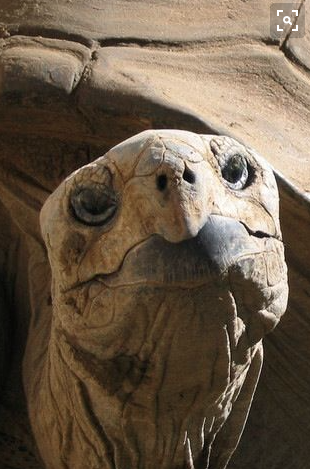
That’s not to say that he was always direct. Despite his brevity, he could indulge in metaphor, but, even then, it was delivered straightly, pointedly. Once when I brought up the lavish life my aunt had had before my uncle lost his “six-figure” executive job and became a hardscrabble salesman of cheap merchandise from China, he said, “You know the ‘Tortoise and the Hare’ right?” I waited for it. “I was the tortoise.” He said nothing more. And from that, I comprehended all that he wanted me to. Not just about the comeuppance of the arrogant hare, but about the toil and steadiness, the constancy of the tortoise. About allowing that one brief pat on the back and returning to the task at hand.
On the day my father taught me gratitude, however, he delivered a direct declarative sentence. My mother had thrown him a surprise seventy-fifth birthday party, and the assembled guests were clinking their glasses, saying, “Speech! Speech!” My father stood up, and shook his head slowly with lips pursed for a good long pause, so, at first, I thought we would be treated to Stanley as entertainer, to a poem or funny anecdote or maybe a joke thanking my mother for putting up with him all these years.
“I am the luckiest bastard on earth,” he said. And he sat down.
Everyone clapped and a few people chuckled, and I wondered if their clapping and chuckling was in affectionate response to what they presumed was understandable awkwardness at such a moment. They knew my dad could be gruff; they knew he wasn’t suave. It seemed they wanted to reassure him: “That’s okay. We understand you don’t know what to say.” But I knew my father, in seven words, had said everything. It was all there: his amazement at fifty-three years of marriage to a modest and loving woman, who built their entire social fabric and cared enough about him to throw this party; his pride and relief that his three grown daughters, who fussed over him, turned out to be accomplished, well-adjusted people he didn’t have to worry about; his pleasure at grandchildren in varying stages of development, the sixteen-year streak of girls finally, finally broken with a boy; satisfaction in the restaurant catering paid for in full with the fruits of his and my mother’s labors; even anticipation of his accustomed evening in his recliner with a book and a pipe, and his fat belly.
All of those things were there, and something more, the essential bedrock for gratitude. My father told us that he wasn’t entitled to any of it. He was the “luckiest bastard,” just a random guy, a shmo, a tortoise, a self-educated beat cop for 30 years who got to come home to a hot meal and three girls being raised right by his beautiful, capable wife, she a respected teacher to boot. It wasn’t luck, of course, but a bounty collected, earned, one small decision, one small commitment at a time. He didn’t see it that way, though. His humility and astonishment at what he considered sheer dumb luck formed the best blueprint for gratitude I would ever receive. I follow it still.
When she was here, my mother would lie on her bed after I helped her shower, on top of the long white towel she insisted I put down so the bed wouldn’t get wet. But I thought of that towel as part of her cocoon, the one I made by putting another long white towel on top of her, and one small one for under her feet because the main towel wasn’t long enough, and one for under her head of course, because I wanted her hair to dry, but in her mind it was there to prevent the pillow from absorbing all that wetness from her hair, always so careful, my mother. Then I’d put her comforter over this sandwich in which she was the filling, and tuck her in.
With her arms and legs immobilized inside this wrapping, by weakness more than by swaddling, and her now small head peeking out over the cover, she seemed to me almost like my child. She pulled forth from me all the same sweet painful love I had only known for my children, with almost but not quite the same targeted piercing as I felt when my breast milk came in. My mother in my care, so completely, so willingly and with utter belief in her security – it was just the same as with my children. And the sensation, this belief I felt from her, made me love her in a new old way. And when I bent down to kiss her just as I would have my child who was going down for a nap, I was even able to nuzzle her neck in a tickling way that made her giggle, then look into her laughing eyes with my loving ones.
I’d announce that I’d come back into her room in ten or fifteen minutes to check if she were dry and ready to dress, but we both knew I meant I’d really be back in as many as thirty minutes because I’d be trying to get something done in the kitchen and on top of that I had no sense of time. That she knew it and knew that I knew she knew, made her love me in a new way as well. I’d like to think so, anyway. We also both knew that she needed more than 10 or 15 minutes anyhow to recover from the exertion the shower required, but that didn’t make either of us love more or differently, it just made us sad.
My mother had pancreatic cancer, diagnosed at least when she was 85, in some sort of merciful grace by an unseen god. On the other hand, for a woman determined to live into her nineties, it still sucked. She didn’t want to leave; she hadn’t stopped enjoying us all, and the small pleasures that came with her every day. Such a modest woman, she didn’t ask for much and was more than delighted by all that she nevertheless received: our attentions, her comfort and independence, the joys of watching her grandchildren and great grandchildren metamorphizing, the familiarity of the signs on her neighborhood roads, her simple routine just the way she liked it. And so, aware that she might not live into her nineties after all, she determined instead to live as long as she could, and fight against the cancer as hard as an 85-year-old with, well, with pancreatic cancer, can. As she had also lost almost 40 pounds in two months of intermittent hospitalizations which included recovery from a life-threatening surgical accident, leaving her so weak that she was unable to perform even daily living tasks, this made the effort required absurdly difficult, but she was not deterred.
My sisters and I decided that as the daughter with the best layout for her limited strength and mobility, the most unstructured, uncommitted time available, and an observed impressive endurance for those small irritations that can build and build with continuous exposure to one’s mother, sick or no, I would be the one to take her in and see to her care. I think they knew, though, that it was what I wanted. I’d go to the mat for it. My sisters would come for wonderful long visits with our mother, and I would be able to leave for the occasional social engagement, or my own doctor appointments, but always I returned to her without the weight of obligation. I carried instead a kind of gratitude, even a shameful pride, that I could make sure my mother’s existence was the most comfortable one possible in her condition.
She knew this. She knew I was compelled to be the one, driven by devotion or some perceived claim. It could have been because I spent the least time with her, called her least of any of us over the preceding ten years or so, and I felt I had to make that up; or maybe it was because I carried the knowledge that I had spent much of my adult life working through the not always so hidden sorrows and insecurities I developed in part as a result of emotional barriers she erected, which I knew, of course, were the result of her own sorrows and insecurities as a child. . . and so perhaps I felt I had to make our last months (or what I hoped would be years) together as intimate and rid of shadows as they could be. It was true that, due to reckonings with my own daughter, and my fuller appreciation of all the ways I had fallen short for her, indeed due to the understanding I acquired over the years of so many things, I was primed to show my mother a new kind of unadulterated love.
But maybe it was because I needed to show her that I loved her desperately as no other could, as much as when I was child, and I wanted her favor and undivided attention as I did then. As the third child coming into a busy working class household, I never really felt I had the individual attention from her that I wanted. And dammit I was gonna get it! I was going to have it, have her, all to myself. . . It’s this last possibility that disturbs me. And yet, even to the extent it may have been true, my mother silently understood all of this. All the reasons, whether noble or pathetic, she accepted as originating from a pure place (as did my sisters, loving and generous souls that they are). Perhaps on some level my mother even recognized that my troubled relationship with my daughter mirrored somewhat the one she had had with me, in that I too had been the unhappy, solemn, and lonely child whom my mother cherished but did not know how to help; though neither of us needed to speak of that – she, because she did not like to reveal herself or reflect on the past, and I because I had already forgiven her so thoroughly that I wouldn’t even think to bring it up.
When I returned to my mother’s room, she usually reported that she was ready for the rest of our post shower ritual, which included dressing of course, but always began with the drying of her toes. This precise operation, developed in response to her complaints that previous toweling had not sufficiently done the job, entailed my softly running the narrow edge of a dry washcloth between her toes. And it is the drying of the toes that I think of now, this small activity that somehow was the perfect expression of our momentary happiness, away from her cancer, away from the end, in being mother and daughter. I was the one providing the care this time, but it could just has well have been her, when I was in her care, before memory even, running a dry washcloth through my toes in the same way. We were back all the way to that space, before the barriers had time to click into place. Adoring caretaker and trusting receiver, both feeling safe in having their attachment truly known.
If dressing exhausted her further, she’d tell me she needed to remain in bed for a little while longer, perhaps a half hour, for a little nap. She knew that I’d let her sleep for longer than that, because I’d be trying to accomplish some mundane administrative task, or even perhaps get back to a poem I was writing; and I knew she secretly was relieved by my anticipated imprecise adherence to the clock, because she had not yet gathered the will to rise, to make her slow way down the hall to her chair in the family room. But sometimes, before leaving her to rest, I’d lie down next to her, alongside her freshly made cocoon of sheet and comforter, and quietly sing her a song she had once sung to me: This is the story of two little babes who were left in their uncle’s care… This didn’t rankle. We both knew it was my way of telling her that I felt how much she had loved me, and that I carried it still. Sometimes she would join me, sometimes she would just listen and remember.
E. Marmer | Free to Navel Gaze The Three Sisters by Betty Albert
I am now parentless. My father died about fifteen years ago, and a little more than two weeks ago my mother died. And I miss her so terribly. I am continually coming up against the impulse to tell her something that I just observed that she would get a kick out of (or that I wished she would get a kick out of, and then maybe I’d experience a bit of disappointment when she didn’t and couldn’t really seem to understand why I thought it was even worth mentioning, but that was all part of our dynamic). I will miss her till the day I die, because she was such an integral part of my existence, even when I didn’t talk to her every week. Even when I lived in another state. Even when I rejected some of her values or felt different from her. She became no more integral to my existence than she already was when I brought her into my home for the last ten months of her life in order to nurse her. Indeed, her that’s why I felt compelled to nurse her.
Being parentless is a very weird thing. And being motherless is like having the air taken away. But for me, miraculously, the suffocation was fleeting and succor swiftly resupplied. It’s because I have my sisters. Because we all share my mother’s breath.
by Katie M Berggren
We are “the three sisters.” I put us in quotes because we are a unique set. We are not just any set of three sisters. Not that we’re necessarily better or worse than any other set out there. We are just exactly what we are, which no other configuration of sisters in the world replicates perfectly. And we three do not replicate perfectly any other sisterhoods out in the world. So perhaps one of the most amazing things about sisters is that there are no two sets alike. But I see that I should get to the point.
We three sisters happen to be strong and mutually trusting souls. That is, we trust with a whole heart that each of us has unconditional positive regard, good wishes, admiration and need for each other. Even if in some circumstances we might first question (only briefly!) whether there hadn’t been a hint of doubt as to a sister’s purity of intentions, we always make that same choice to trust again and again. We dismiss that doubt, and trust in our conclusion that our sister has only good will for us and never would want to hurt us.
When I contemplate that incredible truth, I also think about its genesis. We love and trust each other that way because we all share the love and trust that emanated from my mother. Somehow, in the way she loved each of us and all of us at once, our mother reassured us that she had enough love for all of us to infinity and back, and that she shared it equally. Indeed, I think she raised us to think of us as “us.” We were always an “us” no matter where each sister happened to be or what she was doing or thinking separately at any given time. And because our mother’s sheer adoration of all of us and each of us was always on display, she convinced each individual sister that she was worthy of the love of the other two. We grew up without a doubt of the lovability of each other, always amazed and grateful that we got to have such marvelous sisters.
This is what “us” feels like.
Art by Michelle Dávalos found at weheartit.com
My mother gave me the gift of my sisters. She gave me two wonderful people to love and trust and she gave me two wonderful people who love and trust me. They were there with me when we nursed our mom and they will be with me always. I am truly blessed to have them, and for the miracle that, through them, my mother truly remains here, part of me. Part of us.
photo by Jeremy D. Hembree photo by Jeremy D. Hembree
You are my mommy to the fullest degree of meaning that term caries. You are the person to whom I can still, at age 56, show melted, back-to-age-four, unfiltered and undefended affection. As an adult I had to pull away, even at times push you away, but I have always, always, secretly, deep down thought of you as my mommy. I have always remembered the softness of your touch, the looks in your eyes, adoration and concern, how much as a young child I wanted your attention the way a camper wants the attention of the pretty head counselor, the one all the girls want to be close to, because that’s how blissful and melodious it was to be in your notice.
from CBC News article by Stephen Smith, posted 5/31/2017
Here you lie, the woman who would come to us after 8 hours of being professional, confident, commanding, and show us her softness, her frustrations and vulnerability, her plea for support. Knowing all I know now about raising a family and running a household, I feel such regret that, only partway formed, I couldn’t show you the support you needed and deserved. You were our superhero, tending to the demands of providing meaningful and effective instruction to developmentally disabled students, then coming home to buy our groceries, cook our meals, teach us skills, tend to our hurts and make my father feel like the head of household we all knew he wasn’t. Did you learn how to do all that from your own mother, or were you just this incredible from birth?
I take your hand, too precious now to squeeze as strongly as I’d like to announce my declaration of two, or even one. So I rest it on my palm, and stroke it, with silent, unworded awareness that this is the hand that diapered me, dressed me, smoothed my hair, caressed my forehead, held me tight, spanked me, washed the dishes in soapy water, pulled the weeds from our walkway garden bed. This is the hand you patiently let me examine as a child, always looking at the rising moons on your nails, your sturdy thick fingers, the ones you gave me, always searching for the tiny freckle on your ring finger that never ceased to delight me. Your hand is the object of my most reverent respect and gratitude.
putyourhearttopaper.com
I spent the first half of my adulthood figuring out Daddy – why he was the way he was, and why that merited my respect, sympathy, and admiration; and the second half I’m now spending on you. I think it had to go that way, because before I had traveled far enough on the spectrum of motherhood I don’t think I could have fully come to understand what you carried, the emotions, the concerns and the responsibilities.
And now having traveled this far I must say, my god Mom, how could anyone else have possibly been as awesome? How could any other mother possibly have guided us with as much love as you did, displayed such unwavering, unconditional positive regard, even while yelling at us sternly and with the most effectively scary expression? How could any mother have shown us why we should respect and adore our father, how we should treat our elders, share with each other, shoulder our responsibilities, conduct ourselves graciously, modestly, as you did unfailingly, and vacuum the carpet in the correct direction to produce a smooth nap? And how could any other mother have hovered over us as nervously, advising us to do things that we’ve pointed out countless time we already know to do, and communicated with her questioning and unasked for suggestions just how much she wanted for us – positive outcomes, happiness, freedom from disappointments.
I’m constantly aware of the miracle of air and take it for granted at the same time.
You have been like the air. And I see now it was the taking for granted that underscored the miracle, the unquestioned presence, the enmeshment, the essentiality. Mommy.
My dad had a love affair with the Native American people. Not that he ever involved himself in native communities or causes, tried to learn more about their culture by direct, intensive study, or even decried the decimation of that people and culture by the white European American settlers and pioneers. He loved them because they were part of a tremendous, dashing and rousing adventure tale; and, being a romantic, my father loved all adventure tales. He especially loved those adventures that played out in real life, and so he devoured factual history and fictionalized history about such dramatic events as the American Revolution, the expansion of the white settlers west, the Civil War, and of course the two World Wars. He wasn’t limited to American adventures, though they were his favorite kind. He also read about Napoleon and Ghengis Khan, Marco Polo and Erik the Red. In the context of the clash between Native American culture and the white Europeans, who would be the inevitable victors due to their advancement in science and engineering, he offered no platitudes, no assessments of blame, no regrets, only his deep admiration and nostalgia for the warriors and chieftains who, despite being wholly out of their depth in the contest, were indeed noble savages.
I knew all this because my father was the person I observed most, absorbed most, feared most, wanted attention from most, and, in later years, discussed most in therapy. He would talk about Native Americans with respect and awe. He admired how they put everything on the line for the safety of their villages, how they acted in the name of honor, and were doomed precisely because they were not a devious people. When my sisters and I were very young, he’d put on a native headdress he had purchased while on a trip out to the Southwest with his buddy George in the years following WWII. He’d put the feathers on and hop and grunt the way he thought a brave or a chief might, and we girls would all squeal in delight, but also become just a little afraid of this transformation of our father into a wild man, in touch with the spirit world. He was part of the wild rumpus, and I could see the joy and serious concentration in his face. I could also see the pleasure my mother took in seeing her three girls so entertained and excited, but which I may at the time have mistaken for an endorsement of the authenticity of the proceedings taking place in our living room in the Bronx, far away in space and time from any actual native ceremonies.
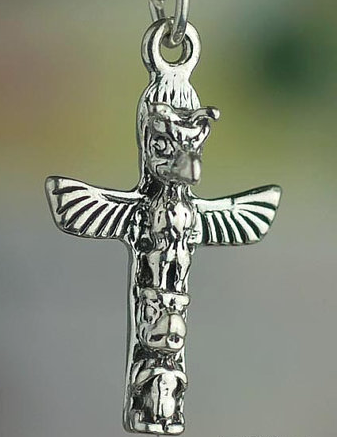
When I was about 14, far from those days of the wild rumpus, my father came into my room, held out a keychain charm in his palm and said, “This is the second keychain this magazine outfit has sent me, and since I already have one, I thought you might want it.”
I couldn’t believe it! My father was offering a bit of the noble adventure to me, and I was not going to let him down! I looked at this keychain, a figure of an eagle with spread wings atop other native symbols and totems, and while part of me thought,“Er, what the hell am I going to do with this?” the greater part of me understood, or rather hoped, that this meant he KNEW I could appreciate how special this native American keepsake, which had been manufactured in some factory in Oklahoma or maybe even China, really was. “Oh wow, Dad,” I said. “Thanks.” And I reverently took the keychain and put it on my desk. I had been anointed! I had been chosen! It mattered not that my eldest sister was out of the house in her first year of marriage, or that my next older sister was too caught up in her senior year of high school to be spending much time around the house when my father received this duplicate keychain, leaving me as the only viable recipient. In my young mind, he had chosen me as the one who would understand. And, not knowing, or ever knowing, what to do with it, I left it on my desk as proof that I could be trusted to carry the torch of idealism, romanticism and appreciation for the suffering and ultimate demise of that noble race.
About two years later, my father was in my room for one reason or another when he saw the keychain on my desk. “Wait a minute,” he muttered, and I thought what was coming next was a glowing acknowledgment of my ability to understand why the keychain was so important. But what came next instead was “Why did you take this out of my drawer?” When I explained, “No, Dad, you gave it to me, don’t you remember?” he came back with, “If you wanted to see it, you could have asked me. Why would you go into my drawer and take something that wasn’t yours?” I was hit by two utterly unrelated thoughts simultaneously, neither of which I could articulate very well, for my ability to communicate has always been compromised by the rush of emotions. One, my Dad apparently had no memory of having given me the keychain, of that moment in time when I thought we were bonding as elder and protégé, and two, he actually thought I would pry into his private space and go through his drawers. I didn’t know where to turn first, but my dad did the navigating for me. “How could you go into my drawer like that??” he demanded.
I protested fervently. I said, “Dad, I wouldn’t go into your drawer. You gave it to me, don’t you remember?” You gave it to me!”
“No, I wouldn’t have given it to you,” he said, apparently having lost all memory of the arrival of a duplicate that would enable him to do just that. “And I could understand if you wanted to see it, but you should have come to me and not just taken it from my drawer.” A few more protests back and forth, and I had become a crying sack on my bed. There were very unsettling things going on. My father had no functioning memory! Either that, or he did not attach the least little bit of significance to the moment, making it easily forgotten. He thought I was capable of sneaky, petty thievery! I wasn’t quite sure which upset me more, but I suppose the indictment of my character won out.
As I lay there, a shuddering and weeping heap, he stormed off to his room with the keychain he had snatched from my desk, intending to put it in its rightful place. When he opened his drawer, I heard from the other room a faint, “Oh.” He saw his original lying there, unmoved.
And what happened next was also very upsetting, although not unexpected. My father came to my door and gruffly, with just the barest bit of sheepishness, said, “I’m sorry. Do you hear me, I’m sorry, ok?” There would be no hugs, no scooping, no lamentations of remorse for having hurt me so. I lay on my bed gutted and bereft until after about 20 minutes, when I picked myself up and continued my life. Despite my anger and hurt, I did not return the keychain. I did not chuck it in the garbage. I suppose I hoped it would be cleansed with time and become once again a symbol of my father’s faith in me.
Another two years later, I was visiting from college, and my father, having come into my room to tell me one thing or another spied the keychain. I kid you not, this is what happened: he said, “Wait a minute… this is mine. Why did you take it?” And the whole thing played out again in miserable inevitability. As a young adult, with greater understanding of the world generally and of my father more specifically, this time I took it in with as much horror as sorrow. My father did not remember having hurt me so, just two years ago. He did not remember discovering the original keychain safely in his drawer. He did not remember me laying on my bed, a quivering, sobbing girl. And, bonus, he still thought me capable of going into his drawers and taking something without asking. This time, my concern for his swiss cheese memory, and what it might mean about his health or ability to learn, won out, just barely, over my hurt feelings. There was no sobbing. Instead, I found my voice and said, “Dad, oh my god, don’t you remember we had this whole conversation before? Don’t you remember how you accused me of taking your keychain and upset me and then you found yours in your drawer and apologized?” And in the face of his continued repetition about how wrong it was for me to go into his drawer, I held fast and spoke like a college freshman. “Dad, you’re upsetting me, wrongfully accusing me, and I advise you to stop because otherwise you’re going to feel bad and foolish in a few minutes!” Despite the surety and relative calm in my voice there was no listening, no consideration of this alternative possibility, no heeding of my warning. My mother had caught on to what was happening this time, and called up the stairs, “Stanley! Listen to what your daughter is saying!”
But he was not taking in the information. He almost never took in the information.
It was why he couldn’t know that I was not the sort to go snooping in his drawer or take his treasures. It was why he couldn’t know I had so achingly believed his gift was a special moment of initiation into the armchair adventure club. It was why he could not accept more than two seconds of a hug or engage in dialogue. It was why, when he eventually made his way once again to his drawer and found the keychain occupying its usual spot, he again did not express profound regret for having maligned me or having ignored my protestations.
I understood like I had never understood before. My father was passionate, vibrant, a storyteller, a dreamer, heroic in his own unflagging commitment to move forward, to provide for his family in a dangerous job that wore him down little by little… and I adored him. But I’d never get in. I’d never have the relationship with him that I truly wanted.
Twenty-four years later, on the day of the evening my father died, he lay still and silent on his bed, with closed eyes. I sat next to him. I caressed his face, able to do so for the first and last time in my life, and told him how much I loved him. Without knowing whether he could even hear me, I told him how I reenacted all his horseplay and recitations I so loved as a child with my own children, and would again with my grandchildren. I told him how he lived in me, in all of us. How I could always feel his love through the things he did for us, his constancy, and the way he beamed with pleasure and contentment for his family. How much he had always meant to me. I clasped his hand and kissed his forehead. Did I get in at that final moment? I will never know for sure, but it was my most undefended and truest offering nevertheless, for the man who had the biggest impact on my life, for good and bad, who offered me so much, and who I miss every single day.
I recently realized that my lifetime struggles with singing mirror exactly my lifetime struggles with self-acceptance and self-expression. What a cliché.
saved from my-diy-crafts-tuts/.blogspot.com
From the age of 5 or 6, singing was a source of joy, of wings for me. Apparently, my rendition at the age of 6 of My Favorite Things, from The Sound of Music was notable enough that my camp counselor pulled over some of her counselor friends for a repeat performance. But just as I was always scanning my family, friends and peers for cues that I wasn’t quite up to par, I was also always very sensitive to any negative criticism about my singing, and it always trumped whatever genuine smiles I also sometimes elicited. At my Bat Mitzvah, one of my 13 year old guests told me after the ceremony that the Kiddush was not meant to be sung with vibrato. Not ever having had a voice lesson, (or even really understanding what vibrato was) whatever vibrato I had was naturally present, but apparently that was a bad thing. It didn’t help that during my high school years the choral director was an ornery old man with a bad temper and no business working with students. He called me out once in front of the entire choir for singing nasally. He had me sing the phrase “Christe eleison” over and over, slamming his baton each time while he mocked me with an excessively nasal rendition, but never bothering to explain to me how to open the sound. Mercifully, after the third time, I magically, and without any understanding of what I was doing differently, landed on an a clear resonant sound, and he actually raised his arms and proclaimed “Hallelujah!” I understood, of course, that everyone’s mortification was not due to my nasal singing, but due to the dreadful awareness that this could have just as easily been them being humiliated. But I also understood that there was something pathetic, inferior, about my singing. I doubted it constantly.
The problem was, of course, I cared too much. Singing made me soar. It gave me a means to express my heart, my understanding of pain, love, sauciness, peace, and confusion. And somehow, it also became an offering of myself, so that any shortcomings or rejections were a dagger into my own breast.
borzui.tumblr.com Alireza Borzui
I sought voice lessons with extremely unqualified people, who taught me no technique whatsoever, and was consistently placed in the second soprano or even alto sections of choirs, due to the vocal strain I’d exhibit whenever I tried to go into the soprano range. The problem with this was that I had no strength in the alto range either, and so, with a weak sound, limited range and no understanding of my abilities, I lamely persisted, trying to achieve flight, still sensing just out of reach a joy like no other, and yet also feeling clipped, inadequate, and confused as well. In other words, singing became a very emotionally fraught activity for me. A minefield. I was as sensitive and wounded as I was determined.
For a few years, I seemed to find my place. I sang with an a cappella group in college, doing standards with complex harmonies. My group, The Chattertocks, had an old-fashioned sound, and provided a home for my particular kind of singing, gentle and sweet. As my confidence grew, a few friends of mine noticed and actually told me that I had a beautiful voice, making me happier than they could ever imagine. But once I graduated from college and went into the larger world, my singing tapered off dramatically. I had none of the training or technique for classical singing, the only kind I found available for amateurs, and a short stint with a chamber choir was nothing but a continual fight for my life. In one strange moment, the conductor pointed out to the entire group how I was the only one on my part who consistently came in at the proper time, and how this should shame them all since I the weakest at sight reading and had the least musicianship of the bunch. Yikes.
Then two developments occurred that contributed to my shutting down. One was that my new husband didn’t seem to enjoy my singing very much. He told me fairly early on in our relationship that when I dreamily sang standards to myself in the car in his presence it was a presumptuous imposition and he’d prefer it if I stopped. The other was that my daughter began singing at the age of 4 and had the voice of an angel. Many years later she told me that it was my singing to her at night that instilled a love of singing in her own heart, but all I could see was that she was a young and vulnerable little girl whose only area of unquestionable confidence was her lovely voice. My focus shifted almost completely to celebration of her unfettered expression. As she grew and faced the painful challenges from being a wonderfully peculiar outlier on the bell curve of uniformity, her singing was something that called to everyone, awkward outliers and popular middlings alike. Even the most scornful peers and parents were moved and had to grant her this acknowledgment – she had a beautiful instrument and naturally knew how to play it like a master. I was so happy for her; she got everything I ever wanted for myself–people to feel something when she sang – and it made her happy as well. I encouraged immediately her interest in private voice lessons, and to this day cannot recall whether that interest generated from a seed planted by her middle school chorus teacher, came to my daughter on its own out of her love of singing, or was all but assured by my constant praise of her voice, and the beaming smile on my face only and barely kept in check by my desire to ensure that my dear girl wouldn’t forget how to remain humble. I never risked diminishing her by conveying that I thought my voice came anywhere near hers, and indeed I never believed that it did. And I daresay, she grew to become as confident in her sound as she was in her face, the other possession of hers that stopped people in their tracks. Which is to say, she became vain. And I was helpless to curb it because I knew she was right. Her own high opinion of her voice was the truth. She was that good. But her vanity and her impatience with lesser practitioners led her to criticize my occasional forays into song and to point out where she could do a better job. It was a one-two punch: Keep your own bird’s song quiet so as not to detract from your child’s, and then hear her chide you for your failings in voice. The vulnerability and honesty in my voice – the expression woven into the notes of my love for her, or whatever particular emotion I dared offer- did not seem to affect her. She heard only the uneven support, the slight wobbling, the occasional sharp or the collapse of the palette.
So, with my less than enthusiastic husband and virtuoso daughter, I stayed more or less silent for over 20 years.
found at http://goingoutsidethebox.tumblr.com/post/14320430113/shyness Endless Downstairs
Then about 5 years ago things began to change. One night at synagogue services I was approached by the conductor of the choir and the lead cantorial soloist. To my secret delight, the conductor told me that the soloist had heard my voice, having been standing close to where I sat, and had gone to directly to her afterward to tell her that the choir should recruit me. I was all at once happy beyond reasoning and also humbled, for the soloist who pronounced this had a beautiful voice indeed. The next thing I knew, with my children grown enough for me to make the time for rehearsals and services, I was in the choir. That led me to me sitting at one of the choir services near a woman I knew loosely from various activities at the synagogue. When we talked about what led each of us to the choir this woman mentioned she was getting voice lessons from someone she recommended highly, and she encouraged me to think about getting lessons as well, if I were seriously interested in reviving my singing. And so I called the voice teacher and began private lessons. These things don’t happen by accident. I must have really wanted to sing.
Over 5 years later, I am still studying with the same teacher. This wonderful woman, a professional singer and cantor, trained at the best music schools in the country, immediately understood things about my voice that no one else seemed to: I didn’t know how to use it and I was blocked. She helped me unlock an entire additional octave in the soprano range, where I actually belonged, simply by patiently and kindly showing me how to let go of my tightened tensed throat and jaw and my deep-rooted fear. At first, at recitals, I was so afraid to sing in front of others that my heart palpitated and I grew white as a sheet. But I persevered. I persevered without little more than an extracted and somewhat strained compliment from my husband or a careful remark from my daughter, encouraging but with the spectre of all the things she wasn’t saying (and let me know without words that she wasn’t). I stopped asking them to attend my recitals and chose to believe my teacher’s insistence that I had a gift to give others. I just needed to accept it for what it was and use it how it was meant to be used, instead of trying to emulate or compare myself to other singers and believing always that I fell short. My dear sisters would occasionally come to hear me sing, smiling and silent but always nodding, fully present and encouraging for the earnest and clearly important struggle, even while they perhaps wished I wasn’t quite so invested and therefore so easily crushed, and even though they might have been hard-pressed, if someone asked them, why it was so painfully important to me. And over the years, little by little I could sing with less and less of the constriction I had always brought. I began asking for, and receiving parts in choir songs. I was asked to sing at my friend’s occasional religious celebrations in her home for the Jewish holidays of Sukkot, Chanukah and Shavuot, and listeners would approach me afterward to tell my how lovely my singing was. The conductor of the synagogue choir invited me to join an elite women’s choir she directed, and the next thing I knew, I was challenging myself and enjoying the stretch for works by Handel, Thompson, and Rachmaninoff. And slowly, ever so slowly, I grew to appreciate that I did have something others enjoyed. A sweetness, an old-fashioned yearning that carried my heart across, and they began telling me that I moved them. They did not focus on the technical failures, the occasional dropped support or forward sounding note. They focused on what I could do for them, and, sure enough, that’s what I began to focus on as well.
The final breakthrough came to me about a year ago. It dawned on me that when I let go completely of the fear, I indeed connected – both with my voice and with the audience. When it became about them instead of about me, I was freed. I was able to stop worrying about all that I couldn’t do, all that my mistakes revealed about my inadequacies, and just feel that sense of joy that comes from laying it all out there and, becoming a vessel for the listeners to willingly sip from. I could see them clutch at their hearts or mist up. And the more I saw their honest and receiving reactions, the more comfortable I was revealing my voice. The emotion, the vulnerability, the aching. It wasn’t a frightened plea for acceptance anymore; it was a brave gift. People enjoy singers and songs because they express baldly and without abashment all the emotions we feel constrained from expressing ourselves. When listening to a singer communicate a broken heart, or confusion, or flirtation, or over the moon love, people lose themselves and allow themselves to feel what they otherwise might disguise during actual communication. Once I understood that, once I understood that most people are just as constricted and afraid as I had always been, I could feel more at ease revealing not just my voice but who I am.
borzui.tumblr.com Alireza Borzui
For this opening up of my voice paralleled in time my slow but insistent opening up (or perhaps reopening) of my nature. And the more I relaxed and revealed without embarrassment that true nature –my giggling, my honest appraisals of what was being said or what I was observing, my desire for friendship or my off-beat sensibilities – the more it seemed that people reacted favorably. More favorably, it turns out, than they did when I tried to blend, tried to remain unseen, smooth and flawless. I discovered that far from being alone in my pained self-thwarting, I was in a sea of people who stay muted because they, too, are afraid to be found wanting. They hang back not because they don’t like warmth and playfulness, but because they don’t want to be branded foolish or undignified or weak. And when I offer myself without nervousness, without dread of rejection, without standing there like a mirror that calls attention to the fears in all of us, it puts them at ease and they respond.
I’ve heard time and again that singing is one of the most vulnerable activities one can do, and, for me at least, that is true. So is being one’s self. And though this journey to my true voice was very long and painful, I don’t regret the time it took or all the misgivings.
pinterest.com, pinned by Anne Krüger
I am instead just so happy to take a deep breath and know that I’ve found it.
My father announced this at the dinner table one day, after one discussion led to another, and ultimately to Aunt Betty and Uncle Gene. My father, Stanley, was a man of few words, except when he was telling a story. When he was telling a story, he was always animated and dramatic. Enthralling, really. But when it came to matters of personal relations, he spoke in short sentences. Sentences that weren’t always direct, but were simple and gruff, and contained all of his otherwise unexpressed heart. “I was the tortoise,” was all we’d get, but it was enough. Everything I had observed growing up told me that Aunt Betty, Uncle Gene and their offspring were hares, and we were tortoises.
Aunt Betty had been a beauty in her youth, and was pampered and adorned just enough to fetch a prize husband, which she did. Uncle Gene had piercing good looks and an animal air, and was a college graduate poised to “climb the ladder.” When I became consistently conscious of him, he had already become an extremely successful executive, a “six figure man” in the late nineteen sixties, of what company or in what business my little six or seven year old self never understood, but all the rewards of which were easy enough for me to grasp. Aunt Betty wore furs, large gemstones and outfits no one else wore, except in glamour magazines or on television. Uncle Gene wore polo shirts, checked blazers, and pinkie rings. He had the trapped energy of someone with some place more important to be. He spoke even less than my father, and, when he did, with far more menace. His yellow eyes, black hair, which was all over his arms, at the opening of his collar, even in his ears, and his rumbling voice, used so rarely and always in short bursts, made him seem always ready to pounce, like some kind of hairy, full-bodied raptor. I had as little to do with him as possible, and he seemed glad of it.
My father, though moody and sometimes brusque, was, I was later to understand, the softest member in his family growing up. This, and his lackluster energy to make something remarkable of himself were the two strikes against him. Since he “wasn’t college material,” the next best thing was a job with a handsome uniform, authority and a pension. He became a cop. And as he was an extremely good looking and a jaunty, Bogart-esque fellow, that handsome uniform served him well when he approached a pretty, caring, demure and capable woman, my mother, who, to her discredit, was the daughter of immigrants. My father’s mother, Gussie, or “Gus” for short, was herself an immigrant, but it didn’t count somehow because she was born on the boat coming over. She had not a lick of an Eastern European accent and fancied herself a woman of the times. And while her first husband (an immigrant) killed himself during the Depression and left her a struggling widow with two young kids to feed, within 2 years time she was remarried to a successful dentist, living in a splendid Grand Concourse apartment, with sunken living room, dining room, eat in kitchen, and two large bedrooms. Her second husband Seymour was born in this country, the son of furriers. Gus and Seymour lived a very comfortable life, a steep rise from the small Harlem tenement where Gus lived with her two children, and Betty and Gene surpassed them. So when my father brought home the soft spoken and unassuming daughter of an immigrant seamstress, Gus looked her up and down, told her that she would be joining a family of a certain caliber and said “I hope you can live up to it.”
Aunt Betty and Uncle Gene invited us to attend a couple of the swank parties they threw at the Spindle Top, a private club and restaurant at the top of a New York City building. My sisters and I were always dressed in our best clothes, and warned to behave like little ladies. What this meant for me was that for the 3 hours or so that we were there I said hardly a word, and just stayed to the outer edges of the scene taking it in with big eyes. I remember, once, Uncle Gene, loosened by whiskey and the satisfaction of success, gave some kind of short toast with wide sweeping gestures, and Aunt Betty floated from guest to guest wearing a white turban that matched her striking white dress. I don’t know if she ever spoke to my sisters, who were older and suitable playmates for my cousins, but she never said a word to me in those years. We would visit them at their homes in Morris Plains, New Jersey and Natick, Massachusetts, often greeted by the barking and highly temperamental “Thor,” a snarling German Short-haired Pointer, usually on a chain just short enough to keep him from actually reaching us but long enough to make it frightfully questionable every time, and then ushered into custom homes with chic décor and noticeable amounts of purple and navy blue. By contrast, we lived in a development where all the homes were virtually identical. Our downstairs floors were pressed linoleum, and something that wasn’t quite wood paneled our family room walls. And yet, we all felt like it was a palace. Our wonderful claim to membership in a thriving suburban town and a huge change from the compact Bronx apartment where we had lived before. It was a home of our own, warm and familiar, just large enough for my sisters and I each to have our own bedrooms, and to find, inside and out, places of absolute solitude to dream.
Though my parents never said as much, I understood that we were the humble cousins in the story. I don’t know if my aunt and uncle saw my mother and father’s quiet nodding and expressions of interest as proper humility, but I saw them for what they were: acts of graciousness. For I was pretty sure that Aunt Betty and Uncle Gene weren’t very nice. They’d peer at me as though I was something to be tolerated, as though the entire visit was something to be tolerated, and, somehow, I felt that my parents knew it, knew that Betty and Gene weren’t very nice and believed they were better than Betty’s uncultured and underachieving brother and his quaint but suitable wife. But my parents pretended otherwise. Everyone was pretending. Aunt Betty and Uncle Gene pretended that that were happy to be there, and my parents pretended they were happy to host them. I watched my parents, who had no use for luxury, who would have just like to have had more breathing space financially, and perhaps a safer and less soul depleting job for my father, attend to any and all of Betty’s commentary, opinions and narratives about good connections, good taste, sophisticated circles and exotic cruises with patience, and kind, if feigned interest. I listened as my mother punctuated Betty’s narrative with the required utterances.
One day, we learned the bad news that Uncle Gene had lost his job in the economic recession. As a man in his 50’s so high on the ladder, we were told, he was having difficulty finding anything remotely like his previous position. It seemed inconceivable to me that anyone would have had the nerve to turn Uncle Gene down; he was that scary. My sisters and I listened solemnly to our mother’s updates: Aunt Betty had to sell this and that piece of jewelry, and Uncle Gene had to take a job beneath him, selling cheap merchandise from China. On a couple of occasions, Aunt Betty came to our house, bringing with her Benetton sweaters, French perfumes and other items, and I watched as she lay things out for my mother’s inspection, explaining the quality and assuring her that $25 for this or that was a bargain. I was older then, and sat in on the proceedings as an additional prospective buyer, gauging my mother’s assessment of whether something was worth buying or would actually be useful, even though we had little cash to spare, and taking my cues from her. And so, after stealing a glance at my mom, and seeing the, “Yes, that would be all right” face, I’d say, “I’d like that, Mom.” And the deal would be struck.
In the many, many years that followed, my father would occasionally give his sister money outright, as any loving and decent sibling would do. Even if he had been disinclined, and I’m pretty sure he wasn’t, my grandmother made sure to remind him, “That’s what a brother does!” A man who at his retirement age never cleared 30,000 dollars salary, and who never received one generous gesture from his sister when she and her husband were living large, gave his sister money to get by, and they never spoke of it. Nor did any of us, for my mother explained the humiliation for my aunt and uncle, to be the poor, dependent relations – a humiliation that did nothing to soften them up or make them take much interest in us. Betty referred to me as Little Lisa, and I was pretty sure she had forgotten my actual, name, Elisa, if she ever knew it. Gene never addressed me, except once at the lunch following my grandfather’s funeral when he saw me watching him put his napkin on his coffee saucer and explained to me that it was a technique to absorb any possible spillage and thereby prevent any drips of coffee on his shirt. No, wait, there was also the time when I was five and he drove my mother and me to a local clinic after I split my chin open falling on the hard cement in their basement during a visit. As the doctor stuck me with the anesthetizing needle and I screamed and wailed, Gene burst out with “Oh come on! Act like a big girl!” (I remember thinking in response, “I’m five.”) Aunt Betty’s comments to me were limited to those absolutely required by circumstance. We ran into trouble when a specific utterance wasn’t indicated, and where, for others, some ease or warmth would have normally filled the space. On one occasion where we found ourselves together at the sinks in the ladies’ room of a restaurant, she said, “You shouldn’t wear your hair long like that. Your face is too big for it.” Then she dried her hands and left.
Our relationships with Betty and Gene’s offspring were also less than ideal. In the early years, Janice and Glenn seemed to enjoy my older sisters, with whom they could play games and have adventures roaming the neighborhood. I was too young to be of interest, and, worse, I was ridiculed and excluded by Janice and Glenn wherever possible- a quiet, sensitive mouse of a little girl who was a tag-along, detracted from their cool and needed looking after. My sisters, each a bit younger than Janice and Glen, respectively, were relieved to be considered worthy and I envied them, wanting to be worthy as well. As the years went by, however, whatever connection there was between the four older cousins waned, and once Gene lost his job the full family visits ceased altogether. Betty came by herself, when she did come, and we were never invited to their home again. My mother explained this was because Betty would not be able to afford to host us in the way she would have liked.
Still, the past had its hold on me. I wanted so badly to have an aunt who actually cared about me, and with whom I could find some common ground. In my mid-twenties, I called her up and asked if I could drive out to visit with her. She accepted, and out to New Jersey I went. For hours we chatted, drank coffee and even shared her cigarettes, something I did in a desperate attempt to connect with her, and which was particularly bizarre seeing as how she had recently been diagnosed with emphysema. I put on my best impression of a hard-boiled person, making small talk peppered with cynical observations. It must have worked because she actually expressed some surprise that I turned out to be so interesting, and she insisted I stay for dinner. The elation I felt at her acknowledgment was short-lived, and in retrospect stung as pathetic. I had achieved a false stamp of acceptance, without my aunt having any idea of who I actually was. I never saw her again. She did not want to be seen at my wedding with a portable oxygen tank and died not long after.
Misfortune in that family continued. My cousin Glen had once been a handsome little devil, who knew how to charm my grandma, and get away with everything, until Gene sent him off to a military school to teach him discipline. It was a failed experiment. Glen had the misfortune of being a soft-hearted boy trying to disguise himself as a hard-ass to survive in his own family, and military school only worsened his hell. He did manage to marry someone he loved deeply, and work as an electrician for many years. My parents, with the happy hope that Glen at least would be close with us, even hired him whenever they needed an electrician. But Glen carried his own demons. He smoked like a furnace and put impulse purchases and drugs before his lovely wife and children. His wife left him, and he left us, after my father had to turn down his request for money. My father turned Glen down, not because he refused to support Glen, but because he had already exhausted his small savings helping Glen out once before. And so we lost Glen, who after that had nothing further to do with us, whether through indignation or shame, and who died alone from emphysema and lung cancer a few years later.”
Betty was gone, Glen was gone, Janice was gone, to California to start a new life, and Gene was living with a woman whom we’d never meet and only vaguely knew of. My grandmother had died shortly after Betty’s death, which was such a heavy blow to her, and was not alive to see Glenn follow too soon. We had no contact with Gene after that, and learned of his passing after the fact, each of us filled with a wordless sorrow.
So, when my dad declared, “I was the tortoise” and then glanced around the table to see if we got it, we quietly nodded. He had reached the finish line, without fanfare, and, yes, with a small measure of satisfaction but, more importantly, with good will and a soft heart. We had all won, really. We were all tortoises. We had family, love, hard work, steady, modest achievement, and gratitude. Everything that could be good about people I learned from my watching my parents make that slow and ultimately far-reaching journey together. But, now, some 25 or so years later, I think that maybe my father wasn’t talking about a race against his sister’s family or even about a race at all. Maybe he was finally free to reject out loud the voices in his head telling him that anyone who wasn’t a go-getter, anyone who delighted in simple things, who wasted time daydreaming about fantastic adventures he didn’t actually want for himself, who didn’t “climb the ladder” and who was content to end each day at home with his family and his books, was a bit of a stooge. Maybe he was trying to tell us that it’s not even about whether fast and flashy are better. It’s about where you’re heading that matters.
Over my life a particular memory visited me from time to time. Whenever it came, I always gave it its due attention. But it seemed to serve no purpose other than replaying a long ago hurt and, despite the gentler perspective granted with age and experience, always triggered the same painful mix of bio-chemicals that squirted forth when it actually happened so many years ago.
Of late, the memory began popping up more frequently.
At first, I wasn’t even wondering why. Then, when it finally dawned on me that the same episode was running again and again on my brain’s T.V. screen, I began to suspect that the constant replay was a demand to be noticed. Like a loud megaphone: Hey, dummy! Does this remind you of anything?
It was a time in my life when I was a real pain in the ass. Somewhere between the ages of 8 and 11, I was experiencing the fallout from being taken away from a life that worked for me. In that wonderful former life in the Bronx, my older sister Michele played with me more than she socialized with our eldest sister Renee. In that life, my best friend lived directly across the hall from me, and was available most of the time for companionship. In that life, my mother was home most of the time; and, when she did go out without me, I had the security of my best friend’s mom across the hall, or or my grandmother (who lived two floors below us) and never once felt alone. But in this new suburban life I was now in, I hadn’t made any real friends yet, my companionable sister had crossed over and was now a fellow traveler of our eldest sister, and my mother worked as a teacher. Little did I know that day when we were all so proud of her for graduating and huddled together, smiling for the camera to mark the occasion, that I should have been singing a dirge. For my mother of course did the next logical thing, which was to get a job as a teacher. Not that it affected me during school hours. But, after school, in place of my attentive, soft and patient mother, offering snacks and asking me about my day, there was a different mother. This one was stressed. A new teacher, preparing lessons for the next day. Working on her masters degree, and sometimes traveling into the city for evening classes, or spending yet more hours doing her assignments.
My father was also withdrawing. Not that he ever was the warm and cuddly type. He was a cop, and had to keep up his hard-boiled exterior. But when we lived in the Bronx, it was a few simple steps for him to come into the bedroom I shared with my sisters, to tell us some stories, make us laugh or sing to us. Now, we all inhabited our own separate rooms, up a flight of stairs, and my sisters were getting too old for that sort of thing anyway. And, too, he was facing his own wearying challenges. He was now commuting from the suburbs into a part of the Bronx that was getting scarier and more disassociated from that place where he grew up. The absence of any men who really could relate to him on any level in our upward striving suburban community, and the surreal and battering horror of traveling back and forth from dainty civilization to dystopia on a daily basis, caused him to retreat further into his world of books and pipe tobacco when he was home. And my sisters were off tittering about some shared secret knowledge or hanging out with their friends. I was no longer a cute diversion holding any interest for them, and my felt banishment filled me with resentment and longing.
From The Children’s Encyclopedia, by Arthur Mee. (London: The Education Company. Orig pub. as The Children’s Encyclopædia 1908), “Ideas” section, Volume I, p. 112.
The final loss, in a twisted turn of poor timing, I also was no longer my mother’s “warm little bundle.” This I learned when she started telling me all the time “Oh you used to be my warm little bundle!” As I was getting larger and losing what was left of my wide-eyed and sweet puppy features, it was not possible, had I even tried, to fool anyone into thinking I still needed slack for my hesitations and cluelessness. People expected me to get with the program, understand my responsibilities, stop expecting time made to soothe and redress my little hurts and disappointments.
One Sunday afternoon in particular I was sadder than usual. My sadness moved into broken-heartedness, and I felt strangely incapacitated, virtually listless. I became convinced that I had some sort of mysterious malady, which only a mother would understand, and certainly have the remedy for, if I could just muster up the energy to call for her, which I did. She was all the way downstairs, using up what free weekend time she had entertaining my Aunt Betty, and so I had to summon up quite a bit of energy for my call of “Mahhhhh-meeeeee!” to reach her. That I was in such a sorry state as to be required to use every last bit of my strength to make such an effort only made me that much more broken-hearted. Years later, I understood that what I wanted to see, what I ached to see, was my mother, coming up into the master bedroom (where my incapacitated little body lay), with a gentle reassuring face, soon to be stroking my hair and telling me that if only she could get ride of Aunt Betty she’d be there with me, taking care of me and making everything all right. What I got instead was a slightly exasperated mother, with firmly set lips, who was there to get to the bottom of why her then 9 year old thought she was incapable of walking down the stairs. When I told her that I wasn’t feeling well, she strode over, checked my forehead for heat and looked at me hard, trying to size up which reaction I deserved. I received the, “Well, just rest here and I’ll check on you later” response, which was far short of what I so desperately wanted. She went back down. I spent the next 15 to 20 minutes wondering what went wrong. Why didn’t I get the loving stroking of the hair and the reassurance that our bond remained intact despite all the demands on her time? And, convinced that I didn’t do a good enough job of conveying how broken-hearted I was, I decided as only a 9 year old can that the best way forward was to call her again, and this time really make sure she understood. Although this time I never got to say anything. As soon as I called out my even more plaintive “Mahhhhh-meeeeee!” I could hear Aunt Betty clucking her tongue about what a nuisance I was for my poor mother, and could almost see my mother’s face pained with exhaustion and embarrassment (for Aunt Betty made it clear always that she tolerated no such nonsense from her children). When she appeared at the bedroom door, having made the climb for the second time, someone even more removed from the mother I grieved for was there. I can’t remember what she said, but the words were irrelevant. Her angry expression and tone said it all. I was a burden, whiny, unreasonable and selfish. Something to deal with. Not a hurt little girl, her daughter, without words to express to her mother how alone she felt in her losses. In that moment, I understood fully and perhaps for the first time that my sweet childhood was truly over. I endured the moments of bitter reprimand that followed and said nothing more.
So why the increased frequency of replay? What was I hoping to find in that memory? As early as young adulthood, I had figured out that my mother was in an almost impossible situation, working full time, running our home and raising her girls all without much input or support from my father. I had already worked out that my father was steeling his soft and poetic nature every day for the work of a mercenary, patrolling an unsafe community that was no longer his own. I had already grown to understand that my sisters were just experiencing their own lives with all the complications and transitions that adolescence brings. I had nothing more to learn from that memory, or so I thought.
My own daughter, now 21, has had her own difficult journey. As the first born, she had no older sibling to shelter her when she first entered the world outside of her mother’s arms. She would return home from a difficult day at school to find me, formerly unflagging in my soothing attention, now preoccupied with her younger brother, or in the middle of house chores, or chafing against something gone wrong in my life that I hadn’t put to words or even understood but which only served to unnerve her all the more.
Dreamscape by wbsloan on Flickr
And at those times, when my daughter needed me, I’d deliver a sort of patched together, half-hearted exasperated offering of my own. Sometimes I even lost my patience with her, when all she really wanted was for me to scoop her up and tell her that she was loved, and special, and that I was glad to have her home. Instead, she knew that part of me wished she was still at school, so I could catch my breath, and have just that bit more peace, and maybe somehow get grounded back to who I was. When she came home from her own battles each day, she was greeted, not by the loving, tender mother she wanted, but by the same overwrought mother, with strained smile and limited patience, that I had greeted. The same mother who hoped to fix her daughter’s unhappiness by suggesting better ways to have handled something, as though that would stem the onslaught of painful experiences. The same mother who felt guilty and helpless whenever she witnessed her child’s pain, and never said the right thing. How is it that I determined to do things so differently from my mother, so that my children would not feel the same rejections and misunderstanding I had, but ended up failing so completely in that regard?
Brave and determined soul that she is, my daughter set herself to exorcising all causes for resentments from our relationship while she was still a teenager. After years of less effective confrontations, at 21 she finally developed the language to convey (and I finally refined my listening enough to receive) the simple truth that she had felt like a burden to me. She felt she was the problem child that made everything harder for me… for us. She confessed it to me one night, one night of wonderful, vulnerable, almost scary bonding and revelation. And there it was, at the ready, finally able to reveal why it had been plaguing me: that memory of my own mother, angry with me for needing her when she was barely hanging on herself, and resentful for not knowing how to fix it all, that aching in me and in herself. And I whispered to my darling daughter, “I’m so sorry, sweetheart. I’m so sorry that I didn’t simply hold you and tell you I loved you, that everything would be okay. That all of it mattered, yes, but that none of it mattered now that you were in my arms.” How long would that have taken? Ten minutes? Ten minutes to soothe a child facing the world without her mother. A child without sheltering siblings and with no trusted friends yet. Why couldn’t I just have simply hugged her, without judgment or the desperate wish that all her problems, that she, the way she was, would just change into something else that would make my life easier? Instead, I contributed to a pattern that would haunt us for years: the lonely and misfit daughter and the overwhelmed, worried and ineffectual mother. I’d come to pick her up from a birthday party, with a dreading expression, expecting before being told that there had been some pain for her in the proceedings, some conflict that all the other children and moms couldn’t understand, or prevent, and wished would magically disappear; and instead of scooping her up and being on her side, I’d wish it would all disappear too. I wished she would just be easier. For my sake as well as hers.
So here is my atonement. To my daughter, for doing exactly what my own mother did, and what her mother did before her. For not wanting to acknowledge the legitimacy, the normalcy, and even the inevitability of the hurts a sensitive child feels when weaned from her mother’s side. For not wanting to explore my part in those hurts, making them worse by adding my own frustration, resentment, guilt and feelings of inadequacy as insult to injury. But my atonement also is to my mother. I atone for having judged her as not up to the task of understanding and comforting an angry, sad, lost child. It is a very difficult task, maybe impossible; I know that now. I atone for my high-handed thinking, when I became an adult, that I was big enough and wise enough to forgive her. There was nothing to forgive. She loved me, and my pain pained her. She was a wonderful, wonderful mother, all the more so in light of all she carried. I atone whole-heartedly, seeking her forgiveness for assessing her and finding her wanting, now understanding finally that all the love and best intentions, all the experiences and memories we swear we will bring to our own child-rearing, may not be enough to overcome the limitations and distortions hammered into us by whatever stressors and unspoken resentments are plaguing us at any given time in our adult lives.
The cycle of hurt between parent and child will continue, I suppose. I pray that my daughter will be able to break it should she have an unhappy child. And I hope in any event that my daughter too comes to understand that I loved her always, and that her pain pained me, and that I wish more than anything that I could redo some of those moments she remembers, bringing the perspective I have now, and taking the hurt away.
People of a certain age may remember that moment in 1984 when Sally Field won an Oscar for her performance in Places in the Heart. In her acceptance speech she was overcome with emotion. Barely but beautifully managing to remain coherent, she expressed her profound happiness and amazement that despite not having had an “orthodox” career (after all, she was Gidget and The Flying Nun), and wanting so much to be respected as a serious actress, she was now being recognized as such. Or, as she more succinctly put it: “…I can’t deny the fact that you like me! Right now, you like me!!” Immediately there were jokes on late night comedy shows, teasing remarks in the media, sniggering banter among the general public, all indicting poor Sally for being so unabashedly preoccupied, apparently, with whether people liked and respected her acting. “How embarrassing! How neurotic! How nakedly needy!” went the chatter, and all nodded in agreement. It became something of a meme, pre-internet, and even resurfaced nine years later in The Mask, a bit altered but still clearly a grotesque homage to the original, when Jim Carrey’s Loki character suddenly receives an Oscar in the midst of his violent encounter with the bad guys. Carrey tearfully and vehemently grasps the statuette and sobs, “You love me! You really love me!”
Even at the time of Sally Field’s speech, I remember feeling a bit peeved by all the ridicule, mainly because it was Sally Field for godssake and who doesn’t love her? So what if she gushed something that sounded a bit too self-revelatory when she accepted her Oscar? It was an unbridled moment of shock, joy and gratitude. Who can be poised under those circumstances? Oh wait, we can. At least, that’s the myth, the standard, the expectation we all accept as gospel. No matter what, don’t reveal uncertainty, insecurity, or a care of any kind for what people think of you or how you are coming across, for that is weakness. And what do we do when we see weakness? Mock it, cluck our tongues, or thank god we haven’t displayed it ourselves. We align ourselves, so we imagine, with the strong, the confident, the unconcerned.
Now, however, on the back end of my presumed 100 years of life, I realize keenly that the myth is its own form of weakness. To be so comfortable in your own skin that you are truly unconcerned with how you come across, so that you neither avoid nor pretend away displays of uncertainty, doubt, or even idiocy is the sign of real confidence. It is the deniers, the mockers who are the poseurs. Their derision highlights their fear of being caught in the act of not being self-assured. The people who actually know me best may understand that this is certainly what I’d like to believe, anyway, for they know or at least suspect that I’ve been preoccupied for a good chunk of my life with how I come across to others. Huzzah! I’m free from it now. Finally and irreversibly free from that concern, but oh, how it plagued me! And I daresay it plagues a lot of people who never admit their affliction or even fully understand that they have it.
I knew I was preoccupied with the judgment of others from an early age; I kept my head down as much as possible. I was quiet with my peers, constantly scanning for whom it was I needed to avoid, or not antagonize, or win over if I were to evade being found out as the strange, uncool, uncertain creature that I was. My first taste of blissful freedom from this preoccupation came at age 12. It was then that I went to sleep away camp. It was a rough and bumpy first 3 weeks. What everyone chalked up to homesickness was actually misery and fear from being among peers who might brand me a loser. It was a misery I experienced all through 4th, 5th and 6th grades, culminating in that summer at camp. I spent a good deal of time in the bunk of my 15 year old sister, sitting on her bed during free periods, learning macramé from the other girls in her bunk, or asking her to let me brush her hair (and surprisingly she did!). I never was so worshipful and doting and meek toward that particular sister as I was that summer, desperately subduing anything remotely pesky lest she banish me and I be cast adrift in the sea of my own bunkmates, all of whom seemed more self-assured, more popular, and more cool than I. Then, at the end of the third week, something extraordinary happened. I overheard two cute, adorable girls, whom everyone respected and admired, conversing about how nice I was! What happened was this: I was using the bathroom in the bunk when this girl Pam thought it would be funny to spy on me from above the divider. I was so surprised and mortified to have my private appointment with the toilet thus invaded, that I literally fell off the seat and cried out, resulting in a rush of girls to the scene. To my amazement, they started berating Pam for being so gross, so mean, so invasive, instead of laughing at me. In a dazed sort of aftershock from the whole affair, I wandered outside to the porch and sat down on a bench. Across the way were the two bunk darlings, Arlene and Mindy. I sat down just in time to hear Arlene say, “I really like Elisa, she’s so nice,” and Mindy answer, “Yeah, I really like her too, she’s so sweet.” They then looked up and saw me sitting there, and we all started laughing in sheepish embarrassment. Except I wasn’t just embarrassed. I was amazed, over the moon, astonished, delighted, so profoundly happy and confused. Could it be? These girls whose imprimatur of acceptance I could have only dreamed about actually enjoyed my presence? It was a seminal moment in my life. I transformed into a happy camper, literally, and proudly mixed in with my bunkmates as one of them. Camp became a place where I was free from the warfare of the cliques and popularity and meanness I witnessed back at elementary school, and it became so dear to me that I cried when it was time to leave. As I had been crying to my sister and my mother for the first 3 weeks about how I wanted to go home, this was somewhat perplexing to them, but nevertheless a huge relief for my mother who no doubt had been fluctuating between guilt and exasperation.
From that moment on the bunk porch, when I metaphorically clutched my own little award – I can’t deny, you like me! Right now, you LIKE me! – I developed greater ease, and a perspective on the wider world of social opportunity sufficiently broad enough to start looking for friends with whom I could connect. I stopped worrying about or trying to impress kids I really had nothing in common with and certainly didn’t genuinely respect. And in that effort I had wonderful success. I ended up having around me the most amazing authentic friends I could have hoped for. I was comfortable enough to be my goofy self. My more or less emotionally brave, honest, loyal, genuine, and caring self.
Then college happened, and once again I was thrown into a sea of young, uprooted and somewhat unsure and often posturing youth. My radar went back into primal overdrive. My information was distorted of course. I believed that everyone had someone to go to dinner with, everyone felt connected, everyone was cool, and everyone had a troupe from his or her freshman hall to rove with. Everyone, that is, except me. It never occurred to me that many others, if not most, had the same concerns of appearing easeful and smooth. And while, over the course of the four years, I slowly, slowly recovered from that setback and convinced myself I wasn’t the complete buffoon I feared, I never quite made it all the way back to that state of grace I found in high school among my dear, dear friends and family. And then, in a still somewhat overly self-editing and internally awkward state of mind, I unfortunately launched into law school and after that a corporate law firm (GAK!), a magnet for aggressive competitors and desperately posing associates who only know about half of what they pretend to know. Even the law partners, who must convince everyone and themselves that that are authorities, because verdicts or millions are at stake, know what they are doing only about two thirds of the time. I know this now, especially after having been married to one for a couple of decades. Not only that, I now understand that this is true of just about everybody. People can only do the best they can, and sometime they are doping it through like everyone else. (Except for blockheads who insist on things they know nothing about instead of actually opening up their minds and taking in information. Those jackasses only know what they are doing about a quarter of the time, if that.)
But back to my immersion in the larger adult world at the age of 25. In this toxic soup of competition, insecurity and posing, I floated. In a new city, far away from family and friends, I began the process of trying to swim, to find my authentic center all over again. Only this time, I didn’t make it anywhere near as far. Let’s just say I entered a prolonged period where I carried the fear of how I was coming across like a block of stone on my back. A fretful monitor in my brain carefully edited my choice of words in the nanoseconds before they came out of my mouth. It scrupulously screened my gestures and manners for anything remotely coarse, naïve, unworthy, insecure. I was consumed by insecurity over seeming insecure! I went over things that happened or that I said after the fact and shrank with mortification over how I could have been such a dolt. I met and married someone floating in that same toxic stew, and we moved to an affluent suburb of carefully practiced gentility, where we felt even more like poseurs. Where parents boasted about their genius children, and tried to appear nonchalant entering or living in huge country versions of mansions with extensive grounds. Where it was so easy to believe that everyone but you always remains assured, elegant and graceful, self-possessed in their movements and tone of voice, even behind closed doors.
What was it that freed me finally and irrevocably from all the dread and self-editing? Well, I do still edit myself somewhat, but these days my only filter is a desire to be kind. It took me until I was 52 to really, really understand that pretty much all of those overly self-assured people are full of shit, and that the truly, truly cool genuinely don’t care if they seem clueless, awkward, or temporarily needful. They are unembarrassed to seek approval or support. They know that everyone is unsure some of the time and it’s no big deal to admit it. I can’t be sure what it was that suddenly led me to open my eyes. To see and even hear the uncertainty and false bravado in so many people around me. To thrust off the expectations or standards of acquaintances and even friends who themselves are worried about the whispers and opinions of others. Maybe it was my utter exhaustion. Maybe it was the journey I went on to find out what it was I really cared about. Maybe it was watching my own children struggle with these same issues. I want them to know that the truly cool, ironically, are the very people who think nothing of proclaiming in moments of absolute joy and relief and gratitude, “You like me! And I’m so glad!!”
The final irony here is that once I was completely free from the worry of whether I was poised and likeable, whether I blended, I started putting others at ease. I started cracking more jokes, and making more honest or personal remarks. I started expressing my uncertainty about something in the most forthright way, and to my astonishment people responded with relief! With gratitude that I expressed something they also felt but didn’t want to admit! With unsolicited compliments about how natural, genuine and comfortable in my own skin I was! In short, they gave me awards, and in my mind I happily accepted them. You like me! You really like me! It was so freeing. So easy! I could be myself. And I wish I could tell her. I wish I could say, “Sally, you are my hero! You deserve an award! Not because you risked being so naked, but because you didn’t hesitate to consider it a risk at all.” If only I had understood way back then.



 We all went to bed at the same time. We all wore matching pajamas. We made up games that inevitably involved jumping from bed to bed, a feat made possible by the fact that the beds were only about eighteen inches apart if that. And on summer nights, we all saw the same twilit sky from our two open windows, felt the small, hopeful breeze stirring, and heard the summer sounds from the neighborhood floating up to us.