Recently, someone I know suggested that my last blog entry, “Message in a Bottle” was “oversharing.” He went on further to ask whether I wrote it to be stroked and praised as a person of great understanding. He stated his concern that it might indicate a form of vanity. This very same person had often expressed to me his wish that I could open up more readily to people other than the handful in my very closest circle and be utterly myself (outspoken, natural and unguarded).
I dismissed all validity to his remarks about vanity – I know the personal essay is an established art form, and that for centuries our civilization has been reading the personal thoughts, yearnings and epiphanies of writers – but they stung nevertheless. They stung because 1) I respect his opinion and care about his approval; and 2) I’m by nature inclined to question myself constantly (which is why I haven’t historically been fully at ease or fully myself, although I’ve been making great strides of late). Did I engage in vanity? I had to ask myself. And, because I’m still working to convince myself that my personality actually is a pretty good one, and that most of my actions and instincts are guided by purer motives, surely not one of the seven deadly sins, I had to think long and hard about it.
Starting with my very first blog post, every single time I hit “Publish” I have worried, “Is this too far? Is this too personal? Is this too exposed and does this reveal what a weirdo or overly sensitive person I am?” And after a minute or two, I calm my worry by remembering that this was why I began writing my blog in the first place. The real, real reason, beneath wanting to write, and wanting to find out if I could write well, I now understand was that I was giving myself my own sort of therapy for becoming emotionally brave and comfortable in my own skin. A total emersion therapy, like jumping into and swimming across the cold, old quarry lake.
One day, and I will never stop being grateful for that day, I found myself writing an essay, addressed to no one in particular, and, if that weren’t surprising enough, actually creating a blog to publish it. Who was this person going boldly where she had never gone before? I suspected I had things to say that would connect with people, and I gave a swift kick in the ass to that inner editor, who has lived in my head for most of my life, always telling me I best keep my mouth shut, that I was awkward, an irritant, someone who had to learn to blend and had nothing worthy to contribute. I will never forget the rush of fear, and the exhilaration when I overcame it and let my first work fly out. I will never forget it, for I experience it anew each and every time. Is this worthy? I ask, filled simultaneously with dread that it isn’t and astonishment that I sent it out anyway.
After doing this strange exercise several times I learned a few things, which you think would have enabled me to nix the dread, but no, I haven’t learned that particular lesson yet. I learned, though, that most people react well to my being so open. That they value my honesty, my proof that they are not alone in having similar feelings. They value the opportunity to think about something they hadn’t considered before, and a different perspective. And there developed a secondary reason for my blog, which has far overtaken the initial one. I write as an offering. I offer my experience, my growth and my mistakes for examination. I offer myself.
And every great artist, thinker, creator has done the same to one extent or another. Believe me, I humbly know I haven’t a fraction of their talents, but by golly I have their bravery, if not their unquestioning nerve. I tell myself, “this is worthy,” and I put it out there, quivering in my nakedness, praying that it is. Do I congratulate myself for that? You’re damned right I do.
The tale of Dr. Jekyll and Mr. Hyde is so much a part of our popular culture that virtually everyone knows its key premise, without ever having read it, or even knowing who wrote it (Robert Louis Stevenson). For some reason (I’m guessing insanity), Jekyll wants to segregate the selfish, depraved and conscience-free half of his nature from his altruistic, civil and dutiful side. He dreams of how wonderful it would be if each half could function without inhibition, free from the influence of the other. Sounds to me like a rationalization to let the dark side go nuts. Jekyll invents a potion to achieve the schism, the actual scientific means by which he accomplishes this left a mystery to the reader. After Jekyll drinks the foul brew, hideous, corporeal Hyde begins to roam the night. Unrestrained by the goodness and civility of Jekyll, Hyde not only degenerates into a murderous fiend, but becomes harder and harder to control. A cautionary tale, indeed.
Well, it turns out that I too have a “screw that!” conscience-free side to my personality, though thankfully she is neither villain nor murderous fiend. I have decided to call her “Estelle.” The most subversive thing Estelle ever did was to buy the loudly ticking antique pendulum clock that is now hanging just to the left of our family room television, despite knowing darn well that the men in the household didn’t want anything distracting from their view of whatever sports game or movie was on, let alone something that made noise and moved. She may also have had a hand in my apparently sudden decision, while accompanying my daughter to a piercing shop, to get a nose stud at age 52 (C’mon! You’ve wanted one for YEARS, you gutless suburbanite!), but I’m not sure about that one.
found at bokehphotography.uk.com
Estelle isn’t out to make trouble. She is just the morality-free, propriety-free, completely selfish truth teller who has finally learned how to jab her way forward to “keep things real.” She tells it like it is… loudly. Indeed, the longer I pretend not to hear her, the louder she gets. Like that ticking clock she insists “Oh yeah? Well here I am! Get used to it!” I first came to know her in the wee hours, when she’d awaken me in the dark, hoarsely whispering to me about how I’d been on autopilot for much of my adult life, navigating according to values or standards that never quite fit me. About how, as a result, the current configuration of my life was suffocating me. About how for years I’d been a pretender in my marriage, my own home, to my family and friends, trying to convince everyone and myself that I was happy.
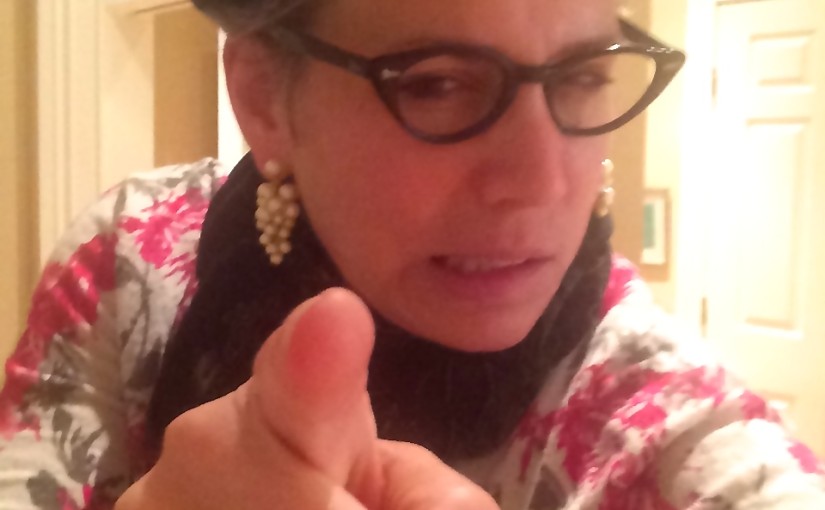
My inner truth-teller, Estelle
Naturally, at first, Estelle frightened me, and I tried to hush her up. But she wouldn’t relent. Estelle was the first one to tell me that there was no way I could pull off preppy, country club clothing. (With those bazooms and that unmistakably Semitic visage??) To flat out say that I’d never be friends with the women in my synagogue’s Sisterhood so why did I keep trying (You don’t even like them!!). To pester me into admitting out loud that I had developed somewhat of a drinking problem. Nothing gets by Estelle. Her inconvenient and sometimes painful truths are often disruptive, but they are always liberating, even if at times anti-social. For example, Estelle helps me understand that when I nagged everyone in my family not to eat potato chips from the bag, it was really just because I resented being the only one who cared about a clean sofa or being the one left with the broken, saliva encrusted detritus at the bottom of the bag, but now that I have the house to myself, I too can happily jam my hand into the bag, cram chips in my mouth and lick my fingers, all while watching Dawn of the Planet of the Apes at an unsustainably loud volume on the surround sound. Estelle says, “This is awesome!”
But while I am thankful that Estelle keeps me honest and helps me cast off the “supposed to’s” that dull, dishearten or, worse, crush me, I have realized that, of course, Stevenson is right. Even when it comes to my loud-no-bullshit-can’t-help-but-love-her Estelle, free reign would be a disaster. She must remain an internal force, a passenger on my crowded bus of characters. There will be no potion taking for me. For though she keeps the constructs of others from making me miserable, Estelle unleashed would be a misery to everyone else. She is blunt, inconsiderate, obnoxious, unintentionally but unsparingly hurtful. I learned this when, over the last two years or so she began taking more liberties, perhaps giddy with her vindication that she had been right about so many things.
On one such occasion, my daughter and I had just concluded a long, overwrought argument in a restaurant, my husband and son trying desperately to act like they weren’t with us, even though we were all at the same table. It finally seemed like my family would be able to move on to a nice dinner; peace and harmony had been thrown up in the air, but were once again beginning to settle on us like a blanket. Nevertheless, upon hearing the last half-hearted diss my daughter flung at me, which ordinarily I would have easily ignored for the greater good, Estelle came roaring forth. I found myself actually snorting and loudly muttering, in the most unmotherly way imaginable, “Give me a break.” Fortunately, all at the table, including my daughter, were so astonished at this aberration, the complete abandon of such a declaration, its sheer reckless nerve, that everyone started laughing and dinner was saved. But in another surfacing of Estelle, I wasn’t so lucky. My son was fervently and sincerely, if a just a wee bit sanctimoniously, trying to explain why something had mattered to him, and Estelle burst free, changing my aspect so completely that she was virtually corporeal like Hyde. Momentarily whisking me to some far away place, where she apparently knew I’d secretly rather be, she blithely sighed, “Blah, Blah, Blah,” in an absent-minded, sing song kind of way. My son and I were both shocked. We had just seen and heard something or someone that wasn’t at all the entity usually in charge, and this force, whatever it was, was completely unconcerned with his feelings. Estelle, it seems, doesn’t give a good goddamn about anyone but me. My son told me it was probably the coldest, and therefore the most hurtful thing I had ever done or said to him, and I could see why. Yow.
Poor Estelle! She only wants me to remain true to myself. She champions my causes. But she has indeed led me to hurt people I love when I’ve let her steer the bus. She takes me to the other extreme. So, to actually remain true to myself, my entire self, I’ll take her under advisement, but negotiate compromise and find my center. Thanks Estelle! Now, will you shut up?
My father and I had a secret ritual, which began before I can remember, and finally came to an end, as was right and necessary, when I was about 11 or 12. I stumbled upon the ritual; it was of my making, but my father was complicit, and I like to believe he valued it as much as I did. It was how he told me he loved me, other than his occasional grabbing of my upper arms and saying through clenched teeth “Flesh of my flesh! Blood of my blood! BONE OF MY BONE!” while shaking me with just enough force and with his eyes gleaming to let me know it was a game. It was indeed better than his parentally crazed shaking, because it also showed me that he trusted me to see his limitations. His vulnerabilities. His steady and sure plodding. His humanity. And it was how I told him that I adored him more than I feared him, which was plenty.
I understood from about the age of 4 or 5 that my father was a cop. Not one of those college educated officers who now fill the ranks of New York’s Finest and put in just enough time to earn a pension and become a genuine part of the fraternity. He was a cop for 31 years, and saw all his peers disappear into the safety of department administration, building construction, or shop ownership, while he continued to walk his beat and the neighborhood around him continued to break down a little more each day. But as I had no real understanding until I was much older of what he did day in and day out, or that being a cop in the South Bronx required being some kind of always, thought just barely, restrained powerful force, I wasn’t afraid of my father because he was a tough cop. No, I was afraid of my father because, cop or no, he was indeed, for some reason I could not comprehend, a barely but always restrained powerful force, and that force was rage. He was a man of few words, and most of those were explosive, passionate, impatient, menacing, or, suddenly, unpredictably and almost unnervingly jolly. He was a man who took things in quietly, but let things out noisily. He was someone I had to watch closely to know whether he would be receptive to my approach, my question, my hand on his knee. He was someone, I learned early, who tolerated no inconvenience or any conversation that lasted more than a few sentences. I vaguely understood the way a 5 year old can that my father was in constant battle for his soul. His overbearing and vulgar parents, the streets, the dangers of his job, required him to be hard boiled. But he didn’t want to be hard boiled. He was Ferdinand the Bull. He wanted to sit under the cork tree and smell the flowers, or, in his case, read a book and smoke his pipe. He wanted to dance a rhumba with his wife or play his violin by ear, laugh at something silly or recite lines from Cyrano de Bergerac. And more than anything else, he wanted not to have to steel himself everyday for the bullfight.
My earliest memories of watching my father shave consisted of me standing quietly by the door of our small bathroom, knowing not to say a word or else risk banishment. I was able to pretend that I was simply waiting for my turn to use the bathroom, the cub ceding to the protector of the pride. I watched with my big eyes, as my father moistened his shaving brush and whipped it around deftly in the yellow-white mug until I could see a creamy foam form on the bristles. I watched as he rubbed the foam all over his face, and then took a single-edged razor to his face. My father shaved up, against the grain of his stubble, causing that scraping sound which to my young mind only proved how tough and brave he really was. And when he was done, had rinsed whatever thin strips of soap remained, had patted his face with a towel, he poured some strange green liquid from a bottle into his hands, slapped it on his face (the sounds of the slaps further proof he could take it, take it all), and grimaced from what I surmised was the same sting I felt when my mother daubed my cuts with alcohol. I knew I was watching something ancient. Private. Sacred, even. He was our warrior putting on his game face. Risking cuts, and stings and sometimes having to paste on little pieces of tissue to stem the bleeding, all so he could go out to do what he had to do. I could feel the dread, wincing internally before I could even hear the scrape, scrape, scrape and the inevitable slapping, and smell the stinging green mystery tonic, whose only purpose seemed to signal the end of the ceremony. A sharp punctuation mark, accompanied on occasion by the intake of air through his clenched teeth, or, rarer still, offered for my benefit, to allay the solemn concern in my big eyes, the big and worried eyes of his most sensitive and soft-boiled daughter, a robust exhalation “Ahhh!”
When I was seven, we moved to a house in the suburbs. My parents suddenly had their own bathroom, and my sisters and I had ours. So, for a little while, no longer having a reason to invade the bathroom he was using or any excuse to stand and wait at the door, I forgot about my father’s shaving. But one day, seeking him out for some purpose, perhaps sent on an errand of information for my mother, I found him in his bathroom shaving, wearing his preferred sleeveless undershirt. And this is where our true ritual began. For though I had no pretext to remain, I did. I took my place sitting atop the closed toilet seat behind him and a little to one side, and silently began watching him once again. And my father looked at me in the mirror only long enough to catch my eye, to tell me without words that it was okay for me to remain in his bathroom, the place of his most private ablutions, grooming and thoughts, so that I could watch him shave. I was allowed into that private space. Because I was silent. Because I would know when it was time to leave. Because in my mute presence I commiserated with him about the unending source of stubble rising out of his face. Because I studied and took vicarious pride in his technique and acknowldeged how he persevered in his unflagging duty to shave, and, more than that, shave well. Because it reassured me. Because I left him alone in his thoughts.
Over the years, I would return frequently to my perch on the toilet, gliding in without a word, and gliding out again once the tonic was slapped on and the brush rinsed, squeezed and reshaped. Sometimes, very, very occasionally, I’d move closer to get a better vantage point, but only when I sensed he’d allow it. Regardless of my exact positioning, we both knew that his letting me watch was his way of saying he loved me, trusted me in this private space, this private occasion. Appreciated my solemnity and my softness. Would never intentionally try to toughen me up or pressure me to be hard boiled. And we both knew that my watching him was my way of saying that in those moments I was not afraid. I could see the man behind the rage. I could see and love my father. I never asked him if my sisters came to watch him. And I never talked with them about it or mentioned it to my mother. I wanted it to be something that belonged to my father and me alone. I wanted to be the only one he allowed in. The only one who knew how to be silent and appreciative of his daily commitment.
Eventually, of course, I stopped coming to watch him shave. I started growing into a woman, and could no longer be the adoring young girl. There was no one seminal event, no ceremonial last occasion. It just stopped somehow, and I didn’t actively think of it again for many years. I didn’t think of it again until almost 40 years later, when I had the opportunity to once again watch a grown man shave. You see, my husband of over 20 years kept a beard. Interestingly enough, his primary motivation for having one was so that he wouldn’t have to deal with the unrelenting tedium of shaving. I never had the opportunity to watch him shave, and I never even really thought about what I once so treasured… Except that having come across a display of men’s shaving items some years ago, I bought myself a bristle shaving brush on impulse, and told myself it would be great for my legs… And except that when I use my brush and get a head of lather, I feel a tinge of pride and silently think about how foolish all women are and most men, not to use one.
So, my husband and I no longer together, I fairly recently watched a new man shave. This man shaved down, with the grain, and he used cream out of a tube. But he also bragged with obvious relish about how he once let a barber of dubious reputation in a foreign country shave him with an old fashioned long-handled straight razor, so I sensed a true shaving enthusiast might lie within. And despite the cream out of the tube, which would require the far less elegant rubbing on with fingers, I felt the stirring of my delight and keen interest. I couldn’t tell if this was due to the fond memories I had of my father, or proof that here too, I was sharing in an exchange. Different, yes, but still admiring. Still loving and still unspoken.
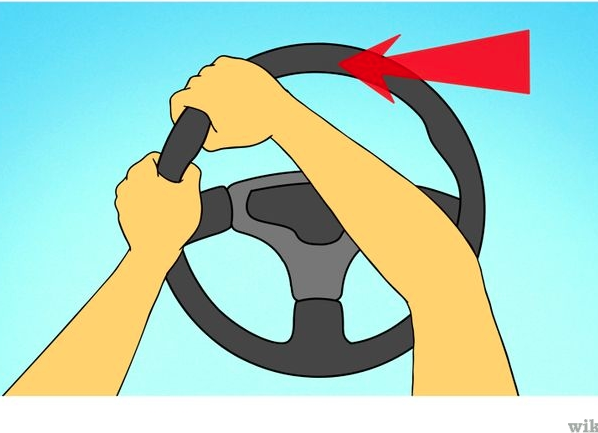
My son told me recently about a driving “adventure” that he and his buddy went on. The rules of the adventure were this: you drive straight ahead until you reach a T intersection, and then you have to turn right. You continue on straight, or making right turns, until you can go no further. While I was digesting the idea that, only by pure dumb luck I didn’t get a call from Chicago, or Terre Haute, telling me not to worry, they’d be back the next day, my son related with relish and a bit of cackling glee how they ended up in what could be described as the slums of Danbury, CT, a mere 35 minutes away, in a dead end by some housing projects. “Why always a right turn?” I asked him.
“It’s easier,” he said, with a look that said, “D-uh!”
I had reason to think of this driving game again when my friend Diane told me about her current heartache. She had met a man on the west coast when she was out visiting her grown daughter, and their chemistry had been immediate. Apparently, they lit each other up, body and soul, like a generator plant on the New Jersey Turnpike. Because she’d go out 2 times a year to visit, she was able to spend extended time with this man, and they fell deeply and madly in love. Skype and phone calls carried them between visits. After a few years, the time had come when they began contemplating combining their lives, but because both of them had strong family, social, professional, even soulful ties to their own communities 3000 miles apart, they faced some tricky obstacles. They had started talking happily and dreamily about splitting their time on each coast, assuming they could find the way to make their professional activities more portable. While Diane had no friends or community connections on the west, her daughter was there, and she looked forward to the adventure of gaining new friends and activities there. And she would still be spending plenty of time with her family and friends on the east. Her man had both family and siblings on the east, and his kids on the west were virtually grown, ready for their own adventures. Nevertheless, this great love of her life seemed to be balking, talking with anxiety and dread about the huge changes necessary for them to be together on a day-to-day basis. He thought he’d be able to carry most of his work with him, but what if he couldn’t? What if he missed his much larger social circle on the west too much? What if he hated living on the east coast, with its gray cities and variable weather? What if, to accommodate him, she ended up spending more time on the west and began resenting him? What if their projected net worth as a pair really wouldn’t be enough to sustain the kind of lives to which they were accustomed or the resulting travel costs? Diane began feeling hurt. Based on what she understood, these possibilities did not seem likely. And wasn’t their love worth the changes? Wouldn’t the day-to day-joy of being together make everything else seem manageable? Fun, even? She wondered if he had just been indulging in a dream of love, one that evaporated when compromise became necessary, while she had been committing her heart.
“It’s not that,” I told her. “He’s just afraid to make a left turn.”
“Huh?” was her response, but I saw from her face that she could already sort of grasp where I was going.
“Diane,” I said, “this is probably the first left turn this guy has made in about 25 or 30 years.”
Dick Grossberg – CD Clocks
Despite the rules of my son’s driving game, young people make left turns all the time at the craziest intersections. They deliberately put on their left signal, having possibly decided at the last minute that’s where they want to go. They move out in the middle of the intersection with all the attendant risks, and nimbly or not so nimbly make it happen. Sometimes with bravado and confidence, sometimes with elevated heart rate, drawing in breath through clenched teeth or muttering “fuck” under their breath, but they make it. They follow a college sweetheart to a new city, a new country even, with no real plan for their future. They quit a job they realize is making them sick or just not leading anywhere they particularly wanted to go, and begin an entirely new career or profession from nothing. They decide they will go to Bhutan before they settle down into a routine life, and suddenly discover a burning desire to become a Buddhist monk. Why can they do this? Is it just because young people are braver? Do they take more risks because they don’t have the life experience to think through all the possible negative consequences? In other words, are they blissfully ignorant?
I think that is definitely so, but instead of worrying on their behalf, which they never appreciate and indeed chafe against, I think we should take a few lessons from them. I used to be one of those mothers who always offered a nervous litany of concerns and fears about her kids’ choices. Offered the litany without solicitation, of course. It just bubbled up out of me, like a compulsion, and I convinced myself I was doing the right thing, counseling my naïve and judgment-impaired children, throwing water on their fires. It started when they were very young, and became so ingrained in me as a protective impulse, that at some point I couldn’t be any other way. I immediately went to that place where everything that could go wrong would, and into the dread, of course, I factored in the weighty heartache and fresh worrying I would personally experience when things inevitable turned sour. What a drag! How did I get so negative and fearful? And I’m not even remotely as negative as most people I know!
What saved me? I started noticing, finally, that there were some people who, when I mentioned something my kid was going to do, something that I felt okay about, would start going through all the things that could go wrong. They set forth all the reasons I should discourage my child. I started noticing that these were the same people who plan out every detail of their vacations, and always find it necessary to proudly point out how they were able to get a spot close by to an event because they charted out their course days earlier and made sure to arrive an hour early. All risk is managed away to provide as smooth a ride as possible. No supporting a kid’s dream, because a dream isn’t practical and almost certainly will fail. No pursuing their own dreams for the same reason. And certainly no left turns! So many of us will continue down a path that really isn’t suited to us, that is leading us astray or to a dead end, rather than make a left.
But perhaps it isn’t just the ever-spreading tumor of worry that drags us down, away from the risk and the rightly earned delight from successfully making a left. After all, when we are older, our vehicles are longer. Instead of a zippy little car or jet ski built for one, maybe two, they are freakin’ tractor-trailers, or huge tankers that carry all the people, responsibilities and ties we’ve accumulated. They don’t turn easily. They take up the entire intersection as they swing round, creating a disturbance, and threatening to upset our cargo. It makes sense to avoid that left! But is it sense or fear that keeps us from taking it? Is it our forgotten skills or long buried sense of adventure?
I know of people whose lifestyles involve changing locales every 5 or 7 years for professional reasons. Their craft never seems to get too big to turn. They find fun and adventure in every new place, and remain nimble, flexible, daring. Sure, moving is a pain, but they do it with good cheer and make the best of it. They have many friends all over the country with whom they keep up contact and visit. They have safe ports all over. But for those of us who stay in one port for too long, our crafts just seem to get bigger and bigger, maybe even stuck, and other ports begin to seem foreign, scary, hard to navigate, not worth the effort.
Maybe our crafts are not as big as we think. Maybe we just haven’t made a left in some time and we’ve lost the stout heart for it. I think even a person who once led an adventurous life for many years can lose heart if they’ve been settled for a while. They might even still make the occasional right, which isn’t nearly as scary, and tell themselves they’ve been making lefts.
No question, the left turn is far more challenging, even dangerous at times. And yes, being parked, or going straight, or even turning right is much safer. And maybe the surroundings we’ve been in for such an extended period of time are wonderful in many ways that we are loath to give up. But maybe what lies to the left is the promised land, the incredible place we never found because we just wanted to avoid that left. Maybe, if we go for it, we will discover that our craft, while indeed carrying a load, isn’t really that huge and heavy after all, and that we can in fact travel back and forth, keeping the delights of our old port while discovering even greater enchantments at a new one. And in the process, maybe we might realize that the young do not have the market on adventure and exploration, and that there is something to be said for venturing forth without a clear sense of what could happen. Maybe it keeps us young, and what’s wrong with that?
I told Diane, “Tell him to turn on his signal, take a deep breath and get ready for the adventure of a lifetime. Or get on board and remind him how.”
I had a friend Iris. I say “had” because I ended the friendship definitively and incontrovertibly, about 18 years ago. I said, “Have a nice life,” and hung up on her. You can’t get any more final than that. This was in the old days, when there was an actual receiver to hang up, which somehow made the gesture all the more powerful. But really, all I did was sweep away the spectral traces, the very contorted and disturbing ghost, of a friendship which in truth had disappeared years before that. What led me to such an abrupt and uncouth snipping of any remaining thread? Well, perhaps it was a case of a slow boil finally and suddenly erupting and spilling over. For years, it seemed, Iris had not really cared about our friendship and had done a number of things to show me that. Either that, or she was so self-absorbed that she hadn’t even realized how shabbily she had treated me.
Found on images.search.yahoo.com
We had been close for years in college. The way we met would forever go down in history. I had dated a boy named Gil my sophomore year, but by the end of the summer we had broken up for various reasons. I still loved him, however, and he and I and kept finding our way back to each other on and off for the next 5 years. During one of our “off” spells, he got himself into a spot of trouble, when he mentioned to a girl he had met that he wanted to see the filming of Pinocchio being shown on campus later that week. That girl was none other than Iris. According to Gil, who came to my door on the night of the movie in a panic, Iris was like a steamroller, jumping on Gil’s remark as though he were asking her on a date, and accepting his offer before he could even understand what hit him. Young and inexperienced as he was, and completely lacking in fortitude and finesse, Gil gulped and accepted this turn of events. Except that he didn’t. He spent the next couple of days trying to round up a group to join them, and when that failed, he showed up at my door, an hour before he was supposed to “pick up” Iris, pleading with me to accompany him right then and there so that the “date” wouldn’t be a date. He must have really been desperate to ask me of all people, since we had a confusing and somewhat painful history ourselves, and, indeed, his showing up at the last minute, making me his last resort, attested to that. Still, on some level he knew that our friendship, whatever the rockiness of our romance, was of strong enough stuff to withstand his turning to me for help that he knew I’d give. That’s what I like to think, because the alternative would mean that not only was he inept with Iris, but he cared more about getting my help than wondering if he was causing me any discomfort or heartache by reminding me that he was dating (although apparently not dating Iris).
In any event, we arrived at her door, Gil having talked nervously the whole way there, breathlessly thanking me for saving him, and when the door opened, there she stood. Shorter than us by one third, with very long, thick and wavy auburn hair, a face full of freckles and large brown eyes. Eyes that looked very confused at that moment to see me standing there. Gil mumbled some kind of incongruous, scrambled, and possibly intentionally incoherent introduction, and off we walked toward the hall where the film would be shown. As we shambled awkwardly across the quad in the dark, the proverbial big elephant lumbering right beside us, I considered. Why did I agree to this? Why did I agree to help this boy who still had strings to my heart, who was being a clod? And why couldn’t he have gone to the movie with Iris, and then afterward simply not follow up? She seemed friendly. Spunky and with a strong essence, but certainly not scary. I reached a conclusion. Iris didn’t deserve any of this, and I was going to rescue her. So I addressed myself to Iris, and almost exclusively to Iris, with genuine interest about her background, what she was studying and where she grew up. The dialogue flourished, and poor Gil was as much of a third wheel as he was confounded. It seemed that Iris, having swiftly concluded that Gil was not worthy of her attention after showing up unexpectedly with another girl, was thankful for somewhere else to direct it. We found that we had an easy rapport, and a mutual desire for friendship.
At the the end of the night, which included a stop for a late snack during which Iris and I never stopped gabbing while Gil just sat there like a stone, we made plans to get together later that week. In any event, we went on from there to be good friends. She was direct and assertive, yes, but she was warm, kind, unguarded. She was the most emotionally brave person I had met up till then. Her friendship meant enough to me to keep it away from Gil when he and I inevitably reconnected. He almost certainly thought I was respecting his very clear preference to have as little exposure to Iris as possible, but in truth I was shielding Iris from Gil’s contempt. I cared for her too much to subject her to it, especially when there was a part of me that believed that he just didn’t “get her.” There was a part of me that felt his inability to be straightforward with her or even spend one evening alone in her company was tied to his inability to connect with me. For after all, Iris and I shared emotionally honesty and intensity. We were brave, while Gil was not. When we talked, it was with trust and comfort. I cared for her enough to listen to her tell the story again and again that we met because a boy had asked both of us out for the same date, even though it gave me a pang each time. It gave me a pang because it pulled up my disappointment with Gil for turning to me for help when what I wanted instead was his love, and it pulled up my disappointment with my dear friend Iris, since she knew that Gil was my great, unrequited love.
Later on that year, when Gil and I had another attempt at romance that ended badly, at least for me, I went over to Iris’s. It didn’t seem ironic at all. She did something that I will never forget. She read me a story. I was sitting on her bed crying, and without explanation, she brought a picture book over to the bed and began reading it to me. Like a mother to a child. By the end of the book, I felt soothed, calmer, safer. It remains one of the sweetest, gentlest things a friend has ever done for me. Another thing that I will never forget was how, after I had graduated but came back to visit Iris who was then a senior, we spent the day walking and talking around Providence. At one point, I took her hand like I did with my friends when I was 8. We held and swung hands for a good block and a half. She was the only girlfriend I would have ever felt safe enough to do that with, and I was trying to tell her that she was dear to me. I couldn’t say it aloud, but it seems that she understood and accepted it with her usual wholeheartedness.
We both lived in New York City at the same time for two years and kept up, but once Iris entered the world of high-powered public relations she began to morph from the unguarded, warm, down to earth friend I had known into a competitor. A shined up, stylish and businesslike associate headed for higher things. Her ambition seemed to take over, and she hardened. I moved away and married, and she met and married Todd, a junior law associate who seemed just as enamored with being a young professional as she did. On the rare occasion when we saw them, their interactions with us and with each other seemed to be one witty, acerbic remark after another looking for an audience.
I guess those years apart really sealed the deal. For when my husband and I moved back to the New York area after 7 years in Boston, Iris and I just never got anywhere near where we once had been. Where, in truth, we had not been for almost a decade. Whatever plans we made that involved she and Todd coming to Westchester for the afternoon seemed always to have conditional status, cancelled at the last minute due to their deciding they were too tired, or wanted to spend the beautiful day going for an ambling country drive. When it was our turn to go into the city to meet Iris and Todd for dinner, we always did. And Iris always seemed to welcome my coming into the city with my two year old, in stroller, for a play date with her one year old at her apartment.
The incident that finally stung me into understanding that I no longer meant anything to Iris occurred when she and Todd took a week’s vacation at Lake Mahopac. She actually was the one to make the call, to tell me about their planned trip. About how, since they’d only be about 30 minutes away, they could use the opportunity to come by for a visit. I had just given birth to my son, and told her that of course, of course, I’d really love for them to come and meet our new family member. And I meant it. I meant it when I said it. Because I wanted my friend Iris to look with me, down at my little boy.
We arranged that she would call me when they got to Lake Mahopac, or maybe she just said, “Let’s you and I talk when Todd and I get there.” She also gave me their telephone number there. After not hearing from her, I called on the third day of a seven day vacation, and asked when they’d like to come. Iris’s answer: “We’re waiting for a rainy day, so we won’t feel like we’re missing out on any of our vacation.”
Of course the rainy day never came. Either that, or I might have said, out of some sense of self-protection, “Oh, that’s all right. Let’s forget it and do it another time.” I can’t remember.
I got off the phone profoundly hurt. I went to my husband and told him what transpired. “She doesn’t care about you,” he said bluntly. I spent the next several months coming to terms with that and realizing that she had been putting no real effort into the friendship for years. It was all just half-hearted rote. Phone calls every so often and broken plans to get together, and no real connection anymore. Certainly there was nothing left that would make either Iris or I want to make the effort, let alone compel us, to be there for each other, wholly and firmly there: on site, at the scene of the action, in sadness or joy. The difference between Iris and me, I sadly realized, was that I didn’t want that to be true. It seemed she didn’t care whether it was true or not. Had she understood well before I did what we had become? Had she intentionally put distance between us for some thoughtlessness of mine of which I was clueless? Had she been consciously or unconsciously viewing our relationship the way one does a spent houseplant, which one tends without much enthusiasm and secretly wishes would die already so you wouldn’t have to water it?
So I was completely unprepared when Iris called me six months later. I listened in stunned silence, my neck and head getting hot and my heart beating like crazy, as she asked me if I’d like to come to her apartment (which would have entailed travel for over an hour into the city, with my now 3 year old and my 6 months old infant) for a play date with her 2 year old and to meet her new baby.
Somehow, this call was an even greater insult that the last one. Did she not know how badly hurt I was to realize I was now no longer one of those would-be-a-delightful-addition-to-a- vacation-for a-few-hours friends, and instead, over the years, I had somehow become merely a perfectly-adequate-activity-that-could-fill-some-time-only-if-other-options-were-rained-out friend? Didn’t she know that I had been grieving this newly ascertained truth that we were no longer close? Hadn’t she blown off my invitation for her to meet my new baby? Yet she was inviting me to undertake the difficulty of bringing my 3 year old and infant to her apartment, complete with all the equipment and accessories that would require . Didn’t she know that for her, for all those years, I had swallowed my pang and smiled every time she seized the opportunity to tell people that we met when a boy asked us both out for the same date? Maybe she did that because, to her, that’s all she and I had been reduced to: a funny, not so funny story. “Iris,” I croaked, in a voice choked with emotion, “you treated me so badly last summer that I thought you wanted to end the friendship. So no, I won’t be coming into the city. Have a nice life.” Click.
Did I handle it well? No. Of course, I know that. I didn’t say, “Iris, what you said and did last summer hurt me terribly, and here’s why.” I just blurted a whole bunch of stuff. Then I hung up on her. No question, I was temporarily insane, overwhelmed by a flood of emotions that I only vaguely understood. I pulled a “nutty,” as they say. I even purposefully tied up the phone for about 15 minutes afterward, rambling on to my husband, seeking his consolation. But as I stared at the now silent phone, still quaking, I couldn’t help but wonder whatwould I have done, if an old friend angrily told me I had treated her so badly that she wished me a nice life and hung up on me. And it occurred to me that I would have called back repeatedly till I got her, and pleaded to know what I could have possibly done to upset her so. If she were someone I really cared about, that is. I was therefore left to consider two possibilities. One was that Iris felt so angry that I was, to her mind, hostile and outrageous for no fathomable reason, that her anger trumped any caring or interests she had in finding out why I would say such a thing and trying to make things right regardless. In that scenario, she was the mistreated friend and I therefore wasn’t worth one more minute of her time. The other possibility was that my husband was right. She didn’t care. Either way, it meant there was no friendship to save. And so I stood up, put away the phone, took a deep breath and picked up my bereavement where I left off, now with a fresh stab of grief.
Still, 18 years later, I sometimes think of her. I think of how she read me a story and how we swung hands. Those were two gifts I will always treasure. I think of them last…. and first. First, the memories come to me. Then, I wonder how she and her family might be doing. Next, I feel the grief for a lost friend and especially that honest vulnerability and emotional bravery that once were, and maybe still are, the wonderful truths behind her brash façade. Then, last, always, always last, I return, with gratitude and affection, to those moments of true exchange and friendship when we were young.
When I was old enough to be driving, but young enough still to be living with my parents, I was returning with my mom from a shopping trip at the mall, when I drove over a mouse in our garage. I don’t know how the exact timing was possible, but his darting out of the way didn’t take him far enough to miss the slowly rolling tire, and I crushed the back half of his body. I discovered this when I opened the door from the parked car, and heard squealing. Squealing that was quiet enough to be barely perceptible, yet still ear piercing. Soul piercing. I craned around and saw the mouse, still alive, pinned there under 2 tons, his head and chest now reaching out from under the wheel, straining for a reality that was no longer possible. I instantly reversed out of the garage, straining for that same reality and then rushed out of the car to see. But no, there he was, half pancake, half mouse. I retracted around the huge fist of a feeling that punched my gut and started wailing and whimpering just like that mouse.
My mother too had been taking in this whole scene, whatever horror she was experiencing enhanced by factors from watching her daughter, her baby, so tormented by something that could not be undone. For a moment she stayed in the horror with me, no doubt incapacitated as I was, but also, it soon became evident, summoning up something colossal. Something so out of her normal way of existing that I felt it happening. I felt her straining against the weight of her nature, 2 tons, just like that car, as she strode with almost too much purpose, just to avoid faltering, to the hanging tools on the garage wall and plucked the heavy metal shovel from its hook. “Stand back!” she commanded, but I could hear the doubt and torture in her voice, as though she wondered without words just how she would be able to do this. In that one fleeting moment, I saw my mom, really saw her, partly crushed by years of doubts and conventions and limitations, and partly alive and strong and defiant. For her baby, for me, she did it. She lifted the shovel high over her shoulder and came down in one fast, unwavering arch of a swipe, right on the mouse’s head. And though the mouse was no longer squealing, his head was not flat like the pancake half of his body, so, the blows coming easier now, she lifted the shovel and slammed it down twice more in quick succession to be sure. Then she stopped, and I beheld her, the horror of the mouse’s fate at my hands supplanted by the awe I felt for my mother. I understood without words the wild and brave extremity she achieved, for me. Not that the mouse was forgotten. Horror, which of course is that feeling you get when confronting something awful and against every value you hold dear, but about which, in that moment at least, you believe you can do nothing, softened into a still difficult but more manageable sorrow that I would recall all my life. But the horror of that moment was dramatically and completely swept aside by the vision of my mother, standing there with the shovel handle clenched in her fists, breathing fast, somewhat overwhelmed and sick to her stomach, trying to regain her composure and a normal blood pressure. Somehow, she did what she had to do: put the mouse out of its misery and thereby smash its and her daughter’s horror completely and beyond reach. In her act, I saw just how much she loved me. For it is one thing to care for and minister to the needs of a child. It’s another thing to do something that requires heaving off one’s own horror. To break through the command of the primitive part of our brains, that renders us afraid and frozen like a threatened gecko. To strain wildly against debilitating, irrational paralysis and manage to act.
We make up all kinds of rationalization after the fact for our debilitation in the face of horror, because it is shameful to us. We know that we were too weak to overcome it; we were completely ineffectual. And when the horror has to do with the social behavior of others our inaction is even more shameful. For we know on some level that paralysis in the face of witnessed violence or physical injury is more excusable than paralysis in the face of witnessed rude, insulting or insensitive social conduct, which after all, presents no actual threat to our bodily integrity. So we paint over such moments with the justifications of societal conventions, “supposed to’s” and staying out of the way and not making a big deal, but afterward we recriminate ourselves silently and repeatedly for having been overpowered by fear. That’s what it is after all. Our residual but still very powerful primitive instinct to freeze in the face of callous or insensitive treatment of others or ourselves is fear.
I have had many, many moments where I failed to act when I witnessed rudeness or insult, whether to me or someone else, and I still feel the shame of those moments so many years later. In the case of mistreatment of my children by ill acting teachers or nasty parents of schoolmates, I managed to summon up at least enough courage not to remain silent, but I didn’t call things out exactly for what they were. I didn’t say, “You grabbed my child! How dare you! Don’t you ever touch my child again!” Instead I said, “My son says you grabbed him by back of his neck when he tried to get something from his cubby, and I’m very concerned about that.” I didn’t say, “Do you realize how twisted and mean, and damaging your sarcasm is to my eight year old? To most eight year olds?” I said, “Your way of interacting with the students doesn’t work for my daughter and I would hope as the teacher you would consider that.” And I didn’t say, “Are you nuts? All the other parents think your kids are the nastiest, most conceited, and crassest kids in the entire school, and you have the nerve to tell me that my kids are defective?” Instead I said, “Well I’m sorry to hear that my kids are doing things when I’m not around that aren’t’ very nice, but that doesn’t give your son a free pass to do something mean that has my daughter feeling sick.” But watching my 21 year old daughter begin truly to understand and struggle through the tangle of mistreatment, selfishness, inconsideration, sexism, you name it, that constitute the “jungle” of our society, and watching her wonder whether she dare call people out for the things they say and do, I feel empowered to rise above my own fetters and shout “Yes! You are right! That person was an asshole! This person tried to belittle you! That other person was manipulative! You are not crazy to think so. You do not have to remain pleasing and conflict averse! You do not have to be worried that people will think you are ‘trouble’ or oversensitive because you refuse to let mistreatment, however nicely dressed or camouflaged or even unintended, pass unchallenged.” As I see her recognizing and identifying all the social interactions that stun us, as I witness her paralysis, I am, it seems, finally able to summon up the strength to heave off some of my own.
A few days ago, the defining moment came.
My daughter and I were eating at a small neighborhood restaurant in Brooklyn. There we were, me with my gray hair, older skin, manner of dress and overall bearing that announced me as a woman over 50, and she being obviously a young woman in her 20’s, perhaps my young friend or perhaps my daughter. Someone who seemed like the owner waited on us, but in any event he was a man somewhere between the age of 38 and 48. He kept referring to us as “girls” and not in that hammy, flirty way that is intended to be a compliment, effective or not, to older women. It was in the dull, automatic, unseeing and oblivious way that some men refer to women generally. With each utterance of “girls” our discomfort grew. We did not have to say much to each other. We both knew that a man waiting on us was referring to a 53 year old mother as a “girl” in the presence of her daughter and that it was belittling, all the more so because it confirmed an absent, careless and undervalued interaction with customers. “You girls want anything else?” It matters not if someone else would have not taken offense; I did. My daughter saw me struggling. She saw me pinned under convention and yet trying to summon up something, anything, to heave it off. When the proprietor brought our check, said, “thank you, girls,” without even looking at us and walked away, I must have contorted my face in some crazy way, for she whispered, “Mom, don’t. Mom, let it pass.” And when I continued to fidget and struggle, apparently presenting the risk of some kind of uncontrolled, over the top outburst, she said, “If you’re going to say something, I’m getting out of the restaurant.” I was too busy summoning up my courage to respond. So she beat a hasty retreat, saying “I’m outta here. I’m going to the bathroom.”
I sat there for about 5 seconds trying to breathe my way to doing what I knew I wanted. I half couldn’t believe it. I was afraid to say something to this stranger. I was afraid lest he think me a crackpot, a “feminist” an overly sensitive, silly female. The conventions and the “supposed to’s” and the always-at-the-ready “Why make a big deal out of something so little?” rose up in my brain. But I knew that if I didn’t say something, I’d be ashamed of myself and always regret it. Not because I’d have let what was just a careless remark pass, but because I’d have let my fear win. I took that one final deep inhalation, stood up and walked over to the proprietor, my payment for lunch already on the table. I said, “Excuse me, you seem like a nice man.” “Thank you,” he interjected. I continued in a calm voice that at first belied how hard my heart was pounding but then actually managed to help me find my ground. “So I’ll ask you to please consider how a 53 year old mother might feel being referred to as a girl in front of her grown daughter.” In the face of his momentary confusion, I added kindly, “I’m really too old to be called a girl; I deserve more respect than that.” He looked at me. Really looked at me for the first time. Suddenly he was a respectful person addressing an older one. A service provider addressing a customer. He asked, “I called you a ‘girl’?” And when I affirmed that he did, he apologized, perhaps more because now he was afraid, (what if I made a scene?) than out of any regret. I smiled, and thanked him and told him with a twinkle that I left him a good tip just the same. Then I turned and strode out, feeling like I had just successfully completed the pole-vault at the Olympics and joyously caring not one whit whether the proprietor was judging me.
My daughter was waiting for me outside. “Mom,” she beamed. “I’m really glad you did that.”
Huh?? “You heard?” I asked.
“Yeah, I heard part of what you were saying after I came out of the bathroom. I was afraid for you to say something, but deep down really I wanted you to.”
Well, I wasn’t doing something as heroic or dramatic as euthanizing a doomed animal, but I managed to heave off my fear, and she watched me do it with pride and gratitude. It was something I had to do. It was my way of saying “See? You can do this, and, by the way, I love you.” And I think by her comments she got that. It was her way of saying “Thanks, Mommy.” In the end, perhaps it seems ludicrous that I would have been afraid to have said something, or even that I felt compelled to do so, and yet, how many times have we not spoken up merely because we didn’t want to seem silly or, heaven forbid, make the transgressor (who may well be unwitting) uncomfortable? And why is seeming silly so catastrophic, to be avoided at all costs?
From my kitchen table I can see that lamp. That floor lamp I finally came up with an excuse to get rid of (it really is far too puny for our oversized family room, and I had no other place to use it) and temporarily replaced with a bigger, more me kind of a lamp. Before the day went out, my son asked, with his panic barely contained, “What did you do with that lamp?”
“What lamp?” I innocently asked, without any actual innocence.
“That lamp that was in the family room? Did you get rid of it??”
I told my son that I still had it. “But see how much better this lamp is for the space?” I sweetly suggested. He was not fooled. “Can you put it back?” he pleaded. He then dropped the cement. The fixative that would tie that fuggin’ lamp to me for all time. “I love that lamp. It’s been in every home we’ve ever lived in. I remember that lamp from forever.” And then the coup de grâce: “…It’s my childhood.” Just like that, I was doomed. Doomed to keep that lamp for all time, till I die.
I understood the power of the lamp for my son. For I too had THE item, a small mass produced print, purchased at some such place like Alexander’s (in the Bronx) or Woolworth’s, of a Paris night scene by Maurille Prévost. This cheap replica, printed on swirl-embossed paper to suggest actual brushstrokes, and set in a common, 1960’s ready-to-hang frame of the sort found everywhere in tasteful or striving middle class homes across the country, was so dear to me that my eye would scan the wall for it virtually every time I was in our kitchen in Rockland County. Before that, when we lived in an apartment in the Bronx, I’d look up from my spot on the smooth-tiled foyer floor (the small sofa seemed reserved for my Dad or visiting adults) and find my familiar friend reassuringly in its place, my proof that I was in the right home. When my parents were preparing for a garage sale prior to moving from their Rockland home to a more suitable dwelling for retirement years, I quickly grabbed the print off the wall and held it close. “Were you thinking of getting rid of this? Cause I’d want it,” I whimpered. And moments later I was the happy owner of my childhood companion, which I promptly hung up in my home, to the confusion of my husband.
So I knew that lamp, that damned lamp, was not just a lamp to my son. My 18 year old son, skilled in never appearing to break cool when it served him, actually voiced a plea for this unoriginal, this unremarkable, this you-should-be-ashamed-of-yourself-sorry-excuse-for-a-lamp lamp, with bond paper dyed and embossed to look like a genuine tanned-leather shade and dark-brown bronze pole complete with matching, hammered base which no lamp should ever have, ever again. He was desperate. Believe me, I knew this from recognizing that same imploring expression of poorly disguised anguish my mind’s eye recalled from my very own face. Worse, I was 35 at the time! But, I wasn’t going to let on just how well I knew. “Okay, sweetie,” I said with my inner Oscar winning actor’s most benevolent patience. “For you, I’ll switch them back.” And as I turned to go, when my face was safely “out of scene,” and out of sight, my inner actor, who is, actually, me, dropped the act and celebrated my coup in grasping the truth: “That’s his lovey.”
Of course, I’m a smug dope cause my lovey is that dumb, cheap, embossed paper print with the cook arriving for work via bicycle and with his chef’s hat on already, while he’s still straddling the bike, at an establishment simply and humbly called “Restaurant.” And I remember the love I had, have, for my lovey. The joy that filled me as though I were a child again when my mother, in the manner of a carnival barker awarding a small kid a prize that was worth absolute crap all the while making the kid feel like she was getting gold, told me “It’s yours!” And I couldn’t bring myself to ruin my son’s not-so-secret, young child’s stab of joy and relief. So I said nothing to him. Nothing to let him know I was on to him. Knew his secret. And even more importantly, nothing to let him know that that very same lamp had been a prick at my heart every single time I looked at it.
I had purchased that lamp during a New England style colonial antique furniture-browsing day with my mother-in-law and sister-in-law, about 4 years into my marriage. Why I was even in that particular browsing experience was a source of mystery to me, since I despise New England colonial antiques, and deep down always did, but my apparent inability to say, “no thanks, Mom, I hate the kind of antiques you love” when she brought up the idea to go browsing for the new home in the “country” that her son and I recently acquired (and so What better place for “country furniture” right?) had something to do with it. I suppose it was tied to the very impulse that later led me to suggest out loud that I might buy the lamp. It was an obligatory outing with “the matrons.” Not that my mother-in-law or sister-in-law were particularly matronly or even were aware they were serving that function. We poor females don’t always know when we morph into a member of the matrons, those women who, among so many other stultifying suggestions and comments, imply to you that furniture shopping is something “the women” do to feather their family nests. And furthermore know how to do primly, and respectably, and for not too much cost because we want to be responsible in our spending after all. And being with the matrons, I didn’t say, couldn’t say, couldn’t admit, “I hate furniture shopping. I couldn’t give a shit about what my furniture looks like, really,” or say “Guys, I’ll shop for my furniture when I good and feel like it, and it won’t be this New England, stripped of all ornamentation or frivolity, and painted or stained only in muted shades that suitably convey puritan plainness, humility and purity shit. It’ll be something positively vulgar, like florid and overly carved Victorian pieces or something out of the 50’s version of the future,” or even “There’s really something messed up about the fact that women do this in groups, to help each other, right? Where are the men? I mean, HELLO! Don’t you realize that we are still doing the same shit our very hairy hundreds of thousands of years ago predecessors did?”
So there I was, along on this activity. For some reason, probably just because it was along our path, we walked into a furniture store that was not filled with colonial antiques or reproductions, but with newer, somewhat everyday, tasteful furnishings. Maybe, understanding what felt like my only way out, I scanned around for something, anything that I could live with. Or maybe the selection just seemed so much better than it was because it appeared after a sea of items I couldn’t ever imagine owning, that I really thought I liked what was in the store. But for whatever reason, that’s when it happened. “What do you think of this lamp for our living room?” I asked. BOOM. There it was. My surrender to the matrons. And one moment later, the fog cleared, and I understood that I had selected something that I really didn’t love or even want, but I held steady. I must have figured, better to get it over with, offer up the sacrifice, and then never have to go through this ceremonial joint furniture shopping ever again. Only I couldn’t have known then that it was the beginning of a long line of offerings that became second nature to me, and led me so far away from myself that I mourned my absence.
To be fair, neither my in-laws, nor anyone else, required my offerings. Indeed, over the years my mother-in-law developed a love affair with expressionist and folk art, which she indulged in freely by altering many of her colonial pieces with paint and decals of bursting blooms, or wildly colored finishes, and by transforming her walls into galleries for some of her own very vivid, unabashed and often quite thrilling expressions of color, form and movement. She was feeling free to be herself. Why wasn’t I? Maybe, once you suspect deep down that you have entered a life that isn’t quite working for you, you do whatever you can to disguise your true impulses and desires. Maybe you do whatever you can to prevent yourself and others from knowing the truth: you do not feel yourself. You do not feel alive.
And so I loathed that lamp. For 19 years I secretly loathed that lamp. But now, well past 50, I finally decided I could simply get rid of it. I no longer felt tied by some inexplicable, self-imposed obligation to temper everything in my style, my home, words that leave my mouth. Yet, here is my son. To him the lamp is his childhood, and he loves it. The strange thing is, that somehow rehabilitates the lamp for me. I can look at it and it no longer pulls up an unpleasant association just outside my conscious language. It is my son’s lovey, … and that is… so cute. I love that lamp! That is the lamp my son looked up at and felt reassured by! How could I ever get rid of it? What was I thinking?! And so, that lamp is now among my favorite items in the house. The house we will be listing on the market this spring, now that my husband and I have separated. I will be sure to keep that lamp in every home I live in, so that my son will know he’s in the right place, or one of two right places of course.
Back to here, from my seat at the kitchen table, I see the lamp. And shifting my eyes I see that I am also in perfect line with that print. THE print, my lovey. Suddenly the thought occurs to me, what if my mother or father had an unpleasant association with that print? What if it was an awful association? I call my mother immediately.
“You remember that little print of the cook outside the restaurant on his bicycle?”
“No.” That puts me on notice right there that I am probably on safe ground.
“The one that used to hang in our foyer at Bronx Boulevard and then in our kitchen in Rockland?”
“No, honey, I don’t remember it? Why?”
At first, my lovey not having an anguished past that my mother would instantly recall and convey to me disappoints me. It made my lovey a bit more… prosaic. The possibilities had been endless. It could have been something that my mother’s wandering and ultimately abandoning father gave her that she couldn’t quite bring herself to throw out. Or it could have been an imposition by her mother-in-law, who firmly declared that it was fitting and expected to see it hanging there in the foyer every time she visited our apartment that was so much smaller and less glamorous than hers. I try to inject some drama.
“Well, you gave it to me because I remembered it so dearly from my childhood, but I was wondering if it turned out that it had actually been a source of emotion for you. You know, like, maybe Grandma Gussie gave it to you and you secretly hated it?”
My mother chuckles kindly as one does at a child with a wild imagination. “No, dear, I probably just picked it up somewhere. I would do that. I’d see something that would strike me, that I’d like, and I’d get it.”
Touché.
Well, it turns out that my lovey is really quite a layered symbol after all. Far from prosaic, it now serves not only as totem of my youth, but also the ability to allow unabashed expression of myself that I once wielded and now wield again. And on top of that, while the materials used for the print and frame were inexpensive and unimaginative at the time of manufacture, they are “vintage” now, and the content, the lovely little scene by Prévost, is quite striking. I rise to wipe layers of dust and grime from the unprotected surface, it occurring to me that the dark colors I always assumed were part of the print might actually be forty years of accumulated film. As the brighter colors burst from under the damp dusting cloth, I realize that the scene has always been a window into my mother’s tastes that I had not really ever looked through.
Some people use the accusation of “gazing at your own navel” to dismiss a self-exploratory mental exercise as useless, self-indulgent, narcissistic, or worse, primitive. Something an ape might do. But an ape doesn’t ruminate as we do, not about its navel or anything else, and so I reject that characterization. To people apt to describe self-exploration as navel-gazing I say: sadly you are lacking in curiosity, self-awareness and frontal cortex complexity. For engaging in a deep consideration of one’s own ideas of the world is the sign, not just of wanting to soak up social, cultural, emotional and intellectual interactions, but of seeking to develop an understanding of one’s self in relation to all that information. Isn’t that how we improve? And so, I humbly offer you the fruits of my navel-gazing. My intent is to invite you to spark your own inward exploration. E. Marmer