Tag: overcoming fear

  • Wide Open

    Wide Open

    instagram.com@medicaltalks

    Recently, someone I know suggested that my last blog entry, “Message in a Bottle” was “oversharing.”  He went on further to ask whether I wrote it to be stroked and praised as a person of great understanding. He stated his concern that it might indicate a form of vanity. This very same person had often expressed to me his wish that I could open up more readily to people other than the handful in my very closest circle and be utterly myself (outspoken, natural and unguarded).


    I dismissed all validity to his remarks about vanity – I know the personal essay is an established art form, and that for centuries our civilization has been reading the personal thoughts, yearnings and epiphanies of writers –  but they stung nevertheless. They stung because 1) I respect his opinion and care about his approval; and 2) I’m by nature inclined to question myself constantly (which is why I haven’t historically been fully at ease or fully myself, although I’ve been making great strides of late).  Did I engage in vanity?  I had to ask myself.  And, because I’m still working to convince myself that my personality actually is a pretty good one, and that most of my actions and instincts are guided by purer motives, surely not one of the seven deadly sins, I had to think long and hard about it.

    Starting with my very first blog post, every single time I hit “Publish” I have worried, “Is this too far?  Is this too personal?  Is this too exposed and does this reveal what a weirdo or overly sensitive person I am?”  And after a minute or two, I calm my worry by remembering that this was why I began writing my blog in the first place.  The real, real reason, beneath wanting to write, and wanting to find out if I could write well, I now understand was that I was giving myself my own sort of therapy for becoming emotionally brave and comfortable in my own skin.  A total emersion therapy, like jumping into and swimming across the cold, old quarry lake.

    https://www.flickr.com/photos/toshofosho/7416482810

    One day, and I will never stop being grateful for that day, I found myself writing an essay, addressed to no one in particular, and, if that weren’t surprising enough, actually creating a blog to publish it.  Who was this person going boldly where she had never gone before? I suspected I had things to say that would connect with people, and I gave a swift kick in the ass to that inner editor, who has lived in my head for most of my life, always telling me I best keep my mouth shut, that I was awkward, an irritant, someone who had to learn to blend and had nothing worthy to contribute.  I will never forget the rush of fear, and the exhilaration when I overcame it and let my first work fly out.  I will never forget it, for I experience it anew each and every time. Is this worthy? I ask, filled simultaneously with dread that it isn’t and astonishment that I sent it out anyway.

    After doing this strange exercise several times I learned a few things, which you think would have enabled me to nix the dread, but no, I haven’t learned that particular lesson yet. I learned, though, that most people react well to my being so open.  That they value my honesty, my proof that they are not alone in having similar feelings.  They value the opportunity to think about something they hadn’t considered before, and a different perspective. And there developed a secondary reason for my blog, which has far overtaken the initial one. I write as an offering. I offer my experience, my growth and my mistakes for examination.  I offer myself.

    https://i.pinimg.com/originals/36/38/ad/3638aded791c87aa39a126d520ba2348.jpg


    And every great artist, thinker, creator has done the same to one extent or another.  Believe me, I humbly know I haven’t a fraction of their talents, but by golly I have their bravery, if not their unquestioning nerve.  I tell myself, “this is worthy,” and I put it out there, quivering in my nakedness, praying that it is.  Do I congratulate myself for that?  You’re damned right I do.


  • Declarations

    Declarations

    “Mom,” my sixteen-year-old daughter asked me one day, “did you know there’s a scale for sexual orientation, zero for exclusively heterosexual and six for exclusively homosexual?” A few seconds later she added, “I’m a three.”

    This was not news to me. She’d struggled quite openly for the past two years to understand her sexuality. The surprise twist was my declaration. “I’d say I’m a two-point-five.”

    “What? Shut up!” was her stunned reaction. I could see delight in her eyes even as her brain worked to catch up. It was the kind of delight one feels when admitted into the inner sanctum. The questions came flying: “Does Dad know? When did you know? Have you been with a woman?”

    I explained that I’d had numerous “signs” of my bisexuality since college, when I reacted viscerally to a beautiful female classmate. I’d attempted to strike up a conversation with her, hoping for something I couldn’t identify, let alone articulate. And yet, I told my daughter, despite occasionally finding myself intensely attracted to a woman, I wasn’t ready to understand my bisexuality until I watched her coming to terms with hers. But even then, knowing the truth about myself, I waited until she seemed firmly settled in her identity. This wasn’t just to give her the space she needed—I was still having trouble coming out myself.

    For 22 years I’d been married to a man and had never been with a woman. Some friends said I had no reason to come out, while others said I couldn’t know for sure I was bisexual until confirming it. They were wrong. I had to come out to be freed from the exhausting task of convincing myself I was straight. To feel the relief of understanding it was okay. And I did not need to touch a woman to recognize the surge of lust, just as a heterosexual man or woman doesn’t need to cheat to know he or she really wants sex with someone who isn’t a partner.

    The trust my daughter showed in me, in baring her most personal struggles and fears, was what led me ultimately to be brave. For how could I repay such trust with secrecy, whether to her or to myself?

    A few years later it was my daughter who gave me the key to yet another door. We were folding laundry, the sort of peaceful activity that promotes intimacy, when she said, “I don’t know, sometimes I just feel like there’s this guy in me.” This hit me like a rock. A guy in me. A guy in me. The reverberations spread out over years, both forward and back. Days afterward, I was driving her to the train station when I said, “I so love that you feel you have a guy in you. It makes me feel like I’m not alone.”

    “Well, I didn’t mean really,” she said, scrolling through her smartphone. “I meant that when I’m attracted to a female, I’m a much more aggressive pursuer than when I’m attracted to a male.”

    “Oh,” I said. I was crestfallen and confused.

    “Wait a minute.” She shifted in her seat to look at me directly. “What are you saying? Ma, are you gender fluid?”

    Gender fluid. The words hung for a long moment. I’d never heard that term before, and the tumblers of a lock were suddenly clicking into place. Here was a Rosetta Stone, to make sense of an awareness that had always been without language, had always made me feel outside the norm, a poseur. And it was this: I was living as a female, with the body of a female and the socially established trappings of a female, but was not nor had ever been exclusively female. Now I knew what to call it. Now it was named, acknowledged. Now I could declare my entirety, to my daughter and to myself.

    E. Marmer | Free to Navel Gaze
  • Of Thee I Sing

    Of Thee I Sing

    I recently realized that my lifetime struggles with singing mirror exactly my lifetime struggles with self-acceptance and self-expression. What a cliché.

    saved from my-diy-crafts-tuts/.blogspot.com
    saved from my-diy-crafts-tuts/.blogspot.com

    From the age of 5 or 6, singing was a source of joy, of wings for me. Apparently, my rendition at the age of 6 of My Favorite Things, from The Sound of Music was notable enough that my camp counselor pulled over some of her counselor friends for a repeat performance. But just as I was always scanning my family, friends and peers for cues that I wasn’t quite up to par, I was also always very sensitive to any negative criticism about my singing, and it always trumped whatever genuine smiles I also sometimes elicited. At my Bat Mitzvah, one of my 13 year old guests told me after the ceremony that the Kiddush was not meant to be sung with vibrato. Not ever having had a voice lesson, (or even really understanding what vibrato was) whatever vibrato I had was naturally present, but apparently that was a bad thing. It didn’t help that during my high school years the choral director was an ornery old man with a bad temper and no business working with students. He called me out once in front of the entire choir for singing nasally. He had me sing the phrase “Christe eleison” over and over, slamming his baton each time while he mocked me with an excessively nasal rendition, but never bothering to explain to me how to open the sound. Mercifully, after the third time, I magically, and without any understanding of what I was doing differently, landed on an a clear resonant sound, and he actually raised his arms and proclaimed “Hallelujah!” I understood, of course, that everyone’s mortification was not due to my nasal singing, but due to the dreadful awareness that this could have just as easily been them being humiliated. But I also understood that there was something pathetic, inferior, about my singing. I doubted it constantly.

    The problem was, of course, I cared too much. Singing made me soar. It gave me a means to express my heart, my understanding of pain, love, sauciness, peace, and confusion. And somehow, it also became an offering of myself, so that any shortcomings or rejections were a dagger into my own breast.

    borzui.tumblr.com
    borzui.tumblr.com Alireza Borzui

    I sought voice lessons with extremely unqualified people, who taught me no technique whatsoever, and was consistently placed in the second soprano or even alto sections of choirs, due to the vocal strain I’d exhibit whenever I tried to go into the soprano range. The problem with this was that I had no strength in the alto range either, and so, with a weak sound, limited range and no understanding of my abilities, I lamely persisted, trying to achieve flight, still sensing just out of reach a joy like no other, and yet also feeling clipped, inadequate, and confused as well. In other words, singing became a very emotionally fraught activity for me. A minefield. I was as sensitive and wounded as I was determined.

    For a few years, I seemed to find my place. I sang with an a cappella group in college, doing standards with complex harmonies. My group, The Chattertocks, had an old-fashioned sound, and provided a home for my particular kind of singing, gentle and sweet. As my confidence grew, a few friends of mine noticed and actually told me that I had a beautiful voice, making me happier than they could ever imagine. But once I graduated from college and went into the larger world, my singing tapered off dramatically. I had none of the training or technique for classical singing, the only kind I found available for amateurs, and a short stint with a chamber choir was nothing but a continual fight for my life. In one strange moment, the conductor pointed out to the entire group how I was the only one on my part who consistently came in at the proper time, and how this should shame them all since I the weakest at sight reading and had the least musicianship of the bunch. Yikes.

    Then two developments occurred that contributed to my shutting down. One was that my new husband didn’t seem to enjoy my singing very much. He told me fairly early on in our relationship that when I dreamily sang standards to myself in the car in his presence it was a presumptuous imposition and he’d prefer it if I stopped. The other was that my daughter began singing at the age of 4 and had the voice of an angel. Many years later she told me that it was my singing to her at night that instilled a love of singing in her own heart, but all I could see was that she was a young and vulnerable little girl whose only area of unquestionable confidence was her lovely voice. My focus shifted almost completely to celebration of her unfettered expression. As she grew and faced the painful challenges from being a wonderfully peculiar outlier on the bell curve of uniformity, her singing was something that called to everyone, awkward outliers and popular middlings alike. Even the most scornful peers and parents were moved and had to grant her this acknowledgment – she had a beautiful instrument and naturally knew how to play it like a master. I was so happy for her; she got everything I ever wanted for myself–people to feel something when she sang – and it made her happy as well. I encouraged immediately her interest in private voice lessons, and to this day cannot recall whether that interest generated from a seed planted by her middle school chorus teacher, came to my daughter on its own out of her love of singing, or was all but assured by my constant praise of her voice, and the beaming smile on my face only and barely kept in check by my desire to ensure that my dear girl wouldn’t forget how to remain humble. I never risked diminishing her by conveying that I thought my voice came anywhere near hers, and indeed I never believed that it did. And I daresay, she grew to become as confident in her sound as she was in her face, the other possession of hers that stopped people in their tracks. Which is to say, she became vain. And I was helpless to curb it because I knew she was right. Her own high opinion of her voice was the truth. She was that good. But her vanity and her impatience with lesser practitioners led her to criticize my occasional forays into song and to point out where she could do a better job. It was a one-two punch: Keep your own bird’s song quiet so as not to detract from your child’s, and then hear her chide you for your failings in voice. The vulnerability and honesty in my voice – the expression woven into the notes of my love for her, or whatever particular emotion I dared offer- did not seem to affect her. She heard only the uneven support, the slight wobbling, the occasional sharp or the collapse of the palette.

    So, with my less than enthusiastic husband and virtuoso daughter, I stayed more or less silent for over 20 years.

    found at http://goingoutsidethebox.tumblr.com/post/14320430113/shyness
    found at http://goingoutsidethebox.tumblr.com/post/14320430113/shyness Endless Downstairs

    Then about 5 years ago things began to change. One night at synagogue services I was approached by the conductor of the choir and the lead cantorial soloist. To my secret delight, the conductor told me that the soloist had heard my voice, having been standing close to where I sat, and had gone to directly to her afterward to tell her that the choir should recruit me. I was all at once happy beyond reasoning and also humbled, for the soloist who pronounced this had a beautiful voice indeed. The next thing I knew, with my children grown enough for me to make the time for rehearsals and services, I was in the choir. That led me to me sitting at one of the choir services near a woman I knew loosely from various activities at the synagogue. When we talked about what led each of us to the choir this woman mentioned she was getting voice lessons from someone she recommended highly, and she encouraged me to think about getting lessons as well, if I were seriously interested in reviving my singing. And so I called the voice teacher and began private lessons. These things don’t happen by accident. I must have really wanted to sing.

    Over 5 years later, I am still studying with the same teacher. This wonderful woman, a professional singer and cantor, trained at the best music schools in the country, immediately understood things about my voice that no one else seemed to: I didn’t know how to use it and I was blocked. She helped me unlock an entire additional octave in the soprano range, where I actually belonged, simply by patiently and kindly showing me how to let go of my tightened tensed throat and jaw and my deep-rooted fear. At first, at recitals, I was so afraid to sing in front of others that my heart palpitated and I grew white as a sheet. But I persevered. I persevered without little more than an extracted and somewhat strained compliment from my husband or a careful remark from my daughter, encouraging but with the spectre of all the things she wasn’t saying (and let me know without words that she wasn’t).   I stopped asking them to attend my recitals and chose to believe my teacher’s insistence that I had a gift to give others. I just needed to accept it for what it was and use it how it was meant to be used, instead of trying to emulate or compare myself to other singers and believing always that I fell short.   My dear sisters would occasionally come to hear me sing, smiling and silent but always nodding, fully present and encouraging for the earnest and clearly important struggle, even while they perhaps wished I wasn’t quite so invested and therefore so easily crushed, and even though they might have been hard-pressed, if someone asked them, why it was so painfully important to me. And over the years, little by little I could sing with less and less of the constriction I had always brought. I began asking for, and receiving parts in choir songs. I was asked to sing at my friend’s occasional religious celebrations in her home for the Jewish holidays of Sukkot, Chanukah and Shavuot, and listeners would approach me afterward to tell my how lovely my singing was. The conductor of the synagogue choir invited me to join an elite women’s choir she directed, and the next thing I knew, I was challenging myself and enjoying the stretch for works by Handel, Thompson, and Rachmaninoff. And slowly, ever so slowly, I grew to appreciate that I did have something others enjoyed. A sweetness, an old-fashioned yearning that carried my heart across, and they began telling me that I moved them. They did not focus on the technical failures, the occasional dropped support or forward sounding note. They focused on what I could do for them, and, sure enough, that’s what I began to focus on as well.

    The final breakthrough came to me about a year ago. It dawned on me that when I let go completely of the fear, I indeed connected – both with my voice and with the audience. When it became about them instead of about me, I was freed. I was able to stop worrying about all that I couldn’t do, all that my mistakes revealed about my inadequacies, and just feel that sense of joy that comes from laying it all out there and, becoming a vessel for the listeners to willingly sip from. I could see them clutch at their hearts or mist up. And the more I saw their honest and receiving reactions, the more comfortable I was revealing my voice. The emotion, the vulnerability, the aching. It wasn’t a frightened plea for acceptance anymore; it was a brave gift. People enjoy singers and songs because they express baldly and without abashment all the emotions we feel constrained from expressing ourselves. When listening to a singer communicate a broken heart, or confusion, or flirtation, or over the moon love, people lose themselves and allow themselves to feel what they otherwise might disguise during actual communication. Once I understood that, once I understood that most people are just as constricted and afraid as I had always been, I could feel more at ease revealing not just my voice but who I am.

    borzui.tumblr.com
    borzui.tumblr.com Alireza Borzui

    For this opening up of my voice paralleled in time my slow but insistent opening up (or perhaps reopening) of my nature. And the more I relaxed and revealed without embarrassment that true nature –my giggling, my honest appraisals of what was being said or what I was observing, my desire for friendship or my off-beat sensibilities – the more it seemed that people reacted favorably. More favorably, it turns out, than they did when I tried to blend, tried to remain unseen, smooth and flawless. I discovered that far from being alone in my pained self-thwarting, I was in a sea of people who stay muted because they, too, are afraid to be found wanting. They hang back not because they don’t like warmth and playfulness, but because they don’t want to be branded foolish or undignified or weak. And when I offer myself without nervousness, without dread of rejection, without standing there like a mirror that calls attention to the fears in all of us, it puts them at ease and they respond.

    I’ve heard time and again that singing is one of the most vulnerable activities one can do, and, for me at least, that is true. So is being one’s self. And though this journey to my true voice was very long and painful, I don’t regret the time it took or all the misgivings.

    pinterest.com, pinned by Anne Krüger
    pinterest.com, pinned by Anne Krüger

    I am instead just so happy to take a deep breath and know that I’ve found it.


  • Taking the Left Turn

    Taking the Left Turn

    found at wikihow.com
    found at wikihow.com

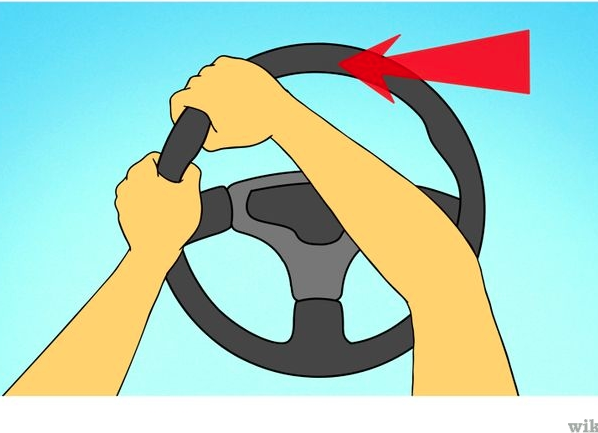
    My son told me recently about a driving “adventure” that he and his buddy went on. The rules of the adventure were this: you drive straight ahead until you reach a T intersection, and then you have to turn right. You continue on straight, or making right turns, until you can go no further. While I was digesting the idea that, only by pure dumb luck I didn’t get a call from Chicago, or Terre Haute, telling me not to worry, they’d be back the next day, my son related with relish and a bit of cackling glee how they ended up in what could be described as the slums of Danbury, CT, a mere 35 minutes away, in a dead end by some housing projects. “Why always a right turn?” I asked him.

    “It’s easier,” he said, with a look that said, “D-uh!”

    I had reason to think of this driving game again when my friend Diane told me about her current heartache. She had met a man on the west coast when she was out visiting her grown daughter, and their chemistry had been immediate. Apparently, they lit each other up, body and soul, like a generator plant on the New Jersey Turnpike. Because she’d go out 2 times a year to visit, she was able to spend extended time with this man, and they fell deeply and madly in love. Skype and phone calls carried them between visits. After a few years, the time had come when they began contemplating combining their lives, but because both of them had strong family, social, professional, even soulful ties to their own communities 3000 miles apart, they faced some tricky obstacles. They had started talking happily and dreamily about splitting their time on each coast, assuming they could find the way to make their professional activities more portable.   While Diane had no friends or community connections on the west, her daughter was there, and she looked forward to the adventure of gaining new friends and activities there. And she would still be spending plenty of time with her family and friends on the east. Her man had both family and siblings on the east, and his kids on the west were virtually grown, ready for their own adventures. Nevertheless, this great love of her life seemed to be balking, talking with anxiety and dread about the huge changes necessary for them to be together on a day-to-day basis. He thought he’d be able to carry most of his work with him, but what if he couldn’t? What if he missed his much larger social circle on the west too much? What if he hated living on the east coast, with its gray cities and variable weather? What if, to accommodate him, she ended up spending more time on the west and began resenting him? What if their projected net worth as a pair really wouldn’t be enough to sustain the kind of lives to which they were accustomed or the resulting travel costs? Diane began feeling hurt. Based on what she understood, these possibilities did not seem likely. And wasn’t their love worth the changes? Wouldn’t the day-to day-joy of being together make everything else seem manageable? Fun, even? She wondered if he had just been indulging in a dream of love, one that evaporated when compromise became necessary, while she had been committing her heart.

    “It’s not that,” I told her. “He’s just afraid to make a left turn.”

    “Huh?” was her response, but I saw from her face that she could already sort of grasp where I was going.

    “Diane,” I said, “this is probably the first left turn this guy has made in about 25 or 30 years.”

    Screen Shot 2015-06-26 at 2.27.49 PM
    Dick Grossberg – CD Clocks

    Despite the rules of my son’s driving game, young people make left turns all the time at the craziest intersections. They deliberately put on their left signal, having possibly decided at the last minute that’s where they want to go. They move out in the middle of the intersection with all the attendant risks, and nimbly or not so nimbly make it happen. Sometimes with bravado and confidence, sometimes with elevated heart rate, drawing in breath through clenched teeth or muttering “fuck” under their breath, but they make it. They follow a college sweetheart to a new city, a new country even, with no real plan for their future. They quit a job they realize is making them sick or just not leading anywhere they particularly wanted to go, and begin an entirely new career or profession from nothing.   They decide they will go to Bhutan before they settle down into a routine life, and suddenly discover a burning desire to become a Buddhist monk. Why can they do this? Is it just because young people are braver? Do they take more risks because they don’t have the life experience to think through all the possible negative consequences? In other words, are they blissfully ignorant?

    I think that is definitely so, but instead of worrying on their behalf, which they never appreciate and indeed chafe against, I think we should take a few lessons from them. I used to be one of those mothers who always offered a nervous litany of concerns and fears about her kids’ choices. Offered the litany without solicitation, of course. It just bubbled up out of me, like a compulsion, and I convinced myself I was doing the right thing, counseling my naïve and judgment-impaired children, throwing water on their fires. It started when they were very young, and became so ingrained in me as a protective impulse, that at some point I couldn’t be any other way. I immediately went to that place where everything that could go wrong would, and into the dread, of course, I factored in the weighty heartache and fresh worrying I would personally experience when things inevitable turned sour. What a drag! How did I get so negative and fearful? And I’m not even remotely as negative as most people I know!

    What saved me? I started noticing, finally, that there were some people who, when I mentioned something my kid was going to do, something that I felt okay about, would start going through all the things that could go wrong. They set forth all the reasons I should discourage my child. I started noticing that these were the same people who plan out every detail of their vacations, and always find it necessary to proudly point out how they were able to get a spot close by to an event because they charted out their course days earlier and made sure to arrive an hour early. All risk is managed away to provide as smooth a ride as possible. No supporting a kid’s dream, because a dream isn’t practical and almost certainly will fail. No pursuing their own dreams for the same reason. And certainly no left turns! So many of us will continue down a path that really isn’t suited to us, that is leading us astray or to a dead end, rather than make a left.

    But perhaps it isn’t just the ever-spreading tumor of worry that drags us down, away from the risk and the rightly earned delight from successfully making a left. After all, when we are older, our vehicles are longer. Instead of a zippy little car or jet ski built for one, maybe two, they are freakin’ tractor-trailers, or huge tankers that carry all the people, responsibilities and ties we’ve accumulated. They don’t turn easily. They take up the entire intersection as they swing round, creating a disturbance, and threatening to upset our cargo. It makes sense to avoid that left!   But is it sense or fear that keeps us from taking it? Is it our forgotten skills or long buried sense of adventure?

    I know of people whose lifestyles involve changing locales every 5 or 7 years for professional reasons. Their craft never seems to get too big to turn. They find fun and adventure in every new place, and remain nimble, flexible, daring. Sure, moving is a pain, but they do it with good cheer and make the best of it. They have many friends all over the country with whom they keep up contact and visit. They have safe ports all over. But for those of us who stay in one port for too long, our crafts just seem to get bigger and bigger, maybe even stuck, and other ports begin to seem foreign, scary, hard to navigate, not worth the effort.

    Maybe our crafts are not as big as we think. Maybe we just haven’t made a left in some time and we’ve lost the stout heart for it.   I think even a person who once led an adventurous life for many years can lose heart if they’ve been settled for a while. They might even still make the occasional right, which isn’t nearly as scary, and tell themselves they’ve been making lefts.

    No question, the left turn is far more challenging, even dangerous at times. And yes, being parked, or going straight, or even turning right is much safer. And maybe the surroundings we’ve been in for such an extended period of time are wonderful in many ways that we are loath to give up. But maybe what lies to the left is the promised land, the incredible place we never found because we just wanted to avoid that left. Maybe, if we go for it, we will discover that our craft, while indeed carrying a load, isn’t really that huge and heavy after all, and that we can in fact travel back and forth, keeping the delights of our old port while discovering even greater enchantments at a new one. And in the process, maybe we might realize that the young do not have the market on adventure and exploration, and that there is something to be said for venturing forth without a clear sense of what could happen. Maybe it keeps us young, and what’s wrong with that?

    I told Diane, “Tell him to turn on his signal, take a deep breath and get ready for the adventure of a lifetime. Or get on board and remind him how.”

    Found at weissesrauschen.tumblr.com
    Found at weissesrauschen.tumblr.com
  • Summoning Up

    Summoning Up

    Screen Shot 2015-05-24 at 7.46.39 PMWhen I was old enough to be driving, but young enough still to be living with my parents, I was returning with my mom from a shopping trip at the mall, when I drove over a mouse in our garage. I don’t know how the exact timing was possible, but his darting out of the way didn’t take him far enough to miss the slowly rolling tire, and I crushed the back half of his body. I discovered this when I opened the door from the parked car, and heard squealing. Squealing that was quiet enough to be barely perceptible, yet still ear piercing. Soul piercing. I craned around and saw the mouse, still alive, pinned there under 2 tons, his head and chest now reaching out from under the wheel, straining for a reality that was no longer possible. I instantly reversed out of the garage, straining for that same reality and then rushed out of the car to see. But no, there he was, half pancake, half mouse. I retracted around the huge fist of a feeling that punched my gut and started wailing and whimpering just like that mouse.

    My mother too had been taking in this whole scene, whatever horror she was experiencing enhanced by factors from watching her daughter, her baby, so tormented by something that could not be undone.  For a moment she stayed in the horror with me, no doubt incapacitated as I was, but also, it soon became evident, summoning up something colossal. Something so out of her normal way of existing that I felt it happening. I felt her straining against the weight of her nature, 2 tons, just like that car, as she strode with almost too much purpose, just to avoid faltering, to the hanging tools on the garage wall and plucked the heavy metal shovel from its hook. “Stand back!” she commanded, but I could hear the doubt and torture in her voice, as though she wondered without words just how she would be able to do this. In that one fleeting moment, I saw my mom, really saw her, partly crushed by years of doubts and conventions and limitations, and partly alive and strong and defiant. For her baby, for me, she did it. She lifted the shovel high over her shoulder and came down in one fast, unwavering arch of a swipe, right on the mouse’s head. And though the mouse was no longer squealing, his head was not flat like the pancake half of his body, so, the blows coming easier now, she lifted the shovel and slammed it down twice more in quick succession to be sure. Then she stopped, and I beheld her, the horror of the mouse’s fate at my hands supplanted by the awe I felt for my mother. I understood without words the wild and brave extremity she achieved, for me. Not that the mouse was forgotten. Horror, which of course is that feeling you get when confronting something awful and against every value you hold dear, but about which, in that moment at least, you believe you can do nothing, softened into a still difficult but more manageable sorrow that I would recall all my life. But the horror of that moment was dramatically and completely swept aside by the vision of my mother, standing there with the shovel handle clenched in her fists, breathing fast, somewhat overwhelmed and sick to her stomach, trying to regain her composure and a normal blood pressure. Somehow, she did what she had to do: put the mouse out of its misery and thereby smash its and her daughter’s horror completely and beyond reach. In her act, I saw just how much she loved me. For it is one thing to care for and minister to the needs of a child. It’s another thing to do something that requires heaving off one’s own horror. To break through the command of the primitive part of our brains, that renders us afraid and frozen like a threatened gecko. To strain wildly against debilitating, irrational paralysis and manage to act.

    We make up all kinds of rationalization after the fact for our debilitation in the face of horror, because it is shameful to us. We know that we were too weak to overcome it; we were completely ineffectual. And when the horror has to do with the social behavior of others our inaction is even more shameful. For we know on some level that paralysis in the face of witnessed violence or physical injury is more excusable than paralysis in the face of witnessed rude, insulting or insensitive social conduct, which after all, presents no actual threat to our bodily integrity. So we paint over such moments with the justifications of societal conventions, “supposed to’s” and staying out of the way and not making a big deal, but afterward we recriminate ourselves silently and repeatedly for having been overpowered by fear. That’s what it is after all. Our residual but still very powerful primitive instinct to freeze in the face of callous or insensitive treatment of others or ourselves is fear.

    I have had many, many moments where I failed to act when I witnessed rudeness or insult, whether to me or someone else, and I still feel the shame of those moments so many years later. In the case of mistreatment of my children by ill acting teachers or nasty parents of schoolmates, I managed to summon up at least enough courage not to remain silent, but I didn’t call things out exactly for what they were. I didn’t say, “You grabbed my child! How dare you! Don’t you ever touch my child again!” Instead I said, “My son says you grabbed him by back of his neck when he tried to get something from his cubby, and I’m very concerned about that.” I didn’t say, “Do you realize how twisted and mean, and damaging your sarcasm is to my eight year old? To most eight year olds?” I said, “Your way of interacting with the students doesn’t work for my daughter and I would hope as the teacher you would consider that.” And I didn’t say, “Are you nuts? All the other parents think your kids are the nastiest, most conceited, and crassest kids in the entire school, and you have the nerve to tell me that my kids are defective?” Instead I said, “Well I’m sorry to hear that my kids are doing things when I’m not around that aren’t’ very nice, but that doesn’t give your son a free pass to do something mean that has my daughter feeling sick.” But watching my 21 year old daughter begin truly to understand and struggle through the tangle of mistreatment, selfishness, inconsideration, sexism, you name it, that constitute the “jungle” of our society, and watching her wonder whether she dare call people out for the things they say and do, I feel empowered to rise above my own fetters and shout “Yes! You are right! That person was an asshole! This person tried to belittle you! That other person was manipulative! You are not crazy to think so. You do not have to remain pleasing and conflict averse! You do not have to be worried that people will think you are ‘trouble’ or oversensitive because you refuse to let mistreatment, however nicely dressed or camouflaged or even unintended, pass unchallenged.” As I see her recognizing and identifying all the social interactions that stun us, as I witness her paralysis, I am, it seems, finally able to summon up the strength to heave off some of my own.

    A few days ago, the defining moment came.

    My daughter and I were eating at a small neighborhood restaurant in Brooklyn. There we were, me with my gray hair, older skin, manner of dress and overall bearing that announced me as a woman over 50, and she being obviously a young woman in her 20’s, perhaps my young friend or perhaps my daughter. Someone who seemed like the owner waited on us, but in any event he was a man somewhere between the age of 38 and 48. He kept referring to us as “girls” and not in that hammy, flirty way that is intended to be a compliment, effective or not, to older women. It was in the dull, automatic, unseeing and oblivious way that some men refer to women generally. With each utterance of “girls” our discomfort grew. We did not have to say much to each other. We both knew that a man waiting on us was referring to a 53 year old mother as a “girl” in the presence of her daughter and that it was belittling, all the more so because it confirmed an absent, careless and undervalued interaction with customers. “You girls want anything else?” It matters not if someone else would have not taken offense; I did. My daughter saw me struggling. She saw me pinned under convention and yet trying to summon up something, anything, to heave it off. When the proprietor brought our check, said, “thank you, girls,” without even looking at us and walked away, I must have contorted my face in some crazy way, for she whispered, “Mom, don’t. Mom, let it pass.” And when I continued to fidget and struggle, apparently presenting the risk of some kind of uncontrolled, over the top outburst, she said, “If you’re going to say something, I’m getting out of the restaurant.” I was too busy summoning up my courage to respond. So she beat a hasty retreat, saying “I’m outta here. I’m going to the bathroom.”

    I sat there for about 5 seconds trying to breathe my way to doing what I knew I wanted. I half couldn’t believe it. I was afraid to say something to this stranger. I was afraid lest he think me a crackpot, a “feminist” an overly sensitive, silly female. The conventions and the “supposed to’s” and the always-at-the-ready “Why make a big deal out of something so little?” rose up in my brain. But I knew that if I didn’t say something, I’d be ashamed of myself and always regret it. Not because I’d have let what was just a careless remark pass, but because I’d have let my fear win. I took that one final deep inhalation, stood up and walked over to the proprietor, my payment for lunch already on the table. I said, “Excuse me, you seem like a nice man.” “Thank you,” he interjected. I continued in a calm voice that at first belied how hard my heart was pounding but then actually managed to help me find my ground. “So I’ll ask you to please consider how a 53 year old mother might feel being referred to as a girl in front of her grown daughter.” In the face of his momentary confusion, I added kindly, “I’m really too old to be called a girl; I deserve more respect than that.” He looked at me. Really looked at me for the first time. Suddenly he was a respectful person addressing an older one. A service provider addressing a customer. He asked, “I called you a ‘girl’?” And when I affirmed that he did, he apologized, perhaps more because now he was afraid, (what if I made a scene?) than out of any regret. I smiled, and thanked him and told him with a twinkle that I left him a good tip just the same. Then I turned and strode out, feeling like I had just successfully completed the pole-vault at the Olympics and joyously caring not one whit whether the proprietor was judging me.

    Screen Shot 2015-05-24 at 7.49.52 PM

    My daughter was waiting for me outside. “Mom,” she beamed. “I’m really glad you did that.”

    Huh?? “You heard?” I asked.

    “Yeah, I heard part of what you were saying after I came out of the bathroom. I was afraid for you to say something, but deep down really I wanted you to.”

    Well, I wasn’t doing something as heroic or dramatic as euthanizing a doomed animal, but I managed to heave off my fear, and she watched me do it with pride and gratitude. It was something I had to do. It was my way of saying “See? You can do this, and, by the way, I love you.” And I think by her comments she got that. It was her way of saying “Thanks, Mommy.” In the end, perhaps it seems ludicrous that I would have been afraid to have said something, or even that I felt compelled to do so, and yet, how many times have we not spoken up merely because we didn’t want to seem silly or, heaven forbid, make the  transgressor (who may well be unwitting) uncomfortable? And why is seeming silly so catastrophic, to be avoided at all costs?

    My daughter and I linked arms and walked on.