Tag: personal ruminations

  • How Can Some Individuals Bring Themselves To Mow Strangers Down With Assault Rifles Like They’re Nothing

    How Can Some Individuals Bring Themselves To Mow Strangers Down With Assault Rifles Like They’re Nothing

    The massacre in Las Vegas may well be the event that finally shakes Congress into action to curb gun violence, even if in just some small way. Perhaps the prevalence of defective people who are capable of using guns in this way is finally sinking into our collective consciousness and will persuade paranoid Americans that having access to guns to make them safer from a suddenly metastasizing government or American hunters and gun enthusiasts that holding an assault rifle to feel a surge of power, are simply not important enough to make all of us sitting ducks. I suddenly needed to understand how it is that someone could mow down strangers with assault rifles.  How could a human simply cease to consider other humans as… humans? How can a person turn strangers into ciphers with no value, no history, no soul, so that they are expendable?  I searched the internet in my quest for an answer, and came across this very interesting article by Dr. Allen J. Francis, published in Psychology Today in 2014.  It’s worth a read, in this age when mass murders seem to have become a ghastly, permanent blight. Despite understanding the phenomenon through the words of Dr. Frances, I can’t help but wonder if at bottom it simply indicates our failure as a species to have evolved far enough from the brutes we once were, or, even more sadly, signals our decay.


  • Old Friends

    Old Friends

    I am so lucky as to have old friends. Old friends go all the way back to before you carried the weight of your world, or at least to before you carried all of it. They’ve stayed in your life despite all the shit you’ve done and they’ve done, good and bad, which could have carried them away from you, but didn’t, or not permanently, anyway. Somehow, they remain. They know, if not everything about you, enough to see your greatest strengths and your regrettable weaknesses, yet still love you to death.. They take your entirety. They look forward to opportunities to see you – it’s never a chore. You know without even thinking about it, by the sheer number of years they’ve been around, that they’re not going anywhere, and so you can exhale a big sigh of relief and be truly yourself.


    When you are with old friends, you can watch dynamics play out that are decades old, or decades in the making, but you never find them wearing, or dull. They are simply there – familiar, comforting and renewing. I was renewed, quite recently, by a weekend away with old friends at a cozy, well-worn farmhouse in New England.


    Most remarkably, there was a member of our party, the hostess in fact, who didn’t go back as far as the rest of us, but it felt like she could have. Old friends will embrace as one of their own anyone who wants to be there with them.  Anyone who takes them all on because she loves one of them, and who is intuitive and observant enough to know what is reassuring, and worth preserving about their interactions.   And, of course, who is lovely herself.  Such a person is readily counted as one of the old gang.


    Razzing and laughter at dinner gave way to reminiscences into the night, and no one felt like they had to be a certain way, do a certain thing, or even show up. I myself got wasted on Benedryl due to my concern that the smells of the old house meant certain asthma, and went to bed hours before the others. But there was no opprobrium; just the gentle teasing that make you feel the love. A late breakfast, hair of the dog for some, the New York Times crossword, and once we were all refreshed, we splintered off into our different activities. Some chose walking, others biking, still others swimming or reading. We all managed to congregate on the grass outside the old farmhouse for a slow afternoon. No one felt bored, no one felt slothful. We were all just happy to be relaxed…and together. I can’t remember the last time the air felt so fresh, the view so beautiful (meadow, blue sky and distant trees) and time such a gorgeous slow motion swirl of sunshine, buzzing insects, moving clouds and an occasional smile or wordless message exchanged among the celebrants. All set to the magical soundtrack coming from a tiny speaker.


    The magic lasted through several meals, a movie, another morning crossword, even up to and past the time to separate. The feelings we shared – of peace, acceptance, good will, love – stayed with us. I had the very good fortune to ride back to my everyday life with the oldest of these old friends. We listened to music and took in the scenery together. I did not bury my head in a book, or lose myself in my own thoughts. I was there, with my friend, nodding and smiling, through all the great songs we bobbed to, all the gorgeous vistas, and the occasional comment offered by one of us. I wanted to be there for as long as I could.


    This oldest of friends and I had been sitting together on the grass the day before, during the magical afternoon where time slowed, and at one point we began reflecting on how old friends differ from regular friends. “It’s as if there is a drill that goes through all your layers, all the phases of your life that have accumulated, and old friends can see the different striations, all the different layers that make you… you,” I offered. “I get that, I get that, “ my friend said, nodding in his very beatnik way, the giant heart walking on two legs that he is. “And it’s the core that served as the magnet from the very beginning,” he then observed so brilliantly. Then he went off in a different direction, inspired perhaps by the almost impossibly large and very old pear tree right in front of us. “Maybe an old friend is like an old tree. The trunk is solid and can be counted on, and the many, many limbs aren’t strange, even if they go off in different directions, twisting this way and that. You just look at the trunk and see that they are all part of the one tree.”


    I liked that, thinking that each one of us is a tree, with many limbs, and together we are an orchard, where it is safe and lovely to lie and look up at the moving clouds, and float with the sweet perfume of memories, carried by the soft breeze of here and now.


    On the way back, we stopped for a piss. His piss, by the side of the road. After I told him that I didn’t want to see him pee, and that he had to be out of my sightline or have his back to me at the very least, he did what he needed and returned with a bouquet of Queen Anne’s Lace. He had pulled them from the side of the road after the deed was done (from a different spot, I’m presuming), and taken the longest stem of one and wrapped and knotted it around the others for a tie. He dropped them onto my lap with the barest of smirks. About fifty miles earlier, I had been sappily watching wave after wave of that wildflower pass by, and remarked to the air, “I love Queen Anne’s Lace. It reminds me of my childhood in the Bronx.” The air, it seems, was paying attention. He doesn’t go back all the way with me to the Bronx, this friend, but far back enough to be there, in my orchard. The sweetness of his gesture summoned up the full range of feelings shared among us all.


  • Taking the Left Turn

    Taking the Left Turn

    found at wikihow.com
    found at wikihow.com

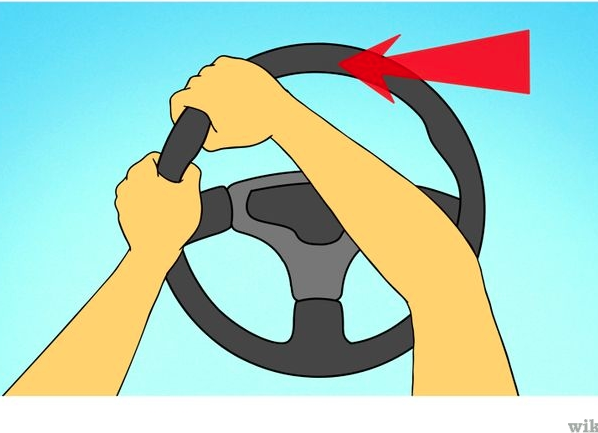
    My son told me recently about a driving “adventure” that he and his buddy went on. The rules of the adventure were this: you drive straight ahead until you reach a T intersection, and then you have to turn right. You continue on straight, or making right turns, until you can go no further. While I was digesting the idea that, only by pure dumb luck I didn’t get a call from Chicago, or Terre Haute, telling me not to worry, they’d be back the next day, my son related with relish and a bit of cackling glee how they ended up in what could be described as the slums of Danbury, CT, a mere 35 minutes away, in a dead end by some housing projects. “Why always a right turn?” I asked him.

    “It’s easier,” he said, with a look that said, “D-uh!”

    I had reason to think of this driving game again when my friend Diane told me about her current heartache. She had met a man on the west coast when she was out visiting her grown daughter, and their chemistry had been immediate. Apparently, they lit each other up, body and soul, like a generator plant on the New Jersey Turnpike. Because she’d go out 2 times a year to visit, she was able to spend extended time with this man, and they fell deeply and madly in love. Skype and phone calls carried them between visits. After a few years, the time had come when they began contemplating combining their lives, but because both of them had strong family, social, professional, even soulful ties to their own communities 3000 miles apart, they faced some tricky obstacles. They had started talking happily and dreamily about splitting their time on each coast, assuming they could find the way to make their professional activities more portable.   While Diane had no friends or community connections on the west, her daughter was there, and she looked forward to the adventure of gaining new friends and activities there. And she would still be spending plenty of time with her family and friends on the east. Her man had both family and siblings on the east, and his kids on the west were virtually grown, ready for their own adventures. Nevertheless, this great love of her life seemed to be balking, talking with anxiety and dread about the huge changes necessary for them to be together on a day-to-day basis. He thought he’d be able to carry most of his work with him, but what if he couldn’t? What if he missed his much larger social circle on the west too much? What if he hated living on the east coast, with its gray cities and variable weather? What if, to accommodate him, she ended up spending more time on the west and began resenting him? What if their projected net worth as a pair really wouldn’t be enough to sustain the kind of lives to which they were accustomed or the resulting travel costs? Diane began feeling hurt. Based on what she understood, these possibilities did not seem likely. And wasn’t their love worth the changes? Wouldn’t the day-to day-joy of being together make everything else seem manageable? Fun, even? She wondered if he had just been indulging in a dream of love, one that evaporated when compromise became necessary, while she had been committing her heart.

    “It’s not that,” I told her. “He’s just afraid to make a left turn.”

    “Huh?” was her response, but I saw from her face that she could already sort of grasp where I was going.

    “Diane,” I said, “this is probably the first left turn this guy has made in about 25 or 30 years.”

    Screen Shot 2015-06-26 at 2.27.49 PM
    Dick Grossberg – CD Clocks

    Despite the rules of my son’s driving game, young people make left turns all the time at the craziest intersections. They deliberately put on their left signal, having possibly decided at the last minute that’s where they want to go. They move out in the middle of the intersection with all the attendant risks, and nimbly or not so nimbly make it happen. Sometimes with bravado and confidence, sometimes with elevated heart rate, drawing in breath through clenched teeth or muttering “fuck” under their breath, but they make it. They follow a college sweetheart to a new city, a new country even, with no real plan for their future. They quit a job they realize is making them sick or just not leading anywhere they particularly wanted to go, and begin an entirely new career or profession from nothing.   They decide they will go to Bhutan before they settle down into a routine life, and suddenly discover a burning desire to become a Buddhist monk. Why can they do this? Is it just because young people are braver? Do they take more risks because they don’t have the life experience to think through all the possible negative consequences? In other words, are they blissfully ignorant?

    I think that is definitely so, but instead of worrying on their behalf, which they never appreciate and indeed chafe against, I think we should take a few lessons from them. I used to be one of those mothers who always offered a nervous litany of concerns and fears about her kids’ choices. Offered the litany without solicitation, of course. It just bubbled up out of me, like a compulsion, and I convinced myself I was doing the right thing, counseling my naïve and judgment-impaired children, throwing water on their fires. It started when they were very young, and became so ingrained in me as a protective impulse, that at some point I couldn’t be any other way. I immediately went to that place where everything that could go wrong would, and into the dread, of course, I factored in the weighty heartache and fresh worrying I would personally experience when things inevitable turned sour. What a drag! How did I get so negative and fearful? And I’m not even remotely as negative as most people I know!

    What saved me? I started noticing, finally, that there were some people who, when I mentioned something my kid was going to do, something that I felt okay about, would start going through all the things that could go wrong. They set forth all the reasons I should discourage my child. I started noticing that these were the same people who plan out every detail of their vacations, and always find it necessary to proudly point out how they were able to get a spot close by to an event because they charted out their course days earlier and made sure to arrive an hour early. All risk is managed away to provide as smooth a ride as possible. No supporting a kid’s dream, because a dream isn’t practical and almost certainly will fail. No pursuing their own dreams for the same reason. And certainly no left turns! So many of us will continue down a path that really isn’t suited to us, that is leading us astray or to a dead end, rather than make a left.

    But perhaps it isn’t just the ever-spreading tumor of worry that drags us down, away from the risk and the rightly earned delight from successfully making a left. After all, when we are older, our vehicles are longer. Instead of a zippy little car or jet ski built for one, maybe two, they are freakin’ tractor-trailers, or huge tankers that carry all the people, responsibilities and ties we’ve accumulated. They don’t turn easily. They take up the entire intersection as they swing round, creating a disturbance, and threatening to upset our cargo. It makes sense to avoid that left!   But is it sense or fear that keeps us from taking it? Is it our forgotten skills or long buried sense of adventure?

    I know of people whose lifestyles involve changing locales every 5 or 7 years for professional reasons. Their craft never seems to get too big to turn. They find fun and adventure in every new place, and remain nimble, flexible, daring. Sure, moving is a pain, but they do it with good cheer and make the best of it. They have many friends all over the country with whom they keep up contact and visit. They have safe ports all over. But for those of us who stay in one port for too long, our crafts just seem to get bigger and bigger, maybe even stuck, and other ports begin to seem foreign, scary, hard to navigate, not worth the effort.

    Maybe our crafts are not as big as we think. Maybe we just haven’t made a left in some time and we’ve lost the stout heart for it.   I think even a person who once led an adventurous life for many years can lose heart if they’ve been settled for a while. They might even still make the occasional right, which isn’t nearly as scary, and tell themselves they’ve been making lefts.

    No question, the left turn is far more challenging, even dangerous at times. And yes, being parked, or going straight, or even turning right is much safer. And maybe the surroundings we’ve been in for such an extended period of time are wonderful in many ways that we are loath to give up. But maybe what lies to the left is the promised land, the incredible place we never found because we just wanted to avoid that left. Maybe, if we go for it, we will discover that our craft, while indeed carrying a load, isn’t really that huge and heavy after all, and that we can in fact travel back and forth, keeping the delights of our old port while discovering even greater enchantments at a new one. And in the process, maybe we might realize that the young do not have the market on adventure and exploration, and that there is something to be said for venturing forth without a clear sense of what could happen. Maybe it keeps us young, and what’s wrong with that?

    I told Diane, “Tell him to turn on his signal, take a deep breath and get ready for the adventure of a lifetime. Or get on board and remind him how.”

    Found at weissesrauschen.tumblr.com
    Found at weissesrauschen.tumblr.com
  • Summoning Up

    Summoning Up

    Screen Shot 2015-05-24 at 7.46.39 PMWhen I was old enough to be driving, but young enough still to be living with my parents, I was returning with my mom from a shopping trip at the mall, when I drove over a mouse in our garage. I don’t know how the exact timing was possible, but his darting out of the way didn’t take him far enough to miss the slowly rolling tire, and I crushed the back half of his body. I discovered this when I opened the door from the parked car, and heard squealing. Squealing that was quiet enough to be barely perceptible, yet still ear piercing. Soul piercing. I craned around and saw the mouse, still alive, pinned there under 2 tons, his head and chest now reaching out from under the wheel, straining for a reality that was no longer possible. I instantly reversed out of the garage, straining for that same reality and then rushed out of the car to see. But no, there he was, half pancake, half mouse. I retracted around the huge fist of a feeling that punched my gut and started wailing and whimpering just like that mouse.

    My mother too had been taking in this whole scene, whatever horror she was experiencing enhanced by factors from watching her daughter, her baby, so tormented by something that could not be undone.  For a moment she stayed in the horror with me, no doubt incapacitated as I was, but also, it soon became evident, summoning up something colossal. Something so out of her normal way of existing that I felt it happening. I felt her straining against the weight of her nature, 2 tons, just like that car, as she strode with almost too much purpose, just to avoid faltering, to the hanging tools on the garage wall and plucked the heavy metal shovel from its hook. “Stand back!” she commanded, but I could hear the doubt and torture in her voice, as though she wondered without words just how she would be able to do this. In that one fleeting moment, I saw my mom, really saw her, partly crushed by years of doubts and conventions and limitations, and partly alive and strong and defiant. For her baby, for me, she did it. She lifted the shovel high over her shoulder and came down in one fast, unwavering arch of a swipe, right on the mouse’s head. And though the mouse was no longer squealing, his head was not flat like the pancake half of his body, so, the blows coming easier now, she lifted the shovel and slammed it down twice more in quick succession to be sure. Then she stopped, and I beheld her, the horror of the mouse’s fate at my hands supplanted by the awe I felt for my mother. I understood without words the wild and brave extremity she achieved, for me. Not that the mouse was forgotten. Horror, which of course is that feeling you get when confronting something awful and against every value you hold dear, but about which, in that moment at least, you believe you can do nothing, softened into a still difficult but more manageable sorrow that I would recall all my life. But the horror of that moment was dramatically and completely swept aside by the vision of my mother, standing there with the shovel handle clenched in her fists, breathing fast, somewhat overwhelmed and sick to her stomach, trying to regain her composure and a normal blood pressure. Somehow, she did what she had to do: put the mouse out of its misery and thereby smash its and her daughter’s horror completely and beyond reach. In her act, I saw just how much she loved me. For it is one thing to care for and minister to the needs of a child. It’s another thing to do something that requires heaving off one’s own horror. To break through the command of the primitive part of our brains, that renders us afraid and frozen like a threatened gecko. To strain wildly against debilitating, irrational paralysis and manage to act.

    We make up all kinds of rationalization after the fact for our debilitation in the face of horror, because it is shameful to us. We know that we were too weak to overcome it; we were completely ineffectual. And when the horror has to do with the social behavior of others our inaction is even more shameful. For we know on some level that paralysis in the face of witnessed violence or physical injury is more excusable than paralysis in the face of witnessed rude, insulting or insensitive social conduct, which after all, presents no actual threat to our bodily integrity. So we paint over such moments with the justifications of societal conventions, “supposed to’s” and staying out of the way and not making a big deal, but afterward we recriminate ourselves silently and repeatedly for having been overpowered by fear. That’s what it is after all. Our residual but still very powerful primitive instinct to freeze in the face of callous or insensitive treatment of others or ourselves is fear.

    I have had many, many moments where I failed to act when I witnessed rudeness or insult, whether to me or someone else, and I still feel the shame of those moments so many years later. In the case of mistreatment of my children by ill acting teachers or nasty parents of schoolmates, I managed to summon up at least enough courage not to remain silent, but I didn’t call things out exactly for what they were. I didn’t say, “You grabbed my child! How dare you! Don’t you ever touch my child again!” Instead I said, “My son says you grabbed him by back of his neck when he tried to get something from his cubby, and I’m very concerned about that.” I didn’t say, “Do you realize how twisted and mean, and damaging your sarcasm is to my eight year old? To most eight year olds?” I said, “Your way of interacting with the students doesn’t work for my daughter and I would hope as the teacher you would consider that.” And I didn’t say, “Are you nuts? All the other parents think your kids are the nastiest, most conceited, and crassest kids in the entire school, and you have the nerve to tell me that my kids are defective?” Instead I said, “Well I’m sorry to hear that my kids are doing things when I’m not around that aren’t’ very nice, but that doesn’t give your son a free pass to do something mean that has my daughter feeling sick.” But watching my 21 year old daughter begin truly to understand and struggle through the tangle of mistreatment, selfishness, inconsideration, sexism, you name it, that constitute the “jungle” of our society, and watching her wonder whether she dare call people out for the things they say and do, I feel empowered to rise above my own fetters and shout “Yes! You are right! That person was an asshole! This person tried to belittle you! That other person was manipulative! You are not crazy to think so. You do not have to remain pleasing and conflict averse! You do not have to be worried that people will think you are ‘trouble’ or oversensitive because you refuse to let mistreatment, however nicely dressed or camouflaged or even unintended, pass unchallenged.” As I see her recognizing and identifying all the social interactions that stun us, as I witness her paralysis, I am, it seems, finally able to summon up the strength to heave off some of my own.

    A few days ago, the defining moment came.

    My daughter and I were eating at a small neighborhood restaurant in Brooklyn. There we were, me with my gray hair, older skin, manner of dress and overall bearing that announced me as a woman over 50, and she being obviously a young woman in her 20’s, perhaps my young friend or perhaps my daughter. Someone who seemed like the owner waited on us, but in any event he was a man somewhere between the age of 38 and 48. He kept referring to us as “girls” and not in that hammy, flirty way that is intended to be a compliment, effective or not, to older women. It was in the dull, automatic, unseeing and oblivious way that some men refer to women generally. With each utterance of “girls” our discomfort grew. We did not have to say much to each other. We both knew that a man waiting on us was referring to a 53 year old mother as a “girl” in the presence of her daughter and that it was belittling, all the more so because it confirmed an absent, careless and undervalued interaction with customers. “You girls want anything else?” It matters not if someone else would have not taken offense; I did. My daughter saw me struggling. She saw me pinned under convention and yet trying to summon up something, anything, to heave it off. When the proprietor brought our check, said, “thank you, girls,” without even looking at us and walked away, I must have contorted my face in some crazy way, for she whispered, “Mom, don’t. Mom, let it pass.” And when I continued to fidget and struggle, apparently presenting the risk of some kind of uncontrolled, over the top outburst, she said, “If you’re going to say something, I’m getting out of the restaurant.” I was too busy summoning up my courage to respond. So she beat a hasty retreat, saying “I’m outta here. I’m going to the bathroom.”

    I sat there for about 5 seconds trying to breathe my way to doing what I knew I wanted. I half couldn’t believe it. I was afraid to say something to this stranger. I was afraid lest he think me a crackpot, a “feminist” an overly sensitive, silly female. The conventions and the “supposed to’s” and the always-at-the-ready “Why make a big deal out of something so little?” rose up in my brain. But I knew that if I didn’t say something, I’d be ashamed of myself and always regret it. Not because I’d have let what was just a careless remark pass, but because I’d have let my fear win. I took that one final deep inhalation, stood up and walked over to the proprietor, my payment for lunch already on the table. I said, “Excuse me, you seem like a nice man.” “Thank you,” he interjected. I continued in a calm voice that at first belied how hard my heart was pounding but then actually managed to help me find my ground. “So I’ll ask you to please consider how a 53 year old mother might feel being referred to as a girl in front of her grown daughter.” In the face of his momentary confusion, I added kindly, “I’m really too old to be called a girl; I deserve more respect than that.” He looked at me. Really looked at me for the first time. Suddenly he was a respectful person addressing an older one. A service provider addressing a customer. He asked, “I called you a ‘girl’?” And when I affirmed that he did, he apologized, perhaps more because now he was afraid, (what if I made a scene?) than out of any regret. I smiled, and thanked him and told him with a twinkle that I left him a good tip just the same. Then I turned and strode out, feeling like I had just successfully completed the pole-vault at the Olympics and joyously caring not one whit whether the proprietor was judging me.

    Screen Shot 2015-05-24 at 7.49.52 PM

    My daughter was waiting for me outside. “Mom,” she beamed. “I’m really glad you did that.”

    Huh?? “You heard?” I asked.

    “Yeah, I heard part of what you were saying after I came out of the bathroom. I was afraid for you to say something, but deep down really I wanted you to.”

    Well, I wasn’t doing something as heroic or dramatic as euthanizing a doomed animal, but I managed to heave off my fear, and she watched me do it with pride and gratitude. It was something I had to do. It was my way of saying “See? You can do this, and, by the way, I love you.” And I think by her comments she got that. It was her way of saying “Thanks, Mommy.” In the end, perhaps it seems ludicrous that I would have been afraid to have said something, or even that I felt compelled to do so, and yet, how many times have we not spoken up merely because we didn’t want to seem silly or, heaven forbid, make the  transgressor (who may well be unwitting) uncomfortable? And why is seeming silly so catastrophic, to be avoided at all costs?

    My daughter and I linked arms and walked on.

  • The Loveys

    The Loveys

    lampFrom my kitchen table I can see that lamp. That floor lamp I finally came up with an excuse to get rid of (it really is far too puny for our oversized family room, and I had no other place to use it) and temporarily replaced with a bigger, more me kind of a lamp. Before the day went out, my son asked, with his panic barely contained, “What did you do with that lamp?”

    “What lamp?” I innocently asked, without any actual innocence.

    “That lamp that was in the family room? Did you get rid of it??”

    I told my son that I still had it. “But see how much better this lamp is for the space?” I sweetly suggested. He was not fooled. “Can you put it back?” he pleaded. He then dropped the cement. The fixative that would tie that fuggin’ lamp to me for all time. “I love that lamp. It’s been in every home we’ve ever lived in. I remember that lamp from forever.” And then the coup de grâce: “…It’s my childhood.” Just like that, I was doomed. Doomed to keep that lamp for all time, till I die.

    I understood the power of the lamp for my son. For I too had THE item, a small mass produced print, purchased at some such place like Alexander’s (in the Bronx) or Woolworth’s, of a Paris night scene by Maurille Prévost. This cheap replica, printed on swirl-embossed paper to suggest actual brushstrokes, and set in a common, 1960’s ready-to-hang frame of the sort found everywhere in tasteful or striving middle class homes across the country, was so dear to me that my eye would scan the wall for it virtually every time I was in our kitchen in Rockland County. Before that, when we lived in an apartment in the Bronx, I’d look up from my spot on the smooth-tiled foyer floor (the small sofa seemed reserved for my Dad or visiting adults) and find my familiar friend reassuringly in its place, my proof that I was in the right home. When my parents were preparing for a garage sale prior to moving from their Rockland home to a more suitable dwelling for retirement years, I quickly grabbed the print off the wall and held it close. “Were you thinking of getting rid of this? Cause I’d want it,” I whimpered. And moments later I was the happy owner of my childhood companion, which I promptly hung up in my home, to the confusion of my husband.

    So I knew that lamp, that damned lamp, was not just a lamp to my son. My 18 year old son, skilled in never appearing to break cool when it served him, actually voiced a plea for this unoriginal, this unremarkable, this you-should-be-ashamed-of-yourself-sorry-excuse-for-a-lamp lamp, with bond paper dyed and embossed to look like a genuine tanned-leather shade and dark-brown bronze pole complete with matching, hammered base which no lamp should ever have, ever again. He was desperate. Believe me, I knew this from recognizing that same imploring expression of poorly disguised anguish my mind’s eye recalled from my very own face. Worse, I was 35 at the time! But, I wasn’t going to let on just how well I knew. “Okay, sweetie,” I said with my inner Oscar winning actor’s most benevolent patience. “For you, I’ll switch them back.” And as I turned to go, when my face was safely “out of scene,” and out of sight, my inner actor, who is, actually, me, dropped the act and celebrated my coup in grasping the truth: “That’s his lovey.”

    Of course, I’m a smug dope cause my lovey is that dumb, cheap, embossed paper print with the cook arriving for work via bicycle and with his chef’s hat on already, while he’s still straddling the bike, at an establishment simply and humbly called “Restaurant.” And I remember the love I had, have, for my lovey. The joy that filled me as though I were a child again when my mother, in the manner of a carnival barker awarding a small kid a prize that was worth absolute crap all the while making the kid feel like she was getting gold, told me “It’s yours!” And I couldn’t bring myself to ruin my son’s not-so-secret, young child’s stab of joy and relief. So I said nothing to him. Nothing to let him know I was on to him. Knew his secret. And even more importantly, nothing to let him know that that very same lamp had been a prick at my heart every single time I looked at it.

    I had purchased that lamp during a New England style colonial antique furniture-browsing day with my mother-in-law and sister-in-law, about 4 years into my marriage. Why I was even in that particular browsing experience was a source of mystery to me, since I despise New England colonial antiques, and deep down always did, but my apparent inability to say, “no thanks, Mom, I hate the kind of antiques you love” when she brought up the idea to go browsing for the new home in the “country” that her son and I recently acquired (and so What better place for “country furniture” right?) had something to do with it.  I suppose it was tied to the very impulse that later led me to suggest out loud that I might buy the lamp. It was an obligatory outing with “the matrons.” Not that my mother-in-law or sister-in-law were particularly matronly or even were aware they were serving that function. We poor females don’t always know when we morph into a member of the matrons, those women who, among so many other stultifying suggestions and comments, imply to you that furniture shopping is something “the women” do to feather their family nests. And furthermore know how to do primly, and respectably, and for not too much cost because we want to be responsible in our spending after all. And being with the matrons, I didn’t say, couldn’t say, couldn’t admit, “I hate furniture shopping. I couldn’t give a shit about what my furniture looks like, really,” or say “Guys, I’ll shop for my furniture when I good and feel like it, and it won’t be this New England, stripped of all ornamentation or frivolity, and painted or stained only in muted shades that suitably convey puritan plainness, humility and purity shit. It’ll be something positively vulgar, like florid and overly carved Victorian pieces or something out of the 50’s version of the future,” or even “There’s really something messed up about the fact that women do this in groups, to help each other, right? Where are the men? I mean, HELLO! Don’t you realize that we are still doing the same shit our very hairy hundreds of thousands of years ago predecessors did?”

    So there I was, along on this activity. For some reason, probably just because it was along our path, we walked into a furniture store that was not filled with colonial antiques or reproductions, but with newer, somewhat everyday, tasteful furnishings. Maybe, understanding what felt like my only way out, I scanned around for something, anything that I could live with. Or maybe the selection just seemed so much better than it was because it appeared after a sea of items I couldn’t ever imagine owning, that I really thought I liked what was in the store. But for whatever reason, that’s when it happened. “What do you think of this lamp for our living room?” I asked.   BOOM. There it was. My surrender to the matrons. And one moment later, the fog cleared, and I understood that I had selected something that I really didn’t love or even want, but I held steady. I must have figured, better to get it over with, offer up the sacrifice, and then never have to go through this ceremonial joint furniture shopping ever again. Only I couldn’t have known then that it was the beginning of a long line of offerings that became second nature to me, and led me so far away from myself that I mourned my absence.

    To be fair, neither my in-laws, nor anyone else, required my offerings. Indeed, over the years my mother-in-law developed a love affair with expressionist and folk art, which she indulged in freely by altering many of her colonial pieces with paint and decals of bursting blooms, or wildly colored finishes, and by transforming her walls into galleries for some of her own very vivid, unabashed and often quite thrilling expressions of color, form and movement. She was feeling free to be herself. Why wasn’t I? Maybe, once you suspect deep down that you have entered a life that isn’t quite working for you, you do whatever you can to disguise your true impulses and desires. Maybe you do whatever you can to prevent yourself and others from knowing the truth: you do not feel yourself. You do not feel alive.

    And so I loathed that lamp. For 19 years I secretly loathed that lamp. But now, well past 50, I finally decided I could simply get rid of it. I no longer felt tied by some inexplicable, self-imposed obligation to temper everything in my style, my home, words that leave my mouth. Yet, here is my son. To him the lamp is his childhood, and he loves it. The strange thing is, that somehow rehabilitates the lamp for me. I can look at it and it no longer pulls up an unpleasant association just outside my conscious language.   It is my son’s lovey, … and that is… so cute. I love that lamp! That is the lamp my son looked up at and felt reassured by! How could I ever get rid of it? What was I thinking?! And so, that lamp is now among my favorite items in the house. The house we will be listing on the market this spring, now that my husband and I have separated. I will be sure to keep that lamp in every home I live in, so that my son will know he’s in the right place, or one of two right places of course.

    Back to here, from my seat at the kitchen table, I see the lamp. And shifting my eyes I see that I am also in perfect line with that print. THE print, my lovey. Suddenly the thought occurs to me, what if my mother or father had an unpleasant association with that print? What if it was an awful association? I call my mother immediately.

    “You remember that little print of the cook outside the restaurant on his bicycle?”

    “No.” That puts me on notice right there that I am probably on safe ground.

    “The one that used to hang in our foyer at Bronx Boulevard and then in our kitchen in Rockland?”

    “No, honey, I don’t remember it? Why?”

    At first, my lovey not having an anguished past that my mother would instantly recall and convey to me disappoints me. It made my lovey a bit more… prosaic. The possibilities had been endless. It could have been something that my mother’s wandering and ultimately abandoning father gave her that she couldn’t quite bring herself to throw out. Or it could have been an imposition by her mother-in-law, who firmly declared that it was fitting and expected to see it hanging there in the foyer every time she visited our apartment that was so much smaller and less glamorous than hers. I try to inject some drama.

    “Well, you gave it to me because I remembered it so dearly from my childhood, but I was wondering if it turned out that it had actually been a source of emotion for you. You know, like, maybe Grandma Gussie gave it to you and you secretly hated it?”

    My mother chuckles kindly as one does at a child with a wild imagination. “No, dear, I probably just picked it up somewhere. I would do that. I’d see something that would strike me, that I’d like, and I’d get it.”

    Touché.

    Well, it turns out that my lovey is really quite a layered symbol after all. Far from prosaic, it now serves not only as totem of  my youth, but also the ability to allow unabashed expression of myself that I once wielded and now wield again. And on top of that, while the materials used for the print and frame were inexpensive and unimaginative at the time of manufacture, they are “vintage” now, and the content, the lovely little scene by Prévost, is quite striking. I rise to wipe layers of dust and grime from the unprotected surface, it occurring to me that the dark colors I always assumed were part of the print might actually be forty years of accumulated film.  As the brighter colors burst from under the damp dusting cloth, I realize that the scene has always been a window into my mother’s tastes that I had not really ever looked through.

    Prevost


  • What’s wrong with navel-gazing anyway?

    Found at: craneimal.blogspot.com
    Found at: craneimal.blogspot.com

    Some people use the accusation of “gazing at your own navel” to dismiss a self-exploratory mental exercise as useless, self-indulgent, narcissistic, or worse, primitive.  Something an ape might do.  But an ape doesn’t ruminate as we do, not about its navel or anything else, and so I reject that characterization. To people apt to describe self-exploration as navel-gazing I say: sadly you are lacking in curiosity, self-awareness and frontal cortex complexity. For engaging in a deep consideration of one’s own ideas of the world is the sign, not just of wanting to soak up social, cultural, emotional and intellectual interactions, but of seeking to develop an understanding of one’s self in relation to all that information. Isn’t that how we improve? And so, I humbly offer you the fruits of my navel-gazing.  My intent is to invite you to spark your own inward exploration. E. Marmer