Blog

  • July’s Twilight

    July’s Twilight


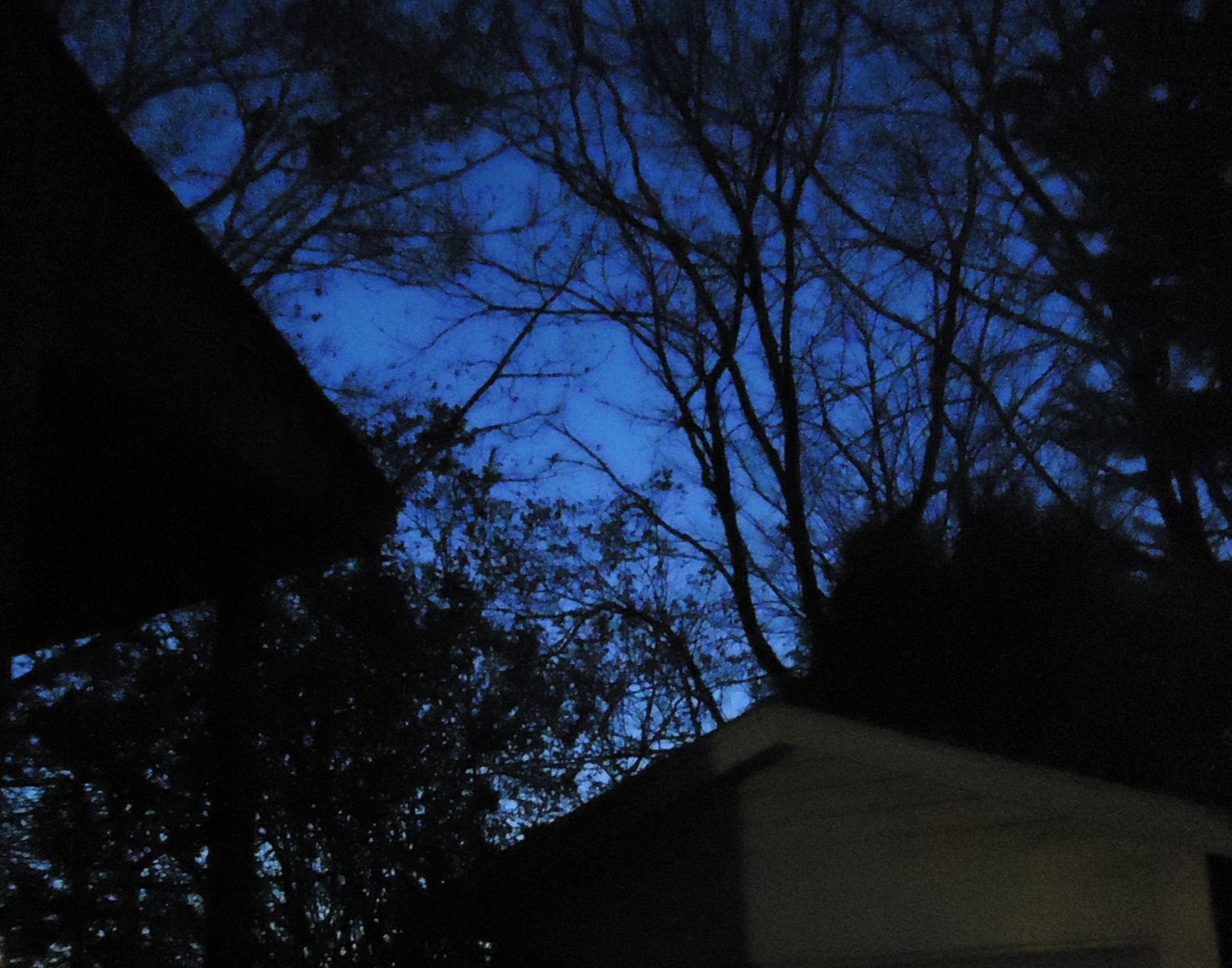
    Yesterday, I was treated to one of July’s lovely, long lasting twilights. I had earlier in the day overseen what I considered some dramatic changes to our garden by a landscaping crew: some pretty ground cover in a once barren area, additional flowers strategically placed in several spotty garden beds, and some new rose bushes and a pink dogwood tree by our little storage shed. In the hours after the men left, I wandered around taking in the colors, the fragrances, the cool grass on my feet and that magical, magical dusk that allows the blue of the sky to deepen and glow in final ambient minutes before gently fading into purplish and indigo shadows.

    I am a carnal creature, highly susceptible to my physical environment, as my husband always likes to tease. He named my instant reactivity to external elements my “boat to Venice” response, recalling how, on the public boat from the mainland to Venice, I was so affected by the heat and the crowd, the body odor and fuel exhaust, that I started grumbling and complaining, crabbing about how we shouldn’t have bothered going to Venice if this is what we could expect, completely losing sight of the fact that we were going to Venice, for godssake. Ten minutes later, actually in Venice, I began oohing and aahing, and it was as if the boat ride never happened.


    But back to the garden last evening– I was transformed into a bewitiched elf, drugged on loveliness.


    Photo by Sudhir Sharma


    It’s funny how certain experiences stay with you. I’m not talking about stories that we savor and retell frequently, but about those small moments that live on in your mind because they affected you profoundly without you even knowing at the time that they would be special. For me it seems, a July twilight is a key that opens my memory to some delicious moments.

    And so, I recall.

    I recall being a young girl living in the Bronx with my family on the 10th floor of a pink brick apartment building, sharing a bedroom with my two older sisters. I went from a crib to a bed in that bedroom. Seven years of togetherness, more for my sisters. By the time we moved from that apartment to a house where we each had our own bedroom, my eldest sister was turning 13 and probably desperately wanted some privacy, but I loved our time in that apartment bedroom.

        We all went to bed at the same time. We all wore matching pajamas. We made up games that inevitably involved jumping from bed to bed, a feat made possible by the fact that the beds were only about eighteen inches apart if that. And on summer nights, we all saw the same twilit sky from our two open windows, felt the small, hopeful breeze stirring, and heard the summer sounds from the neighborhood floating up to us.

    Photo by Ellie Wilson

    And I recall summer nights at the age of 10 or 11, when I was free to wander in the streets of my remarkably safe suburban neighborhood, looking up at the trees dark in their silhouettes against that compelling, cooling, translucent sky. The lights in the neighbors’ houses, and my own, were warm yellow rectangles, jewels strung for my enjoyment, and the steam of the day melted into a hush, full of possibilities. Unhurried, lost in a dream, I drank it all in, beliving I was the sole invitee to a secret ritual and feeling my freedom, until it became too dark and the ritual was over. My mother never once called me in, always knowing I’d return at the right time, like our cat.

    Uncredited photo in article by Scott Levine, Stephen Tonkin


    I have been so fortunate. Despite heartaches, despite losses, tragedies and chronic stressors. I have been treated to so many wonderful moments, so many lovely, warm July twilights. Last night’s romp in our garden will be among these. I am so very glad that I paid attention.

    E. Marmer | Free to Navel Gaze


  • Holy Cow!  My Daugther is Autistic!

    Holy Cow! My Daugther is Autistic!

    E. Marmer | Free to Navel Gaze

    A few days ago, I learned that my 28-year-old daughter Sophie is autistic, and I’ve been walking around semi-stunned ever since. Not because the diagnosis changes any of the facts on the ground- my daughter is who she is and I’ve observed her social and emotional difficulties, and some cognitive processing problems as well, over her entire life. I’m stunned because a vital and previously absent piece of information has now been revealed to us, and the impact of that information is enormous. It is ground-shifting, for my daughter of course, because now everything that she struggles with and has over her childhood, adolescence and young adulthood makes sense to her, but also for me. I have a different lens in place now, and the consequences are profound.

    peterdarcy.com.au

    My Sophie is many things. She is passionate, she is sensitive. She is extremely intelligent, diligent, observant, loyal, funny, talented and loving. She is also a monopolizer of conversation and attention, brusque, loud, emotionally volatile, quick to anger or upset, preoccupied with how she is being judged, easily overwhelmed or distressed, and afflicted by several mental illnesses, among these, bi-polar disorder, borderline personality, anxiety, an eating disorder, OCD and PTSD. As her mother I quite understandably have dedicated much of my emotional energy to trying to understand her, support her, soothe her, navigate her abrupt reactions and changes in mood, and even “fix” her, just so she would have an easier path in life. I also continually asked myself what I was doing wrong. When she was a child and was unable to connect with peers, when she had a tantrum, when she lashed out and when she withdrew, I always quavered internally with the worry that I was blowing it. Did I not model correctly, did I not teach properly, did I not counsel or discipline or comfort the way I should have?

    photogallery.indiatimes.com

    These are questions that plagued me over the decades, to the point where I was often frozen with uncertainty, and incapable of any action or meaningful contribution in a variety of contexts. Ironically, and sadly, my uncertainty and sheer confusion, my feelings of deep concern for her and my fear of inadequacy as her mother, often led me to do harm during her childhood. I said unhelpful or even hurtful things in my floundering. I focused and lectured on the extremity of her responses instead of addressing the underlying feelings which produced them, which left Sophie feeling unseen and unheard, and moreover conveyed the idea that she was different, or “wrong”. I remained silent when I should have spoken and left her feeling alone in her experience of the world or in her own family. But perhaps the worst thing I did was broadcast through my eyes and facial expressions my heavy and helpless worry that she would not be able find her way in this world. Sophie saw and felt that concern there every day and took it to mean, as any child would, that she was somehow causing me pain. That is a terrible thing to show a daughter who knows she is different but doesn’t know why or how to change.

    I know that I couldn’t have known she is autistic. The field just hadn’t advanced enough and only now is exploding with greater understanding of what autism is, and what are its symptoms. People now know that autism is not a linear spectrum, but more like a pie with sections which are filled in differently according to areas of deficit, which is why autism presents differently in different individuals. There has been a reckoning, moreover, with the failure to recognize symptoms of autism in female-presenting individuals, who are taught from an early age to be social, to fit in and please others and thus possibly are more motivated or skilled to mask the ways in which they are different. When an autistic person masks many aspects of their autism while still displaying others, it presents a perplexing tangle of seemingly erratic and confusing behaviors or tendencies that can create problems with family and peers, but which are all the more difficult to comprehend. It’s like looking at half a picture.

    So, intellectually I know that I shouldn’t blame myself for many of the mistakes I made. And yet, I still feel great sorrow at having made them as there is no question that they had an impact, and contributed a great deal to my daughter’s suffering. Perhaps she wouldn’t have struggled with so much anger and insecurity throughout her life, or carried the resulting scars, if I had simply understood that a lot of her behaviors were not within her control or resulted from different cognitive wiring. These are things I cannot now change.

    Going forward, however, this new lens brings tremendous clarity and a grounding for a positive future. My daughter burst into tears of relief when she received her diagnosis, and I wasn’t far behind. The central piece of a puzzle has been put into place. Even her other mental illnesses make more sense, because, as we’ve learned, they are very often present with autism, and indeed even directly related. Sophie, (and I) now know that she doesn’t need to change, that there is an explanation for how she is configured, and that the world is catching up to understanding and making room for people with autism. I plan to read all that I can about autism, and hopefully will be able to support my wonderful, complicated daughter in whatever ways I can with a greater understanding and an even greater appreciation of all her amazing qualities, her dedication to getting to the bottom of her unique emotional and mental makeup and her daily struggle to make sense of a society set up by the neurotypical majority. I’m so proud of her.

    E. Marmer | Free to Navel Gaze

  • Smitten

    Smitten

    This is a confession.  I have to face facts and stand in judgment.  Please be merciful for I have become that which I once held in ridicule. That most tiresome and clueless imposer of …. things about my cat. 

    E. Marmer | Free to Navel Gaze

    Thus far (for the most part), I have resisted, while in a constant stream of unrestrained pet joy, the impulses to post photos of my cat doing cute things… this essay being the exception that proves the rule of course. I can still recall the tut, tut, tut judgment (mine included) of all those subjected to a dizzying array of cats doing this and cats doing that.  This has given me the brake, which thus far has tamed my wildly beating breast.   

    But make no mistake.  What I am not posting I am nonetheless constantly calling out in utter delirium to anyone who happens to be nearby:  Look!  Look! Look! Look! Isn’t she cuuuute?? Look at how she curls her little paw! Look at how she rolls over when she wants to play!  Isn’t it adorable how she pounces on her toy! Listen to that cute little questioning chirp that sounds like “Huh?” 

    E. Marmer | Free to Navel Gaze Her Royal Kitten Highness

    My family and best friend have thus borne the brunt of my giddy outbursts.  I have to gush somewhere.  It is a constant struggle to zip it, and most days I just give in.  After all, they’re my inner circle, right?  They have to listen.

    Yes, I am smitten.  With a creature who has done nothing to warrant my devotion but be cute and utterly dependent on me, though she tries to feign otherwise.  How did this happen? 

    E. Marmer | Free to Navel Gaze A Minor Inconvenience

    I think it’s a parental thing.  My theory: it’s the unconditional love, the spoiling, the besotted pride of the parent for his or her infant. Even though my cat technically is no longer a kitten, she will always be my baby. Her need of me stirs that instinct, that crazy love. What else could explain why I refer to myself as “Mommy” when I talk to her? (Yikes!)  

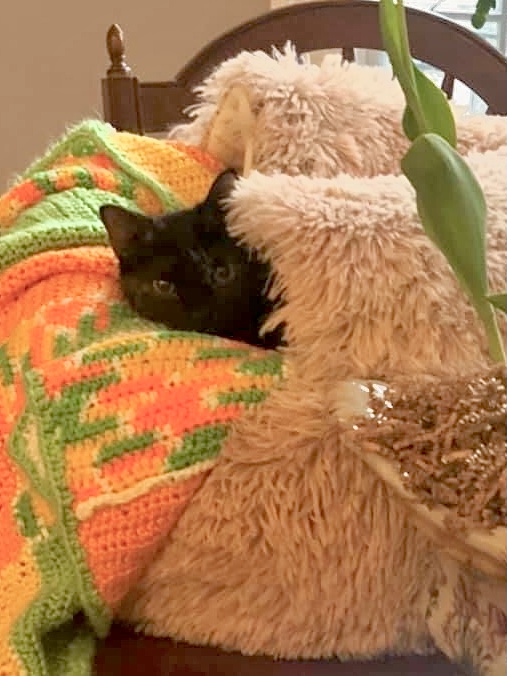
    My cat, my Esme, a tortoiseshell, mixed- breed rescue (Can you see how she is part Oriental?? Look at that bone structure!  Do you see her grace?), struts around in importance and yet starts at the slightest sudden noise, looking to me for reassurance. She instantly relaxes her tightly coiled body at my calm and loving energy directed at her:  yes, my love, everything is okay, you are safe.  No matter how merely tolerant she tries to seem of my petting, we both know she’d be lost without me.  Hardly a trip to the bathroom goes by without her mewing pitifully at my closed door.  Never a night goes by without her curled up on my bed. And when she has lost the trail of me in our house, suddenly unsure of where I am, calling out in a desperate wail, and I respond with a loud and cheerful call, never a time goes by where she does not bound to where I am, trilling in excitement, relief and happiness.  Who wouldn’t melt?

    E. Marmer | Free to Navel Gaze Could You Not?

    But maybe it’s more than that. Maybe it’s that a cat is an uncomplicated, indeed primal being (waaay more primal than a dog, as any cat owner knows!), who responds to a person’s most elemental essence.  Esme loves me like my children did before they lost blind faith in me, before I didn’t handle something well, before we had to navigate complex situations.  It feels good and is easy to tell myself that Esme is a barometer of my most basic goodness. 

    This feline carnivorous prowler that slinks around my house, that grabs her scratching posts (and occasionally the furniture) with sharp claws and sometimes her teeth, this actual creature in my house that looks like a giant rat from the back when she is sitting and a strange monkey when she balances up on her hind legs begging for a treat, brings me the joy of her attachment and complete trust.  Not a lap cat at all, and completely disinterested, if not affirmatively abhorrent of being held, Esme’s idea of showing her positive assessment of me is to allow me to provide her the pleasure of having her neck massaged. Not for more than a minute, mind you, which, is all I need, so we both win.  

    E. Marmer | Free to Navel Gaze My Slinky Girl
    E. Marmer | Free to Navel Gaze Trying To Blend

    So, now, I am much more inclined to view pet photos online with a generous heart. For what are they but sweet celebration of an uncomplicated relationship, a perpetual two-way street of positive regard. Pet pictures are happy declarations that we get to adore a simple companion, who will not one day talk back to us or make choices that challenge our peace of mind. They express our delight in being trusted by a primitive beast whose fight or flight system has adjudged us as benevolent. 

    Still, I’ll try to keep my cat pics to a minimum. But oh, oh, oh! Did I tell you about the time she dragged her wand toy up to my bedside as I was settling down for the night, and then mewed at me to play with her? Isn’t that a-DOR-able?

    E. Marmer | Free to Navel Gaze Esme
  • New Words

    In the fall of 2017, I was in a desert, devoid of creative impulse or self-kindness. I had had a sprinkling of published writings, a small following online, a few commissions for my paintings, and some sales at various artshows, but it all drained away when my heart broke. After four years of shared avowals, secrets, plans, and lovemaking, someone I adored wildly stomped my faith in him, in us, to death.

    E. Marmer | Free to Navel Gaze

    His telling me I was a mere vampire in my writing, feeding on the experiences of others and not able to create anything new, didn’t help; nor did his sending me a famous writer’s essays on writing with a note exhorting me to learn from them.

    I had believed so fully in the idea that, despite the challenges facing us, being apart was unacceptable. Not only did I learn he felt otherwise, but also that he wasn’t a very nice person. That should be fodder for an outpouring, yes? And I did have one, gut-wrenching poem after poem, maybe twenty in all, a fine booklet of anger and sorrow. But I came to a dead halt afterward, the poison successfully sucked out, the damage remaining. Grief is not a creative force. Rather, it hijacks creativity, like a virus hijacks a cell, converting it to a singular purpose and then killing it.

    The unfailing love of another person, my ex-husband, amazingly, saved me. His unflinching kindness, his simple witness to my unmooring and his wordless moving closer in my everyday life (a sweet parallel to how, at the beginning of our first courtship over 30 years ago, he stayed close to me at a party, always eventually appearing at each conversation group I moved to) proved that some people are solid as rock. Through eventual words and embraces we conveyed mutual forgiveness of everything that had gone wrong in our marriage, and our willingness to let it float away.

    upshot.com

    But in the face of my mother’s pancreatic cancer, the ten months that I nursed her, her difficult death making everything I did to reduce her suffering useless and silly; in the face of our daughter’s suicide attempt six months after that, her battling hallucinations in the hospital while the doctor said that the only thing preventing her from seizing was the fortuity of one of the drugs in her death cocktail being an anti-seizure medication, that sweetness of my now-again husband’s love wasn’t enough to water me to fertility.  I managed to squeeze out some writings about my mother’s death and get an old story published, but grief, only so recently conquered, regained a new hold on me.

    In 2020, with our daughter on a course of medication and therapy that seemed finally to offer her a way forward, my now-again husband and I moved in together, hopeful at last to find some peace. But a month later Covid erupted, and my house became a sort of kibbutz for family and friends sheltering. They brought all their problems and fears, and I, already so porous, soaked them all up. Though they left one by one, the pandemic became part of our everyday lives, injecting a chronic sense of dread.

    The Scream Edvard Munch

    I endured one last further sapping. We sold our house in 2021. It was far too large, seven thousand square feet of architectural interest that never quite felt authentic or homey, although I had tried so hard to cozy it up. And when my husband and I were separated I had hated it as a symbol of how we had gotten so far away from ourselves. But it was where my mother spent her last year, where my extended family visited week after week, in loving gatherings. It was where I reunited with my husband, where my family once again felt whole. If I left it, would all that stay behind? And being so drained, how could I manage it?

    Belief in a better tomorrow carried me; that’s the only explanation. Finally, now in this sweet, magical country house, next to a horse farm and across from a lovely meadow, I can take in the light as I sit at my kitchen table. After such a long drought, this writing is perhaps the first bubbling up of a new well. A welcome greeting as I move forward.

    E. Marmer | Free to Navel Gaze

  • Second Publication by Read650

    Second Publication by Read650

    E. Marmer | Free to Navel Gaze

    My essay “The Luckiest Bastard” will be included in the written collection “Gratitude” compiled by Read650 in connection with the “Songs of Gratitude” event at the Bruno Theater at Lincoln Center on January 4, 2020. The event is in celebration of the 250th anniversary of Beethoven’s birth. Excerpts from the collection “Gratitude” will be read, and Beethoven’s  String Quartet No. 15, Op. 132, known as a “holy song of gratitude,” will be performed by the New York Classical Players. For more about the event, visit: https://www.carnegiehall.org/calendar/2020/01/04/songs-of-gratitude-0230pm?fbclid=IwAR21wtZVns5tCAyj819yQNOx1nvanN8MLBnZw5QD97zBdhlAn_acCag1N28

  • The Luckiest Bastard

    The Luckiest Bastard

    E. Marmer | Free to Navel Gaze

    My father Stanley taught me gratitude the way he taught me everything, which is to say, in the fewest words possible. In contrast, when telling a story, or bringing history alive, boy, could he grandstand. His descriptions were drawn out, delicious, almost overdone, but not quite. A consummate natural performer, he never once doubted whether he had the crowd while holding court. And yet, when it came to the personal, he withheld the flamboyance. He withheld the unnecessary. My father conveyed the essential nut of a thing – whether a choice, a betrayal, a triumph, a lesson, a wonder – with a simplicity that never ceased to flabbergast me, humble me and convince me that I was getting truth.

    That’s not to say that he was always direct. Despite his brevity, he could indulge in metaphor, but, even then, it was delivered straightly, pointedly. Once when I brought up the lavish life my aunt had had before my uncle lost his “six-figure” executive job and became a hardscrabble salesman of cheap merchandise from China, he said, “You know the ‘Tortoise and the Hare’ right?” I waited for it. “I was the tortoise.” He said nothing more. And from that, I comprehended all that he wanted me to. Not just about the comeuppance of the arrogant hare, but about the toil and steadiness, the constancy of the tortoise. About allowing that one brief pat on the back and returning to the task at hand.

    On the day my father taught me gratitude, however, he delivered a direct declarative sentence. My mother had thrown him a surprise seventy-fifth birthday party, and the assembled guests were clinking their glasses, saying, “Speech! Speech!” My father stood up, and shook his head slowly with lips pursed for a good long pause, so, at first, I thought we would be treated to Stanley as entertainer, to a poem or funny anecdote or maybe a joke thanking my mother for putting up with him all these years.

    “I am the luckiest bastard on earth,” he said. And he sat down.

    Everyone clapped and a few people chuckled, and I wondered if their clapping and chuckling was in affectionate response to what they presumed was understandable awkwardness at such a moment. They knew my dad could be gruff; they knew he wasn’t suave. It seemed they wanted to reassure him: “That’s okay. We understand you don’t know what to say.” But I knew my father, in seven words, had said everything. It was all there: his amazement at fifty-three years of marriage to a modest and loving woman, who built their entire social fabric and cared enough about him to throw this party; his pride and relief that his three grown daughters, who fussed over him, turned out to be accomplished, well-adjusted people he didn’t have to worry about; his pleasure at grandchildren in varying stages of development, the sixteen-year streak of girls finally, finally broken with a boy; satisfaction in the restaurant catering paid for in full with the fruits of his and my mother’s labors; even anticipation of his accustomed evening in his recliner with a book and a pipe, and his fat belly.

    E. Marmer | Free to Navel Gaze

    All of those things were there, and something more, the essential bedrock for gratitude. My father told us that he wasn’t entitled to any of it. He was the “luckiest bastard,” just a random guy, a shmo, a tortoise, a self-educated beat cop for 30 years who got to come home to a hot meal and three girls being raised right by his beautiful, capable wife, she a respected teacher to boot. It wasn’t luck, of course, but a bounty collected, earned, one small decision, one small commitment at a time. He didn’t see it that way, though. His humility and astonishment at what he considered sheer dumb luck formed the best blueprint for gratitude I would ever receive. I follow it still.

    royalfleur.com

  • House Resolution 489: A reminder about our American ideals.

    House Resolution 489: A reminder about our American ideals.

    admin | Free to Navel Gaze

    House Resolution 489 – a condemnation of Donald Trump’s disgusting statement embracing the notion that new Americans aren’t real Americans, and should “go back” to their old countries if they dare have concerns about our SHARED American government and society – will be considered a very important document one day and will go down in history, or should.

    If you haven’t read it, you should. It is such a stirring statement of the gorgeous ideals of our nation. Proud to be an American.

    https://www.congress.gov/bill/116th-congress/house-resolution/489/text

  • When She Was Here

    When She Was Here

    E. Marmer | Free to Navel Gaze

    When she was here, my mother would lie on her bed after I helped her shower, on top of the long white towel she insisted I put down so the bed wouldn’t get wet. But I thought of that towel as part of her cocoon, the one I made by putting another long white towel on top of her, and one small one for under her feet because the main towel wasn’t long enough, and one for under her head of course, because I wanted her hair to dry, but in her mind it was there to prevent the pillow from absorbing all that wetness from her hair, always so careful, my mother. Then I’d put her comforter over this sandwich in which she was the filling, and tuck her in.

    With her arms and legs immobilized inside this wrapping, by weakness more than by swaddling, and her now small head peeking out over the cover, she seemed to me almost like my child. She pulled forth from me all the same sweet painful love I had only known for my children, with almost but not quite the same targeted piercing as I felt when my breast milk came in.  My mother in my care, so completely, so willingly and with utter belief in her security – it was just the same as with my children. And the sensation, this belief I felt from her, made me love her in a new old way. And when I bent down to kiss her just as I would have my child who was going down for a nap, I was even able to nuzzle her neck in a tickling way that made her giggle, then look into her laughing eyes with my loving ones. 

    I’d announce that I’d come back into her room in ten or fifteen minutes to check if she were dry and ready to dress, but we both knew I meant I’d really be back in as many as thirty minutes because I’d be trying to get something done in the kitchen and on top of that I had no sense of time.  That she knew it and knew that I knew she knew, made her love me in a new way as well.  I’d like to think so, anyway.  We also both knew that she needed more than 10 or 15 minutes anyhow to recover from the exertion the shower required, but that didn’t make either of us love more or differently, it just made us sad.

    My mother had pancreatic cancer, diagnosed at least when she was 85, in some sort of merciful grace by an unseen god. On the other hand, for a woman determined to live into her nineties, it still sucked.  She didn’t want to leave; she hadn’t stopped enjoying us all, and the small pleasures that came with her every day. Such a modest woman, she didn’t ask for much and was more than delighted by all that she nevertheless received:  our attentions, her comfort and independence, the joys of watching her grandchildren and great grandchildren metamorphizing, the familiarity of the signs on her neighborhood roads, her simple routine just the way she liked it.  And so, aware that she might not live into her nineties after all, she determined instead to live as long as she could, and fight against the cancer as hard as an 85-year-old with, well, with pancreatic cancer, can.  As she had also lost almost 40 pounds in two months of intermittent hospitalizations which included recovery from a life-threatening surgical accident, leaving her so weak that she was unable to perform even daily living tasks, this made the effort required absurdly difficult, but she was not deterred. 

    My sisters and I decided that as the daughter with the best layout for her limited strength and mobility, the most unstructured, uncommitted time available, and an observed impressive endurance for those small irritations that can build and build with continuous exposure to one’s mother, sick or no, I would be the one to take her in and see to her care.  I think they knew, though, that it was what I wanted. I’d go to the mat for it. My sisters would come for wonderful long visits with our mother, and I would be able to leave for the occasional social engagement, or my own doctor appointments, but always I returned to her without the weight of obligation.  I carried instead a kind of gratitude, even a shameful pride, that I could make sure my mother’s existence was the most comfortable one possible in her condition. 

    She knew this.  She knew I was compelled to be the one, driven by devotion or some perceived claim. It could have been because I spent the least time with her, called her least of any of us over the preceding ten years or so, and I felt I had to make that up; or maybe it was because I carried the knowledge that I had spent much of my adult life working through the not always so hidden sorrows and insecurities I developed in part as a result of emotional barriers she erected, which I knew, of course, were the result of her own sorrows and insecurities as a child. . . and so perhaps I felt I had to make our last months (or what I hoped would be years) together as intimate and rid of shadows as they could be. It was true that, due to reckonings with my own daughter, and my fuller appreciation of all the ways I had fallen short for her, indeed due to the understanding I acquired over the years of so many things, I was primed to show my mother a new kind of unadulterated love.  

    But maybe it was because I needed to show her that I loved her desperately as no other could, as much as when I was child, and I wanted her favor and undivided attention as I did then.  As the third child coming into a busy working class household, I never really felt I had the individual attention from her that I wanted. And dammit I was gonna get it! I was going to have it, have her, all to myself. . . It’s this last possibility that disturbs me.  And yet, even to the extent it may have been true, my mother silently understood all of this. All the reasons, whether noble or pathetic, she accepted as originating from a pure place (as did my sisters, loving and generous souls that they are). Perhaps on some level my mother even recognized that my troubled relationship with my daughter mirrored somewhat the one she had had with me, in that I too had been the unhappy, solemn, and lonely child whom my mother cherished but did not know how to help; though neither of us needed to speak of that – she, because she did not like to reveal herself or reflect on the past, and I because I had already forgiven her so thoroughly that I wouldn’t even think to bring it up. 

    When I returned to my mother’s room, she usually reported that she was ready for the rest of our post shower ritual, which included dressing of course, but always began with the drying of her toes.  This precise operation, developed in response to her complaints that previous toweling had not sufficiently done the job, entailed my softly running the narrow edge of a dry washcloth between her toes. And it is the drying of the toes that I think of now, this small activity that somehow was the perfect expression of our momentary happiness, away from her cancer, away from the end, in being mother and daughter.  I was the one providing the care this time, but it could just has well have been her, when I was in her care, before memory even, running a dry washcloth through my toes in the same way.  We were back all the way to that space, before the barriers had time to click into place. Adoring caretaker and trusting receiver, both feeling safe in having their attachment truly known. 

    If dressing exhausted her further, she’d tell me she needed to remain in bed for a little while longer, perhaps a half hour, for a little nap.  She knew that I’d let her sleep for longer than that, because I’d be trying to accomplish some mundane administrative task, or even perhaps get back to a poem I was writing; and I knew she secretly was relieved by my anticipated imprecise adherence to the clock, because she had not yet gathered the will to rise, to make her slow way down the hall to her chair in the family room.  But sometimes, before leaving her to rest, I’d lie down next to her, alongside her freshly made cocoon of sheet and comforter, and quietly sing her a song she had once sung to me: This is the story of two little babes who were left in their uncle’s care… This didn’t rankle. We both knew it was my way of telling her that I felt how much she had loved me, and that I carried it still. Sometimes she would join me, sometimes she would just listen and remember.
    E. Marmer | Free to Navel Gaze
  • I Thank My Mother For My Sisters

    I Thank My Mother For My Sisters

    E. Marmer | Free to Navel Gaze The Three Sisters by Betty Albert

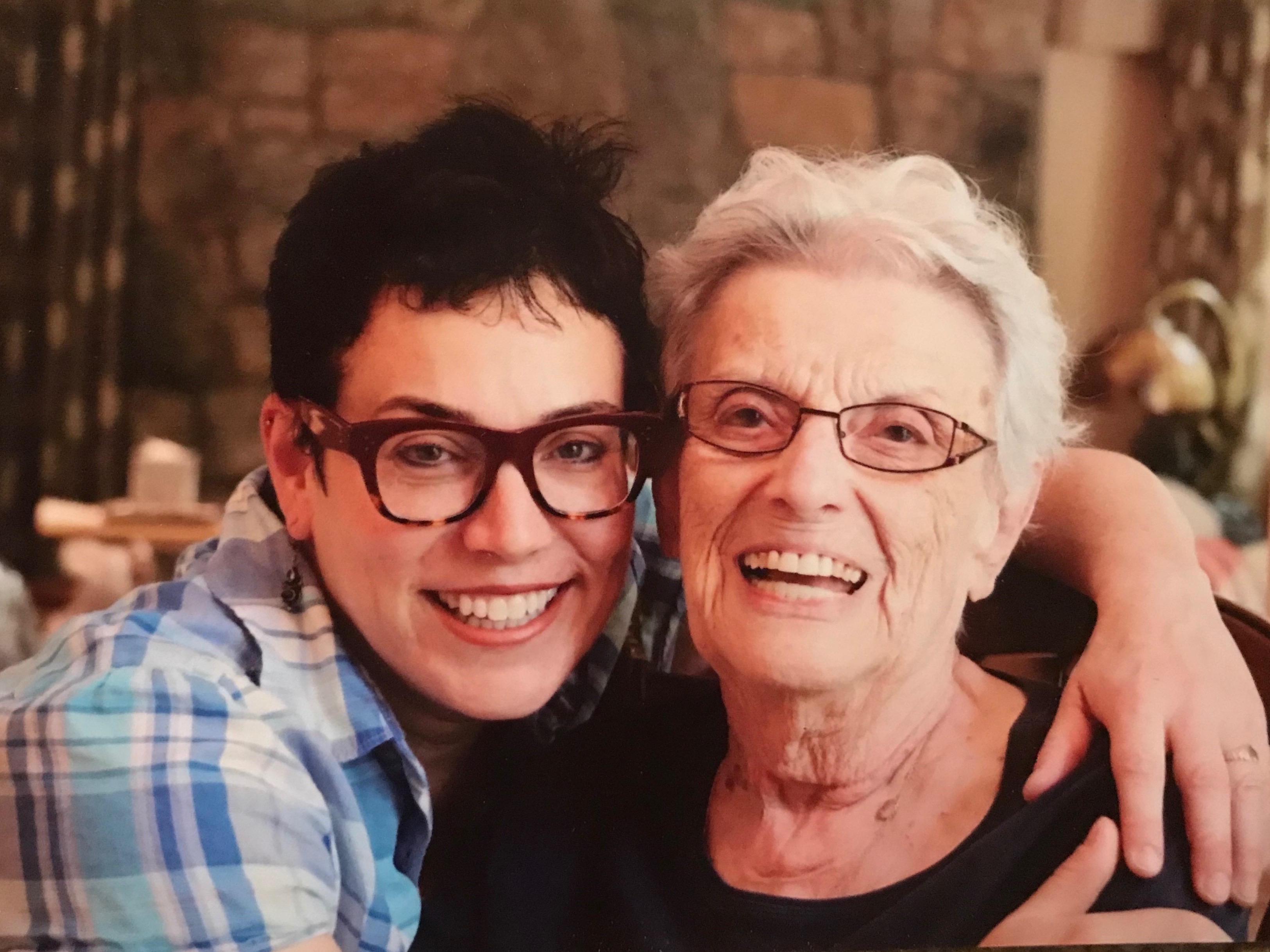
    I am now parentless. My father died about fifteen years ago, and a little more than two weeks ago my mother died.  And I miss her so terribly. I am continually coming up against the impulse to tell her something that I just observed that she would get a kick out of (or that I wished she would get a kick out of, and then maybe I’d experience a bit of disappointment when she didn’t and couldn’t really seem to understand why I thought it was even worth mentioning, but that was all part of our dynamic). I will miss her till the day I die, because she was such an integral part of my existence, even when I didn’t talk to her every week.  Even when I lived in another state. Even when I rejected some of her values or felt different from her.  She became no more integral to my existence than she already was when I brought her into my home for the last ten months of her life in order to nurse her.  Indeed, her that’s why I felt compelled to nurse her.

    Being parentless is a very weird thing.  And being motherless is like having the air taken away.  But for me, miraculously, the suffocation was fleeting and succor swiftly resupplied.  It’s because I have my sisters.  Because we all share my mother’s breath.    

    by Katie M Berggren

    We are “the three sisters.” I put us in quotes because we are a unique set.  We are not just any set of three sisters. Not that we’re necessarily better or worse than any other set out there.  We are just exactly what we are, which no other configuration of sisters in the world replicates perfectly.  And we three do not replicate perfectly any other sisterhoods out in the world.  So perhaps one of the most amazing things about sisters is that there are no two sets alike.  But I see that I should get to the point.

    We three sisters happen to be strong and mutually trusting souls.  That is, we trust with a whole heart that each of us has unconditional positive regard, good wishes, admiration and need for each other.  Even if in some circumstances we might first question (only briefly!) whether there hadn’t been a hint of doubt as to a sister’s purity of intentions, we always make that same choice to trust again and again.  We dismiss that doubt, and trust in our conclusion that our sister has only good will for us and never would want to hurt us.  

    When I contemplate that incredible truth, I also think about its genesis.  We love and trust each other that way because we all share the love and trust that emanated from my mother.  Somehow, in the way she loved each of us and all of us at once, our mother reassured us that she had enough love for all of us to infinity and back, and that she shared it equally.  Indeed, I think she raised us to think of us as “us.”  We were always an “us” no matter where each sister happened to be or what she was doing or thinking separately at any given time. And because our mother’s sheer adoration of all of us and each of us was always on display, she convinced each individual sister that she was worthy of the love of the other two. We grew up without a doubt of the lovability of each other, always amazed and grateful that we got to have such marvelous sisters.

    This is what “us” feels like.

    Art by Michelle Dávalos found at weheartit.com

    My mother gave me the gift of my sisters. She gave me two wonderful people to love and trust and she gave me two wonderful people who love and trust me. They were there with me when we nursed our mom and they will be with me always.  I am truly blessed to have them, and for the miracle that, through them, my mother truly remains here, part of me. Part of us.
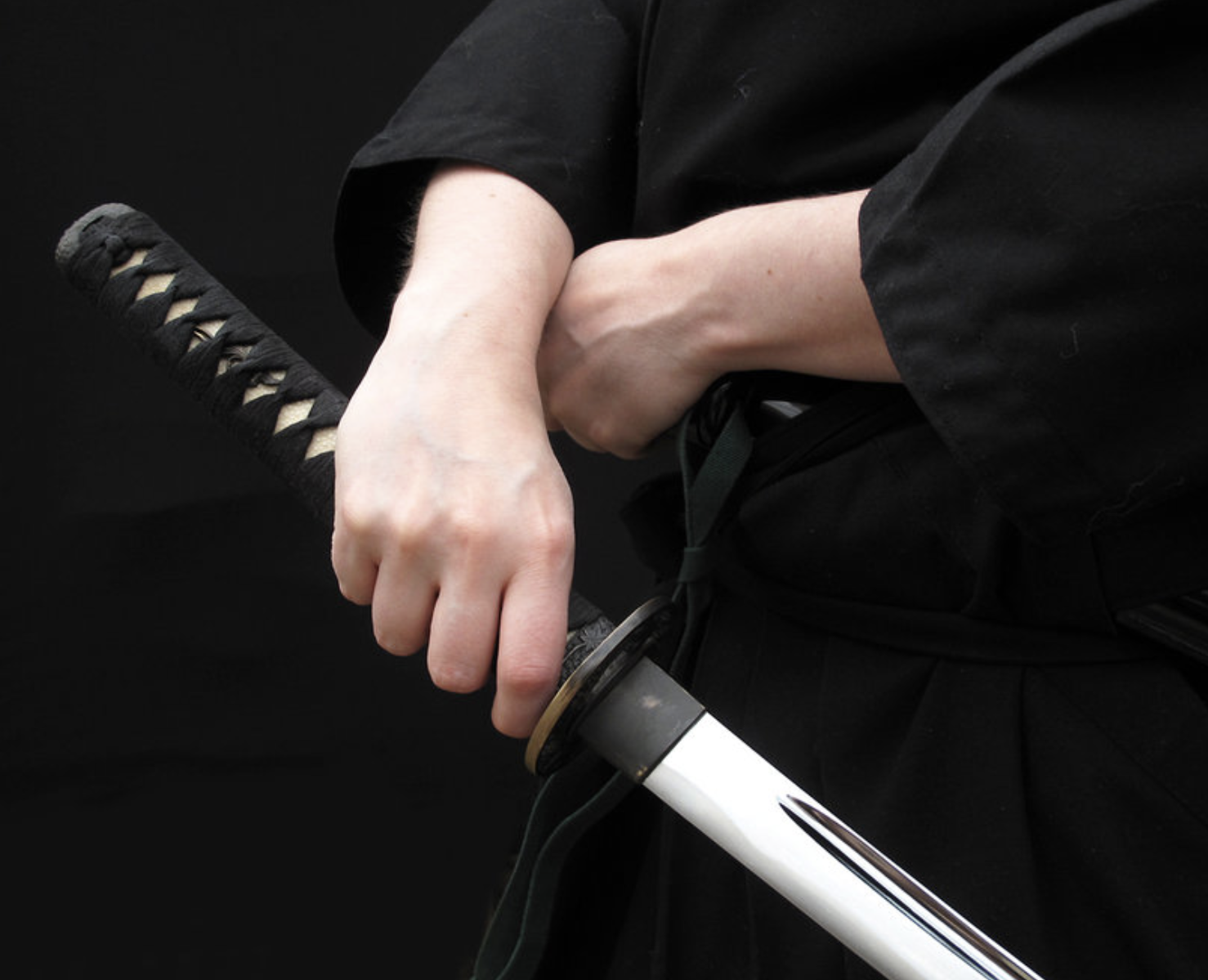
    photo by Jeremy D. Hembree photo by Jeremy D. Hembree
  • Warrior

    Warrior

    https://www.deviantart.com/astro-stock/art/Katana-57-offensive-cutting-255883318

    At the tender age of fourteen or fifteen, too soon after entering that nebulous stew of adolescence that would carry him from childhood to manhood, my son Jeremy stood ready for battle. He woke me at around two a.m., weapon in hand, with the kind of strained whisper that always wakes a mother. My eyes and ears struggled to comprehend the scene. The words “I hear something downstairs” pierced the dark fuzzy sleep-womb I had been enjoying only seconds earlier, and I was instantly alert.  The short hulking form standing over me was my son. He was wielding a samurai sword that we had gotten him a few birthdays ago. 

    megaknife.com

    Many thoughts came at once. Not generally inclined to panic, my brain leaped first, believe it or not, to something having to do with adorableness. The sword was part of a thrilling but tellingly inexpensive set we gave him as a nod to his achievements in the martial arts, junior style.  Though the blade had never been sharpened, its edge barely even forming a V, and I suspected that any significant force on it would cause it to snap shamefully (it was, after all, a factory-made ornament for a growing market of proud suburban parents), my son didn’t know any of that. In his mind, we had trusted him with a deadly weapon, and he was armed from baby face down to as yet hairless legs. He was ready to protect us.  He was ready to protect me. My heart swelled.

    I have to confess, my second train of thought dwelt briefly on the absurdity of the tableau.  I don’t think my son considered the potential for shock and fear I might have had waking up to someone holding a long sword a few feet from my face, and I found myself mentally slapping a head to my forehead. And my knowledge of the sword’s inherent qualities, or lack thereof, made it seem like a ridiculous choice for taking on a prowler.  But this element of absurdity only enhanced his adorableness.  It seemed that my mind had no interest in going to fear or protection, only wanting to stay on my brave, unseasoned son. 

    found at https://www.kisspng.com/png-bicycle-theft-robbery-security-alarms-systems-copy-3865517/download-png.html

    Still, I had to consider the possibility that the sounds he heard were more than the usual sounds our house made in the wee hours, such as the heat kicking on, or the filter back-washing. And the dead seriousness of my little man’s face necessitated that I display not a hint of the love and amusement I was experiencing.  “Let me get my baseball bat,” I said, retrieving the wooden slugger I had kept from my twenties, a sort of affectionate souvenir of my own silly bravado, when I actually believed that it, along with a steak knife in my pocket, could protect me from attack on the night streets of Providence in the early 80’s. (Why I was foolish enough to be on the streets of downtown Providence at two in the morning is another story altogether).  On some level, I must have felt that the bat was the appropriate companion to the sword.

    found at https://i.pinimg.com/736x/8d/ed/16/8ded16ea807d3e861c3d74a369802b6e.jpg

    My son and I stealthily walked along the upstairs hall, and down the stairs.  Peering around every corner, we soundlessly investigated every room, opened closets on signal and even ventured into the basement after we felt confident that we had not missed a lurking horror which could close in behind us. Finally satisfied that we would not be murdered in our sleep (and disregarding the fact that our foray only made it all the more likely that we would meet a bad end), we returned to our respective rooms.  Lying in my bed, I had a few more moments of reflection before I drifted back to sleep.

    It was not lost on me that Jeremy came to my side of the bed. My husband lay right beside me and remained peacefully asleep throughout this entire incident.  I knew this was testament to something unspoken but indisputable.  My son understood on a gut level: Mom was the parent in charge.   My husband was many wonderful things – brilliant, reliable, principled, committed, tenacious when inspired – but the last thing he was in our home was in charge.  Too, there was always the possibility that my son knew my husband’s tendency toward cynicism (and perhaps even inertia) would have made him the poor choice to awaken for this particular occasion.  But either way, my son came to me, and, in the dark of my room, I silently thanked him for this acknowledgment, which only made me love him more, and was more than enough payment for my briefly elevated heart rate. I also noted that when we embarked as a commando team, my son let me take the lead. Whether this was in deference to my badass abilities and leadership or, instead, a recognition of his own inexperience and diminutive bearing, I do not know, but, in any event, it greatly reassured me.  My son, it seems, was not being foolish at all. 

    Just the other day, I reminded Jeremy of how he came into my room with his samurai sword so many years ago. I pointed out that the sword may not have been up to the task.  Sensing the little bit of mirth in my tone and my affection for his callow boyishness, he retorted with arch assurance mixed with the gentlest of chiding. “Well, a prowler in the dark wouldn’t have known that, and I think I could have down some real damage with it. It was a long pointy thing, after all!”  Even now, his bravado remains intact.  For that, I am immensely proud and grateful.  And with his now conspicuous size and the tempering of his steel, I have no doubt that these days he would be leading the commandos.

    found at http://loeilenmarche.blogspot.com/2011/12/les-samourais-du-quai-branly.html